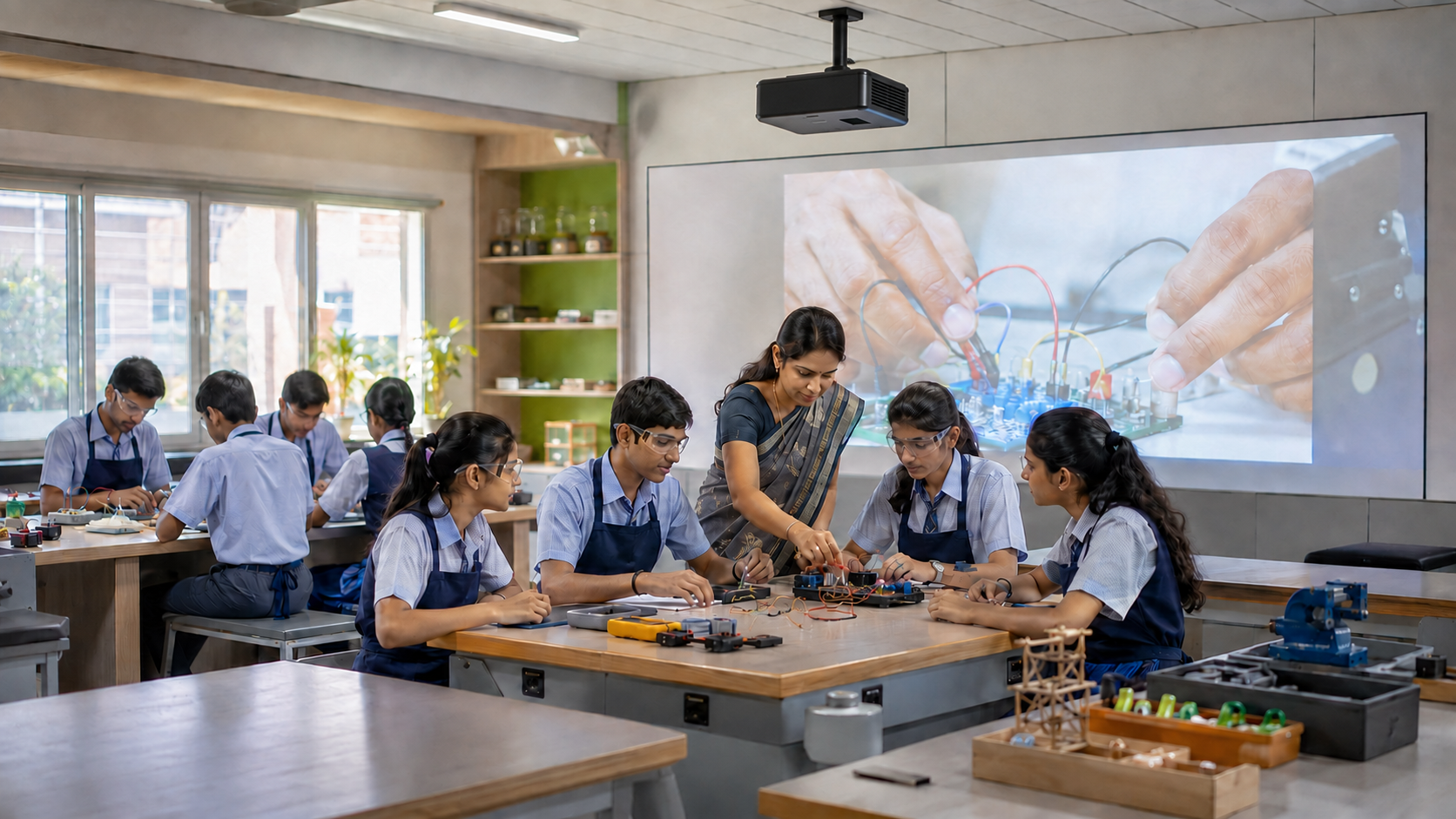


A hybrid classroom can appear fully occupied yet leave half the room uninvolved. A packed lecture hall and a full Zoom grid both suggest attendance, but neither tells you who is actually learning. In higher education, engagement is not one number. It is a mix of presence, participation, and what students do after class. Most institutions still track only the first one.
To gain a clearer picture of engagement, higher education institutions need to look beyond attendance. This article explores the key metrics they should track in a hybrid classroom.
Why Faculty Lose Their Read on Engagement in Hybrid Settings
In a physical university classroom, faculty can read body language, eye contact, and side conversations almost instinctively. In a hybrid classroom, that signal splits across two groups, and the remote half often becomes invisible. The problem is not just visibility; it is measurement. If a student is silent, logged in, and disconnected, the system usually records nothing meaningful until the exam result drops. That is why many colleges need better classroom technology and a clearer data model for student learning outcomes.
The wider context matters too. India's higher education system continues to expand in scale and digital depth. AISHE 2022-23 reports enrolment of 4.46 crore students across 58,643 HEIs, while national platforms like SWAYAM have crossed 6.1 crore enrolments. That makes engagement tracking in a hybrid classroom far more important than attendance alone.
Four Engagement Signals Higher Ed Should Track
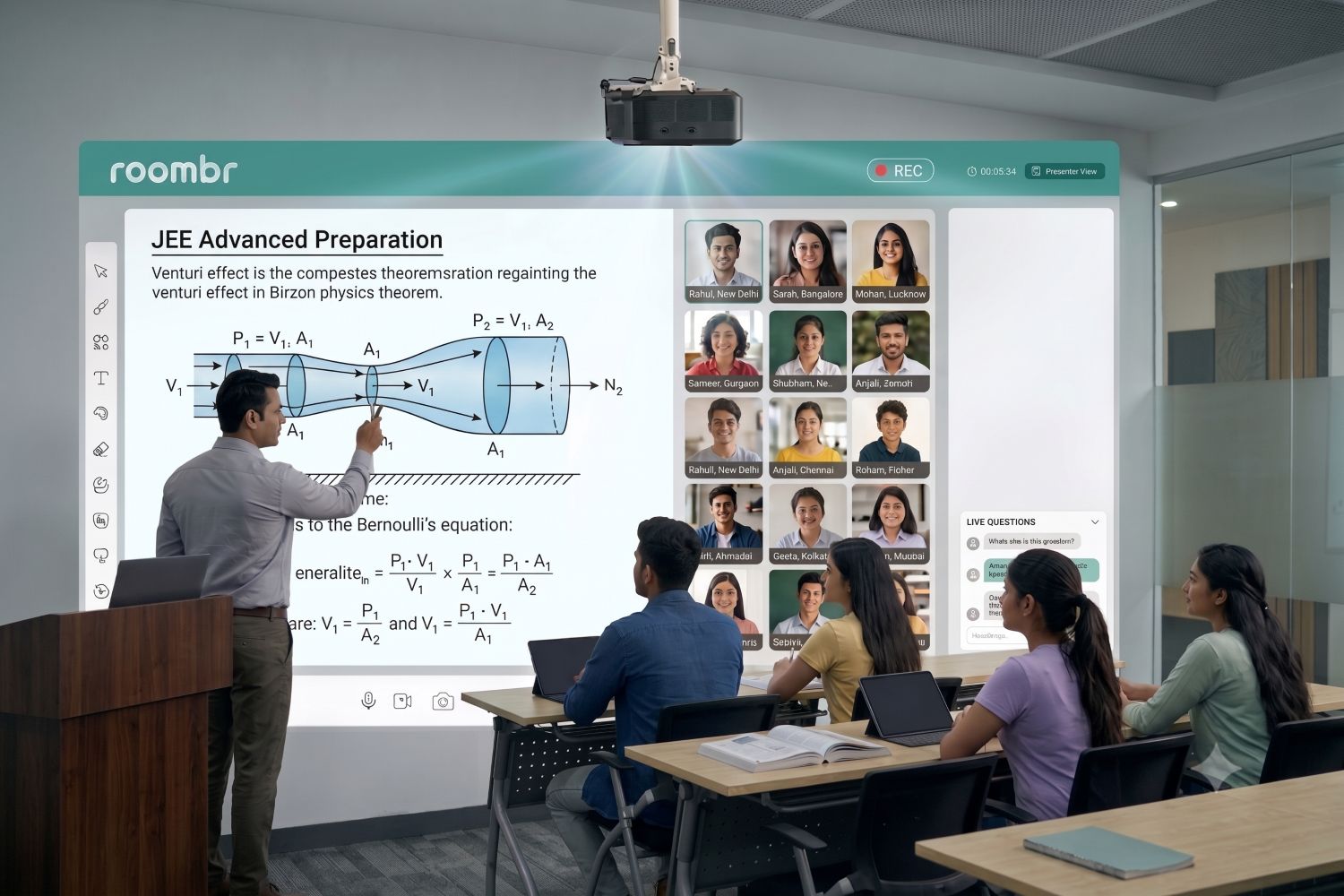
A useful engagement model must connect technology and student learning to observable behavior. Roombr for institutions provides the tools needed for this: live dashboards, AI-enabled assessments, automatic recording and chapterization, and a recursive learning system that ties performance back to engagement with recorded lessons.
1. Attendance Parity, Not Just Attendance Count
The best student learning measurement starts with parity, not totals. Track the in-person-to-remote ratio by class, week, and subject. A 90% attendance figure is misleading if the remote cohort has been shrinking for three weeks. That is especially important in hybrid teaching and learning, where the real question is not “Was someone present?” but “Was every group present at the same level?”
2. Live Participation
Live participation is the cleanest sign of active learning outcomes during class. Polls, quizzes, and chat activity show whether students are processing the material in real time. Roombr’s AI test generator can create assignments, polls, and tests, then automatically evaluate responses and surface performance insights. That makes participation visible across both in-room and remote learners.
3. Post-Class Engagement With Recorded Lectures
This is one of the most overlooked signals in student learning online. Watching a recording can absolutely count as engagement, but only as one part of the picture. The stronger question is how often students return, which chapters they revisit, and how quickly they do it. Roombr’s automatic recording, AI chapterization, and lesson library are built for this kind of recorded lecture engagement. Research on lecture capture also shows that viewing behavior is a meaningful learning signal, not just a backup convenience.
4. Engagement-Performance Correlation
This is where measuring student learning outcomes becomes strategic. When a student’s participation falls, recording use drops, and quiz scores decline, the pattern often appears before the final exam failure. Predictive analytics in higher education are increasingly used to identify at-risk students and target support earlier. That is why the strongest institutions are moving from raw data to actionable alerts.
Why a Single Dashboard Beats Four Separate Spreadsheets
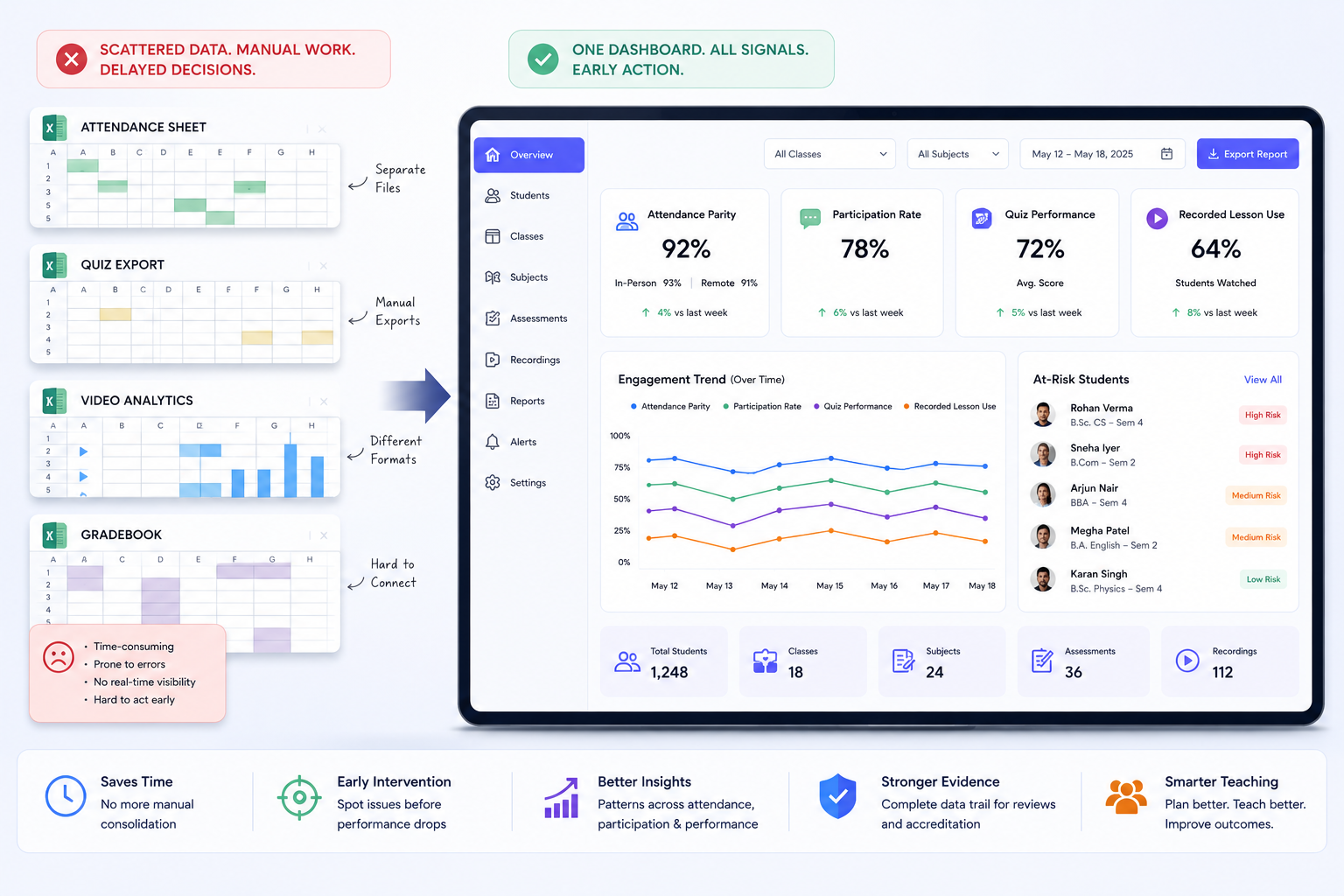
Most colleges still stitch together attendance sheets, quiz exports, video analytics, and gradebooks by hand. That is slow, messy, and easy to misread. A single dashboard gives faculty and administrators one view of student learning assessments, participation, and post-class behavior. Roombr’s live dashboards can track student-wise, class-wise, and subject-wise data in one place, which makes it much easier to act early.
As a secondary benefit, that consolidated data also strengthens evidence trails for internal reviews and accreditation work.
For institutions investing in smart classroom learning, centralized dashboards make it easier to identify engagement patterns, monitor progress, and intervene before performance declines. Effective classroom analytics also support better instructional planning and smart classroom management.
Frequently Asked Questions (FAQs)
1. What counts as student engagement in a hybrid classroom?
It is the combination of presence, live participation, and post-class behavior. In practice, that means attendance parity, poll or quiz activity, chat interaction, and how students use recorded lessons afterward.
2. How can universities measure engagement fairly across in-person and remote students?
Use the same engagement categories for both groups, then compare ratios instead of raw counts. Track attendance parity, participation speed, and recorded-lesson use inside one dashboard so in-person and remote students are evaluated using the same standards.
3. Does watching a recorded lecture count as engagement?
Yes, but as post-class engagement, not as the full story. It shows learning behavior, revision intent, and concept reinforcement. It should be paired with live participation and assessment data for a fair reading.
4. Can engagement data predict which students are falling behind?
Yes. When participation, recording use, and assessment scores decline together, that pattern can flag risk early. Predictive analytics are increasingly used in higher education to identify at-risk students before outcomes worsen.
Turn Engagement Data Into Better Learning Outcomes
Attendance alone cannot tell you who is learning, participating, or falling behind in a hybrid classroom. To improve student learning outcomes, institutions need visibility into attendance patterns, participation levels, assessment performance, and recorded-lecture engagement—all in one place. Roombr helps higher education institutions track these critical engagement signals through real-time dashboards, AI-powered assessments, smart recordings, and actionable learning insights.
Ready to see how it works? Schedule a personalized demo and explore how Roombr can help your institution make data-driven teaching decisions.
You can also call us at +91 9686659444 or email us at learn@roombr.com to learn more about our products and services.

Foziya Abuwala
Share
Step Into the future of
Education with Roombr