
Vocational education starts with a simple question: what should a learner be able to do at work? The answer shapes the lessons, practice, tools and assessment.
This approach matters in an economy that needs electricians, healthcare assistants, machine operators, software technicians, solar installers and many other skilled workers. Yet the subject is often reduced to a list of courses.
The real system is wider. It includes school-based skills subjects, ITIs, apprenticeships, short courses, diplomas, and recognition of skills gained at work.
This guide explains how these pathways work, what makes a program effective, and what learners and institutions should consider before making decisions.
What Is Vocational Education?
Vocational education is structured learning for a trade, occupation or group of job roles. It builds the knowledge, practical ability and work habits needed to perform defined tasks.
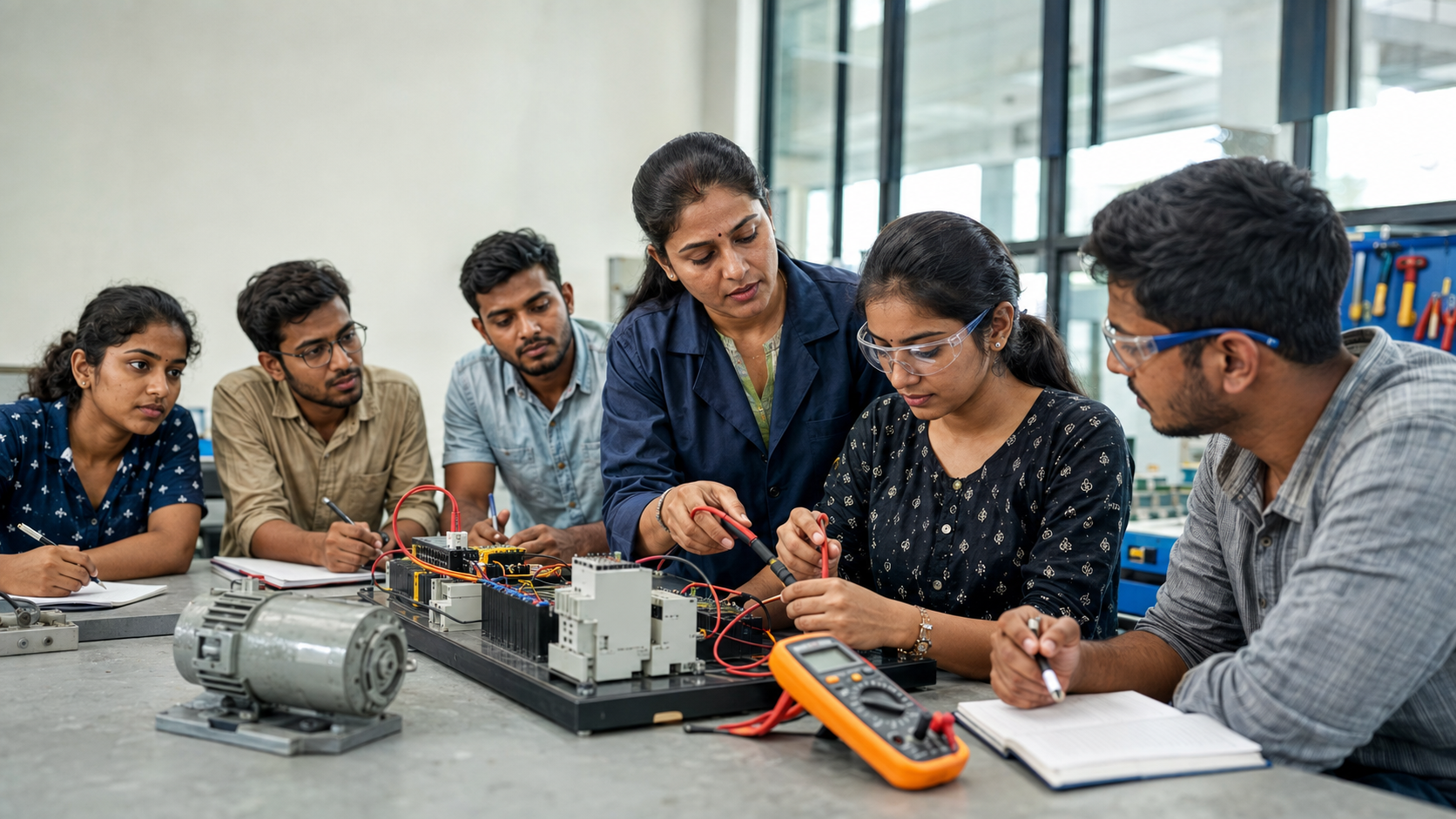
A learner studying electrical systems, for example, does more than remember circuit symbols. The learner must select the correct tools, find faults, follow safety steps and explain the work.
Strong vocational learning usually combines:
- Job-related theory
- Instructor demonstrations
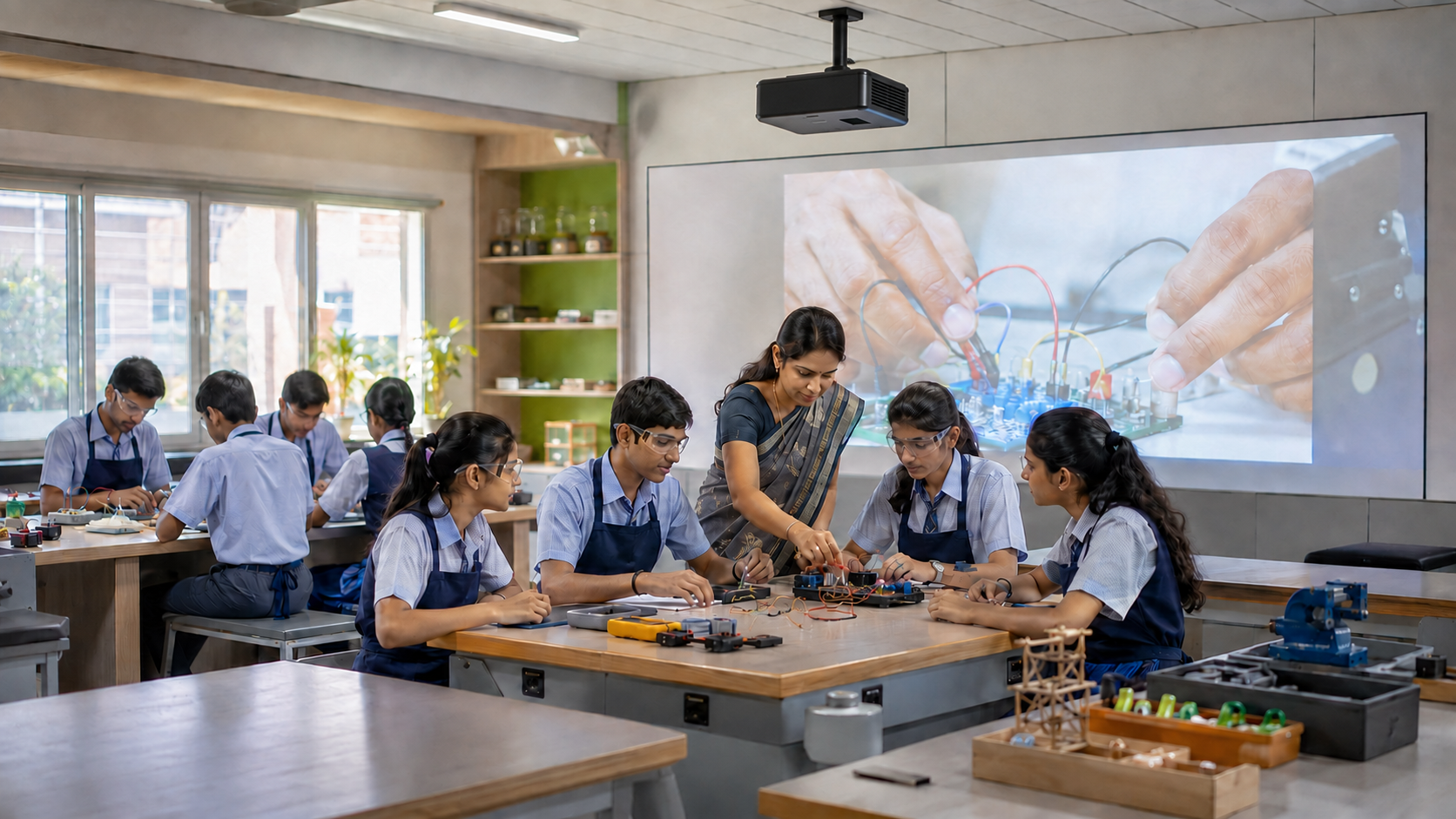
- Supervised hands-on learning
- Practice with current tools or software
- Communication, teamwork and problem-solving
- Workplace exposure or on-the-job training
- Practical assessment and certification
The broader field is often called vocational education and training, or VET. Technical and vocational education and training, or TVET, is another common term.
These labels overlap. Their shared purpose is to connect education with occupational competence, job readiness and career progression.
Vocational Education vs Vocational Training
The terms are closely related, but they emphasize different parts of the learning journey.
This is not a rigid division. Good vocational training still explains the theory behind a task. Good academic study can also contain substantial practical work.
The key difference is the starting point. Academic study often begins with a field of knowledge. Occupational learning starts with workplace outcomes and builds the required learning around them.
Why Vocational Education Matters in India
India cannot meet all workforce needs through a single educational route. Learners also differ in how they learn, when they enter work, and when they need new skills.
This learning route supports that diversity in several ways.
1. It creates a clearer connection with work
Learners understand which tasks they are preparing to perform. Employers can also compare a qualification with a defined job role and expected competency.
2. It gives practical ability a formal place
Making, repairing, operating, caring and troubleshooting require judgement as well as knowledge. These abilities need planned practice and fair assessment.
3. It supports more than first-time jobseekers
Workers may return for upskilling when tools or processes change. Others may reskill for a new occupation or seek certification for skills learned informally.
4. It can support employment and entrepreneurship
A course may lead towards a job, apprenticeship, advanced qualification or self-employment. Institutions should explain these routes without promising guaranteed placement.
5. It makes lifelong learning more practical
Short modules, workplace learning and recognised qualifications can help workers learn in stages. They do not always need to leave work for a long course.
Main Vocational Education and Training Pathways in India
India has no single entry route into job-focused learning. The right pathway depends on the learner’s age, prior education, experience and intended occupation.
1. Skill Education in Schools
School-based skill education introduces learners to work, tools and practical problem-solving before they choose a specialised occupation.
Under Samagra Shiksha, skill education now forms a regular component from Classes VI to XII. Students in Classes VI to VIII are introduced to pre-vocational learning. Classes IX to XII can take courses aligned with the National Skills Qualifications Framework.
The scale is significant. By 2025–26, 31,477 schools had been approved to implement vocational education. It had reached 25,181 schools and almost 39.5 lakh students by March 2026, according to the Ministry of Education.
School programs should encourage exploration and build practical confidence. They should not push every student into an occupation too early.
Institutions planning these learning environments can also read Roombr’s guide to digital classrooms under Samagra Shiksha.
2. ITIs and the Craftsmen Training Scheme
Industrial Training Institutes provide one of India’s largest long-term vocational training routes. The Directorate General of Training runs the Craftsmen Training Scheme through government and private ITIs.
As of August 2026, India had 13,856 ITIs offering training across 170 NSQF-aligned trades. The current network includes 3,328 government and 10,528 private ITIs, according to the Ministry of Skill Development and Entrepreneurship.
ITI learning normally combines trade theory, practical work and employability skills. Available trades, entry requirements and course length vary, so learners should check current DGT and institute information.
3. Short-Term Training Under PMKVY 4.0
Pradhan Mantri Kaushal Vikas Yojana offers shorter, job-focused routes for fresh skilling, upskilling and reskilling.
The official PMKVY 4.0 guidelines emphasise industry connection, on-the-job training and technology-enabled delivery. They also cover standard assessment, trainer development and courses linked to market demand.
PMKVY 4.0 includes:
- Short-Term Training: For learners seeking new skills or preparation for an updated job role
- Recognition of Prior Learning: For people who already have relevant experience
- Special Projects: For specialised roles, locations or learner groups needing a flexible model
Eligibility and duration depend on the scheme component and job role. Readers should verify current details through Skill India Digital or an authorised provider.
4. Apprenticeship Training
An apprenticeship places a substantial part of learning within a workplace or establishment. The learner works under real operating conditions through a formal training arrangement.
This route adds something that a simulated exercise cannot fully provide. Learners experience production standards, customer needs, deadlines, teamwork and real workplace responsibility.
Institutes can prepare learners with theory and safe practice. Employers then help them apply those skills in context.
Current opportunities can be checked through the official Apprenticeship Training Portal.
5. Recognition of Prior Learning
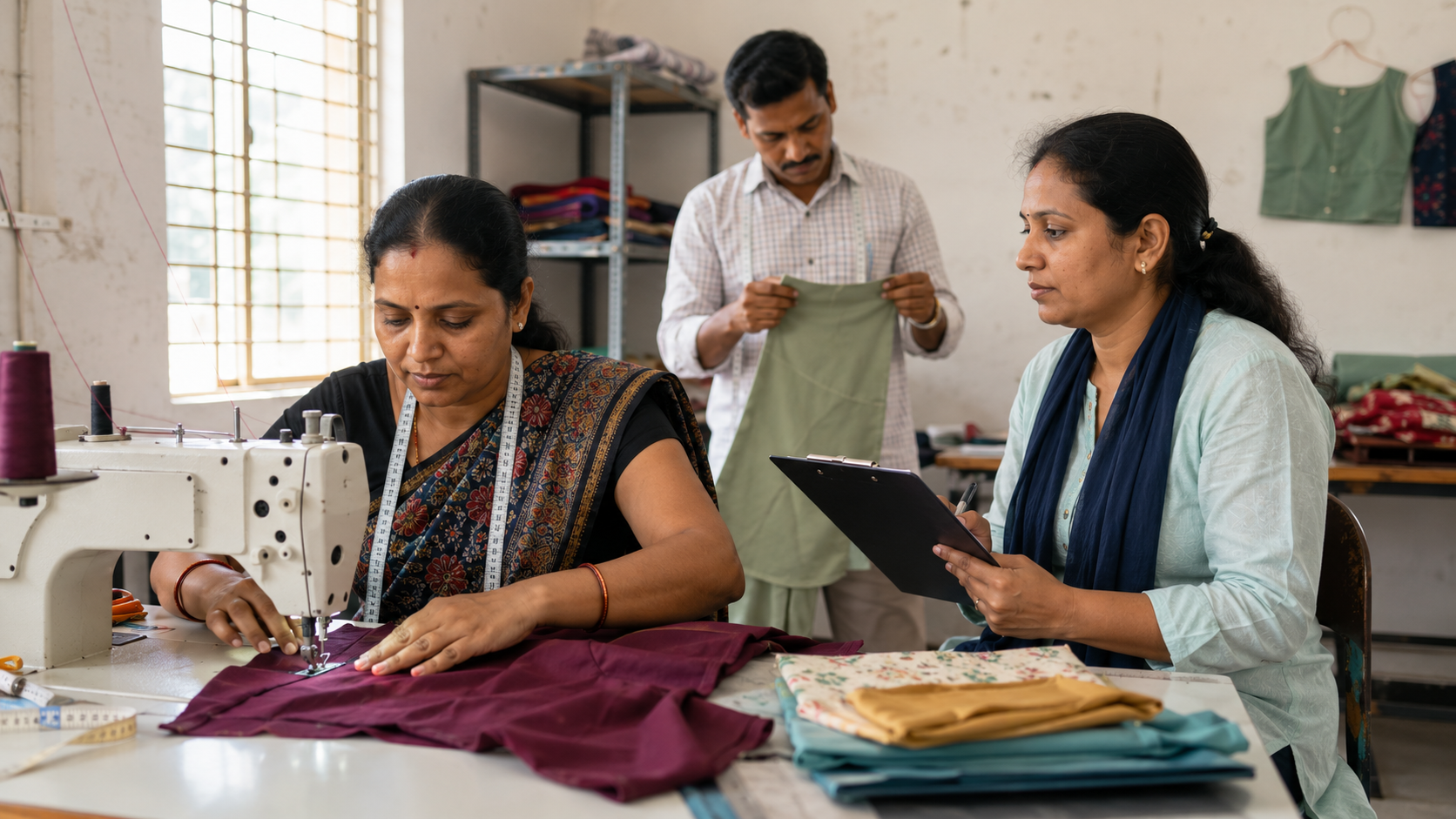
Many workers learn through employment, family trades or informal practice. They may have strong skills but no recognised certificate.
Recognition of Prior Learning, or RPL, assesses that existing competence. It may also identify areas where the worker needs a short bridge course or further practice.
Consider an experienced sewing-machine operator who learned on the job. RPL should not ask that worker to start from zero. It should test current ability against the required outcomes.
6. Polytechnics, Colleges and Industry Programs
Polytechnics, colleges, universities, companies and private vocational institutes also offer certificates, diplomas and occupational programs.
Some qualifications support entry into work. Others allow further education or specialise an existing worker in a new tool, process or sector.
The course name alone does not prove quality. Learners should check who awards the qualification, what recognition applies and how much supervised practice is included.
How India’s Vocational Education System Fits Together
Several bodies shape standards, programs and certification. Their roles can be confusing when a learner or institute sees only a long list of acronyms.
The National Skills Qualifications Framework is especially important. It focuses on what a learner knows and can do, not only on time spent in class.
A vocational training institute may work with an Awarding Body for an NSQF-aligned qualification. It may also run employer-led courses outside that arrangement.
Institute leaders should confirm the correct recognition route for each qualification. Roombr’s NCVET guide explains recognition requirements for skill development institutes in more detail.
What Makes a Vocational Program Effective?
Machines, course books, and certificates do not create competence on their own. A strong program connects each part of delivery with a clear workplace outcome.
1. Begin With Real Job Requirements
Institutes should speak with employers and study local work opportunities. They need to know which tasks, tools and behaviours the occupation requires now.
2. Write Outcomes That Can Be Observed
“Understand motor systems” is vague. “Identify a fault, choose the correct test and explain the result” can be taught and assessed.
3. Protect Enough Time for Practice
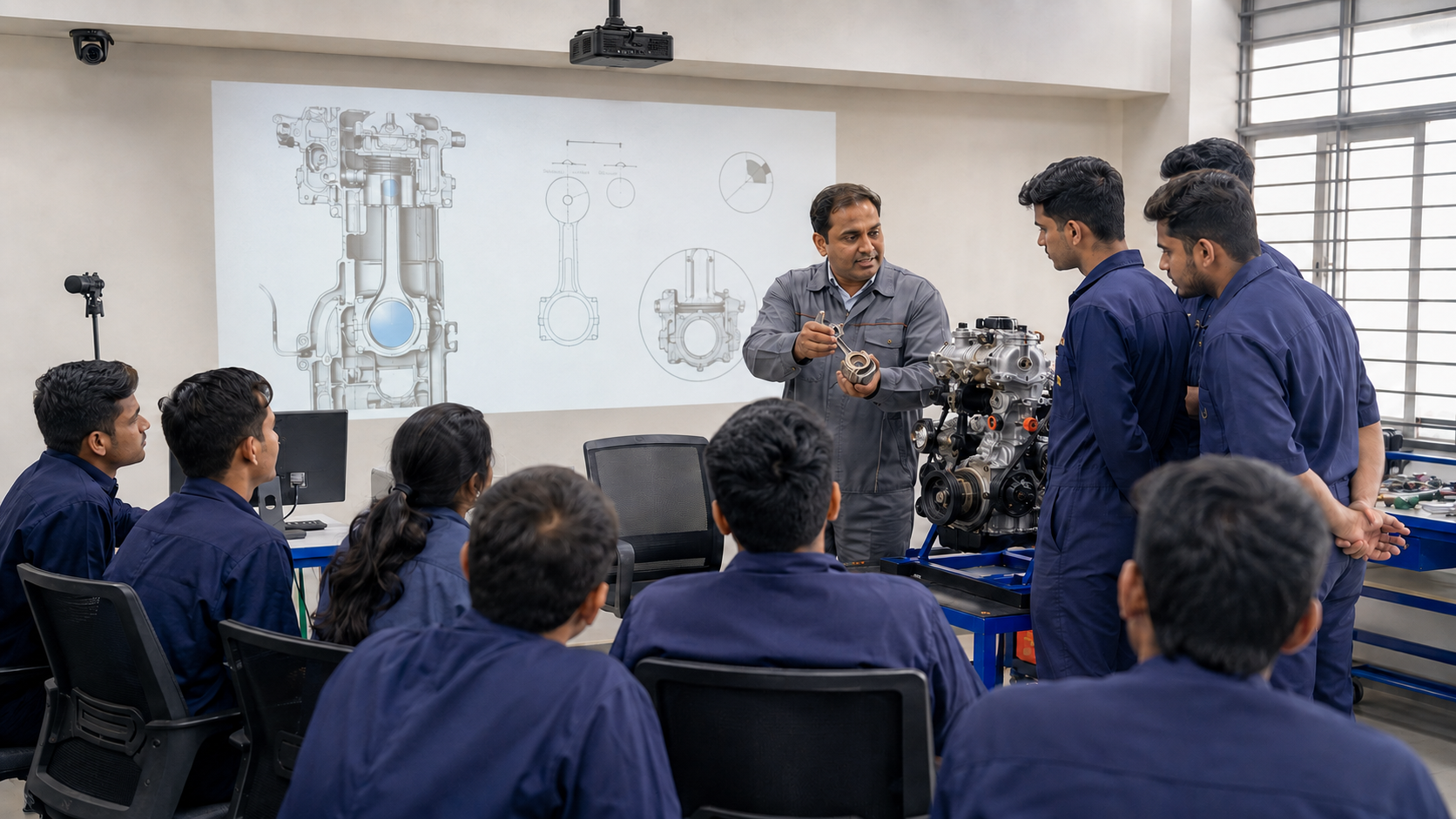
Watching the instructor is not the same as performing the task. Every learner needs repeated practice, observation and correction.
A simple capacity check can reveal a weak plan. If 30 learners share five practice stations, each station serves six learners. The timetable must give every person enough hands-on time.
4. Prepare Trainers as Technology Changes
Trade knowledge can become dated. Trainers need exposure to new equipment, software, safety standards and teaching methods before the revised course begins.
5. Link Theory, Demonstration and Action
A useful teaching sequence is short: explain the principle, show the process, let learners practise and give feedback at once.
For an electric-vehicle service lesson, the instructor might first explain battery isolation. Learners then watch the safe sequence, practise it and complete an observed safety check.
6. Assess Throughout the Course
Small practical checks reveal gaps before the final assessment. Projects, demonstrations, oral questions and observed tasks can each test a different part of competence.
Show the Next Step
A credible program explains what follows certification. That may be employment, apprenticeship, self-employment or a higher qualification.
Key Challenges of Vocational Education in India
India’s skill-training system has grown, but scale does not guarantee consistent outcomes.
1. Vocational Routes Still Face a Perception Problem
Some families see them as a second choice after academic education. This view ignores the judgement, precision and responsibility required in skilled occupations.
Clear progression routes can help. Learners need to see how a certificate can lead to work, further study or a higher occupational level.
2. Quality Varies Among Providers
The same course title can hide major differences in trainers, facilities and practical time. Recognition should be checked, but it is not the only quality test.
3. Curricula Can Fall Behind Industry
Employers may adopt new software or machinery before training materials change. Regular industry review is needed to keep vocational training programs useful.
4. Trainers Need Stronger Support
A skilled worker is not automatically an effective teacher. Trainers need help with demonstration, feedback, assessment and inclusive teaching.
5. Access Remains Uneven
Location, language, disability, cost and family responsibilities can limit participation. Flexible scheduling and accessible resources help, but practical quality must remain intact.
The Future of Vocational Education in India
The next stage of skill-based learning will depend on stronger links among schools, training institutes, higher education and employers.
Several shifts are already visible:
- Skill exposure is entering mainstream school education.
- Apprenticeship is connecting academic learning with industry experience.
- AI, robotics, semiconductors, sustainable energy and green skills are entering training programs.
- Credit frameworks are creating more flexible learning and progression routes.
- Industry partners are taking a larger role in curriculum and infrastructure.
PM-SETU shows the direction. The ₹60,000 crore scheme plans to upgrade 1,000 government ITIs through 200 hubs and 800 spokes. It includes modern labs, digital content and courses aligned with industry needs.
The scheme also includes smart classrooms, but the screen is not the main story. The larger change is an industry-led training system built around local job demand and current practice. See the official PM-SETU details.
Where Digital Learning Supports Practical Training
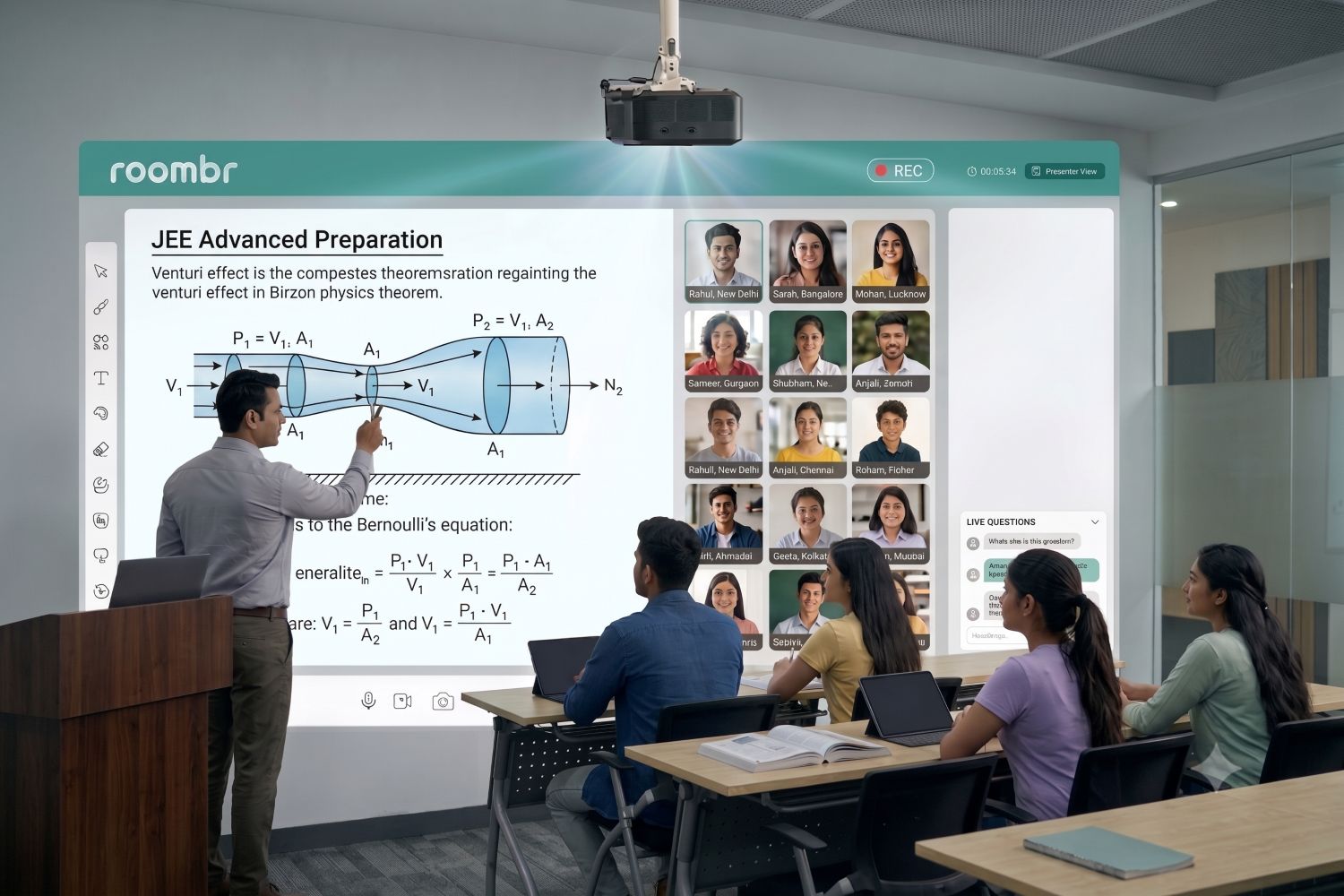
Digital resources can make a process easier to see, repeat, and discuss. They can also connect an external expert or support a quick knowledge check.
They cannot prove that a learner can operate a machine, complete a repair, or perform a safety-critical task. Vocational training still requires supervised practice.
For the technology decision itself, explore smart classrooms for training centres
Checklist for Choosing or Planning a Vocational Program
Before selecting or launching a program, check:
- Recognition: Who awards the qualification, and what approval applies?
- Job Relevance: Which occupation and workplace tasks shape the curriculum?
- Practical Facilities: Are the tools, software and safety provisions suitable?
- Trainer Capability: Do trainers understand both the occupation and teaching?
- Practice Time: Will every learner perform the required tasks?
- Assessment: Are practical outcomes checked throughout the course?
- Industry Exposure: Is there an apprenticeship, project or workplace connection?
- Progression: What can the learner do after certification?
A prospectus may answer the first question. A visit to the workshop often answers the next five.
Frequently Asked Questions
1. What is vocational education in simple words?
This learning route teaches the knowledge and practical skills needed for an occupation. It combines explanation, demonstration, supervised practice and assessment.
2. What is the difference between vocational education and vocational training?
Vocational education is the broader occupational learning pathway. It may include theory, practical work, qualifications and progression. Vocational training usually focuses more directly on developing competence for a particular skill or job role.
3. What are the main vocational education pathways in India?
The main routes include school skill subjects, ITI courses and PMKVY short-term training. They also include apprenticeships, RPL, polytechnic diplomas and industry programs.
4. Is an ITI part of vocational education?
Yes. Industrial Training Institutes are a major part of India’s vocational system. They provide trade-oriented training under the Craftsmen Training Scheme through government and private institutes.
5. Can vocational training be completed online?
Some theory, demonstrations and assessments can be delivered online. However, occupations involving tools, equipment or physical procedures still require supervised practical work in a suitable setting.
Building Learning That Leads Somewhere
Good occupational learning does not end with attendance or a certificate. It enables a learner to perform useful work, explain the process and improve with experience.
India already has several routes for doing this. The priority now is to connect them with current curricula, capable trainers, fair assessment and credible progression.
Technology has a supporting role. Roombr combines interactive projection, computing, cameras, audio and recording in one teaching system. It can help institutes explain and review practical concepts without replacing the workshop.
Explore Roombr’s digital classroom hardware for skill and training institutes.

Foziya Abuwala
Share
Step Into the future of
Education with Roombr