
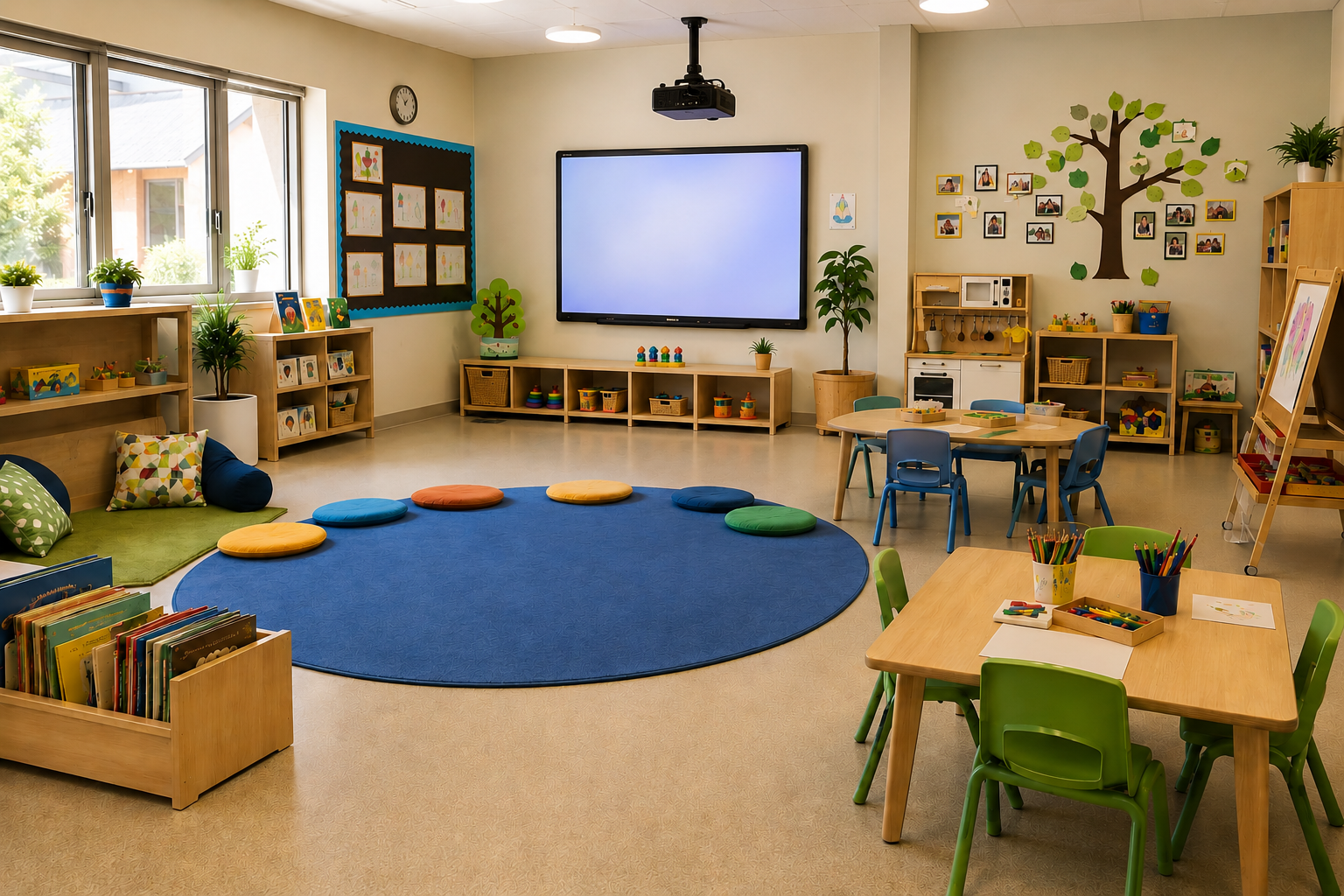
It is 7:45 AM. The paint has dried, the furniture has arrived, and in a few hours a room full of three-year-olds will walk in for the first time. This is the moment every nursery classroom setup comes down to: does the space actually work for a child?
Sometimes, layout decisions are made based on what fits the budget rather than what fits a child's day. That is a missed opportunity. The room itself is a teaching tool, and a thoughtful layout does real work before a single lesson begins.
This guide walks through what a well-planned early years room needs, zone by zone.
Why Nursery Classroom Layout Matters
Where a child sits, plays, and moves through the day leaves a mark on their behavior and attention span.
Studies on early learning spaces confirm this connection. A study covered by the Association for Psychological Science found that children in classrooms with heavily decorated, visually busy walls spent more time off-task and showed smaller learning gains than children in simpler, calmer rooms.
The takeaway is simple. A cluttered room competes for a child's attention. A well-organized one supports it.
The Core Learning Zones Every Nursery Classroom Needs
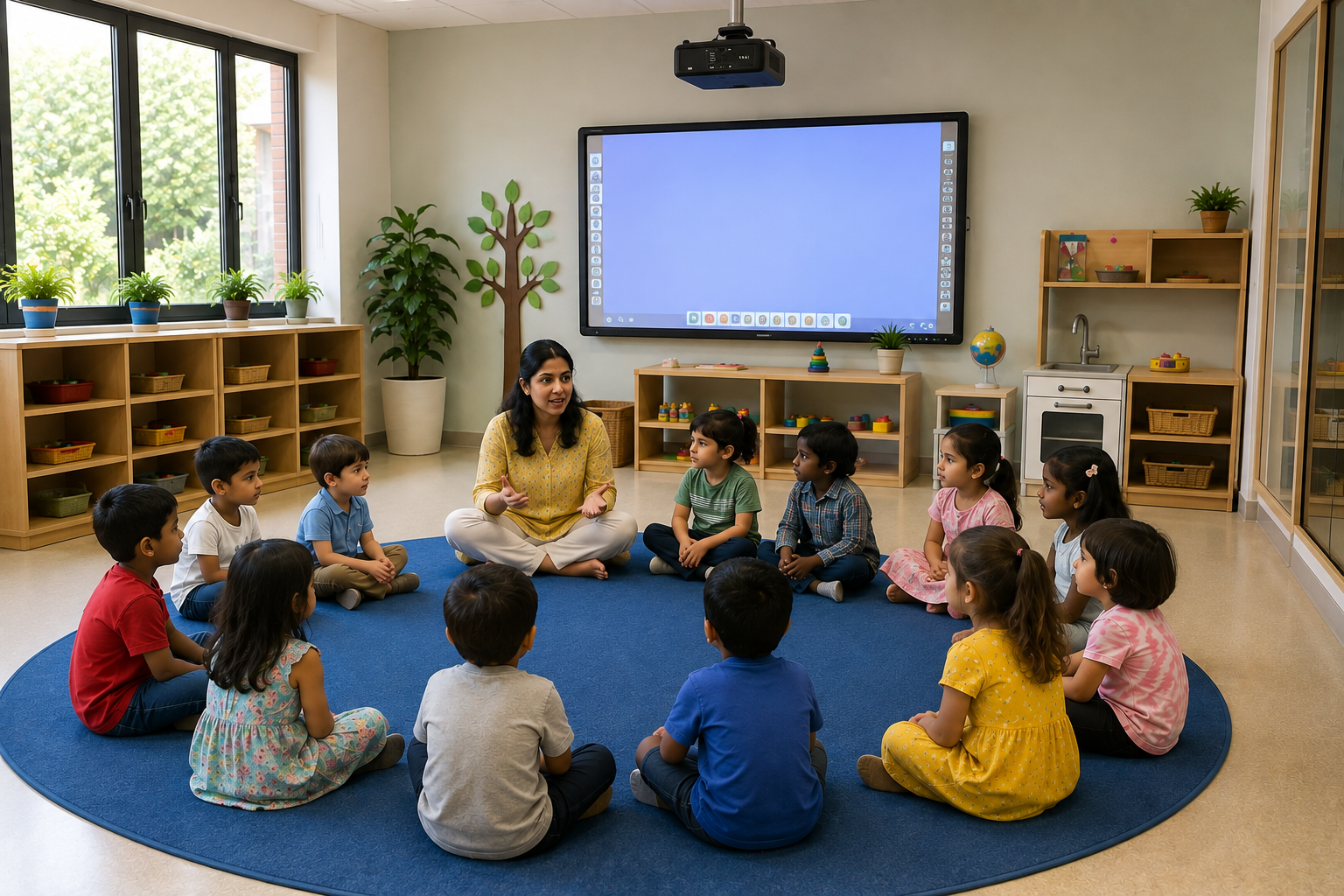
Most early years experts agree on a similar set of zones. Each one serves a different part of a child's day.
1. Circle Time and Group Area
This is the anchor of the whole room. It is where the day starts, songs happen, and the group comes together.
Keep this space simple:
- Open floor space with soft mats or a rug
- A clear line of sight to every child from the teacher's position
- No furniture blocking movement in or out
Circle time also doubles as a transition tool. A consistent spot for it helps children settle faster between activities.
2. Reading Corner
A reading corner works best when it feels like a retreat, not another activity station.
- Low, open shelving so children can choose books themselves
- Soft seating like cushions or a small rug
- Placement away from high-traffic zones to keep noise down
3. Art and Messy Play Corner
This is usually the busiest, loudest zone in the room, and it needs to be planned for that.
- Washable tables and floor coverings
- Storage bins at child height for easy cleanup
- Proximity to a sink or water source, if the room allows it
4. Sensory and Dramatic Play Space
Sensory and role-play areas build language, imagination, and social skills at the same time.
- Rotate materials every few weeks to keep interest high
- Include props for pretend play, like a small kitchen set or dress-up corner
- Use textured materials such as sand, dough, or fabric for tactile exploration
Furniture and Safety Basics for a Nursery Classroom
Good zones only work if the furniture and safety choices support them. A few basics make a real difference:
None of this needs to be expensive. It needs to be deliberate.
Where Technology Fits Into the Room
Technology should support a zone, not dominate the room. A wall-mounted, child-height interactive display works well positioned near the circle time area, since it supports whole-group songs and activities without eating into floor space.
If you are evaluating interactive learning and a play device, from multi-touch capability to audio quality, that is a separate decision with its own checklist. Our guide on smart classroom features for kindergarten covers that in depth.
Key Takeaway
A good setup is never really finished. The best layouts stay flexible, shifting as the group grows and the term progresses.
Start with the four core zones, get the safety basics right, and let the room do part of the teaching for you. That is what separates a classroom that merely holds children from one that genuinely supports them.
Frequently Asked Questions
1. How much space does a nursery classroom need per child?
Most early years guidelines recommend at least 35 square feet of usable indoor space per child. This allows enough room for zones, movement, and safe supervision.
2. What is the ideal number of learning zones for an early years room?
Four to five zones work well for most classrooms. This typically includes circle time, reading, art, and sensory or dramatic play, without overcrowding the room.
3. How often should the layout be changed?
Minor changes, like rotating sensory materials, work well every two to three weeks. A full layout review once a term is usually enough to keep the space relevant.
4. Does classroom layout affect child behavior?
Yes. A cluttered or poorly organized nursery classroom can increase distraction and off-task behavior, while a calm, well-zoned room supports focus and independence.
Ready to bring your nursery classroom to life? See how Roombr for Kindergarten fits naturally into your circle time zone, built for early learners from the ground up.

Foziya Abuwala
Share
Step Into the future of
Education with Roombr