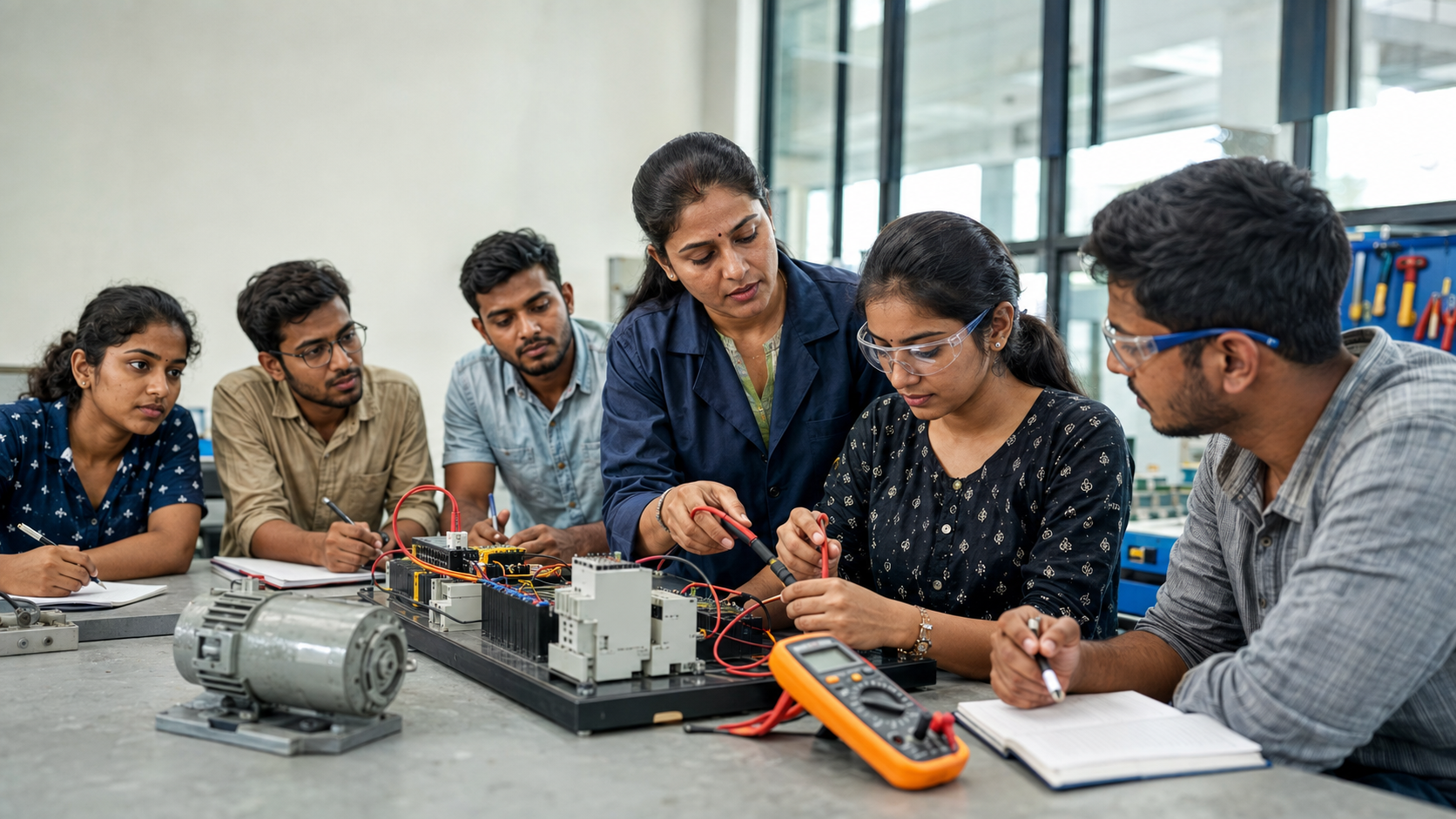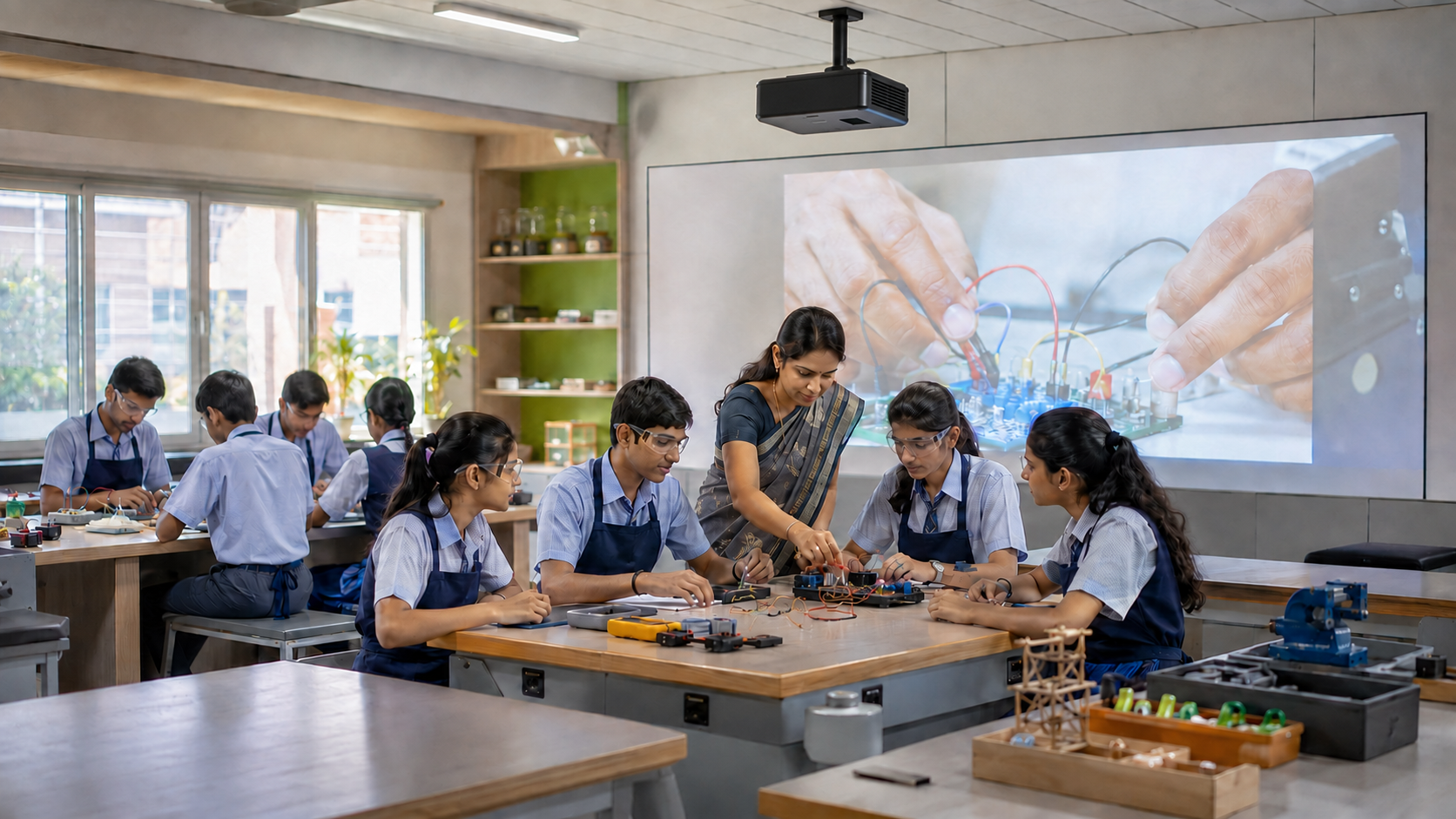

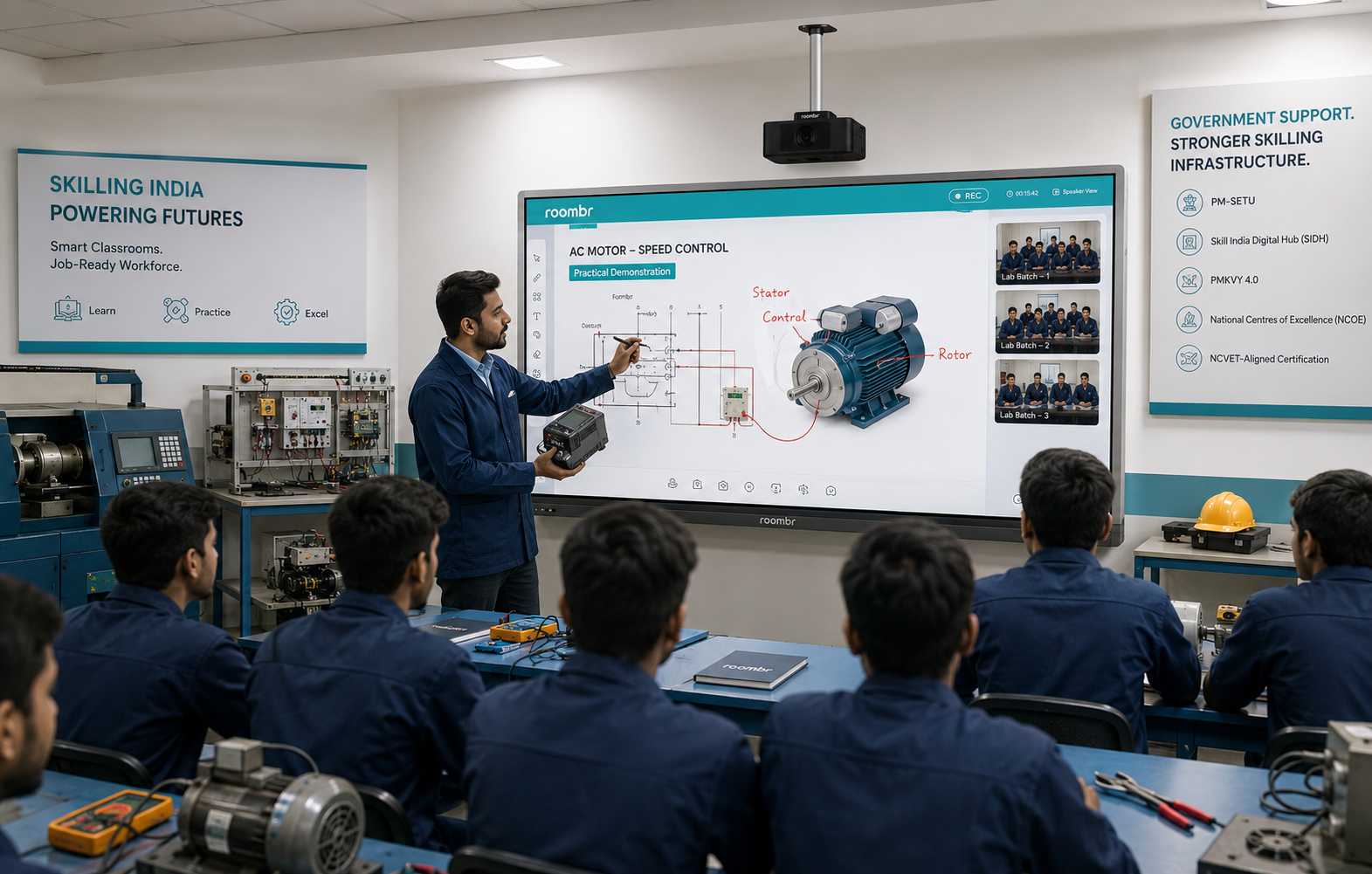
India just made its largest-ever investment in skill training infrastructure, and technical training centers are where much of it is landing.
The Ministry of Skill Development and Entrepreneurship's FY2026–27 budget touched ₹9,885.80 crore, its highest outlay to date. A large share of that is moving through PM-SETU, a scheme built specifically to fast-track infrastructure upgrades across ITIs and technical training centers across the country.
That kind of money doesn't sit still. It shows up as new machinery, rebuilt labs, and increasingly, rebuilt classrooms.
What's Behind the Technical Training Center Push
This isn't happening in isolation. Beyond the budget itself, two structural changes explain why classrooms specifically are getting attention.
The Skill India Digital Hub has pulled what used to be scattered schemes, including PMKVY 4.0, into a single connected system. Government skill development is no longer just about enrolment numbers. It's about training delivery that can be tracked, verified, and improved center by center.
That kind of tracking only works if the classroom itself can produce the data and evidence to support it, which is pushing technical training institutes and skill development institutes to reconsider equipment they've relied on for years.
Put together, these factors explain why vocational training and education programs are under more scrutiny than ever. Institutions know that outdated classrooms won't hold up against this level of investment and expectation.
What This Shift Demands From a Training Environment
A funding push doesn't automatically fix outdated classrooms. It raises the bar for what a modern education environment needs to do. For technical training institutes, three needs stand out.
Multi-Batch and Shift-Based Scheduling
Most TTCs don't run one class at a time. They run overlapping trade batches across shifts, often in the same room. A classroom setup built for a single continuous class doesn't handle quick handoffs well.
What works better is classroom technology that supports fast session resets. Instructors should be able to close one batch's session, wipe the board digitally, and start the next group without losing ten minutes to manual setup.
Trade-Specific Hands-On Demo Capture
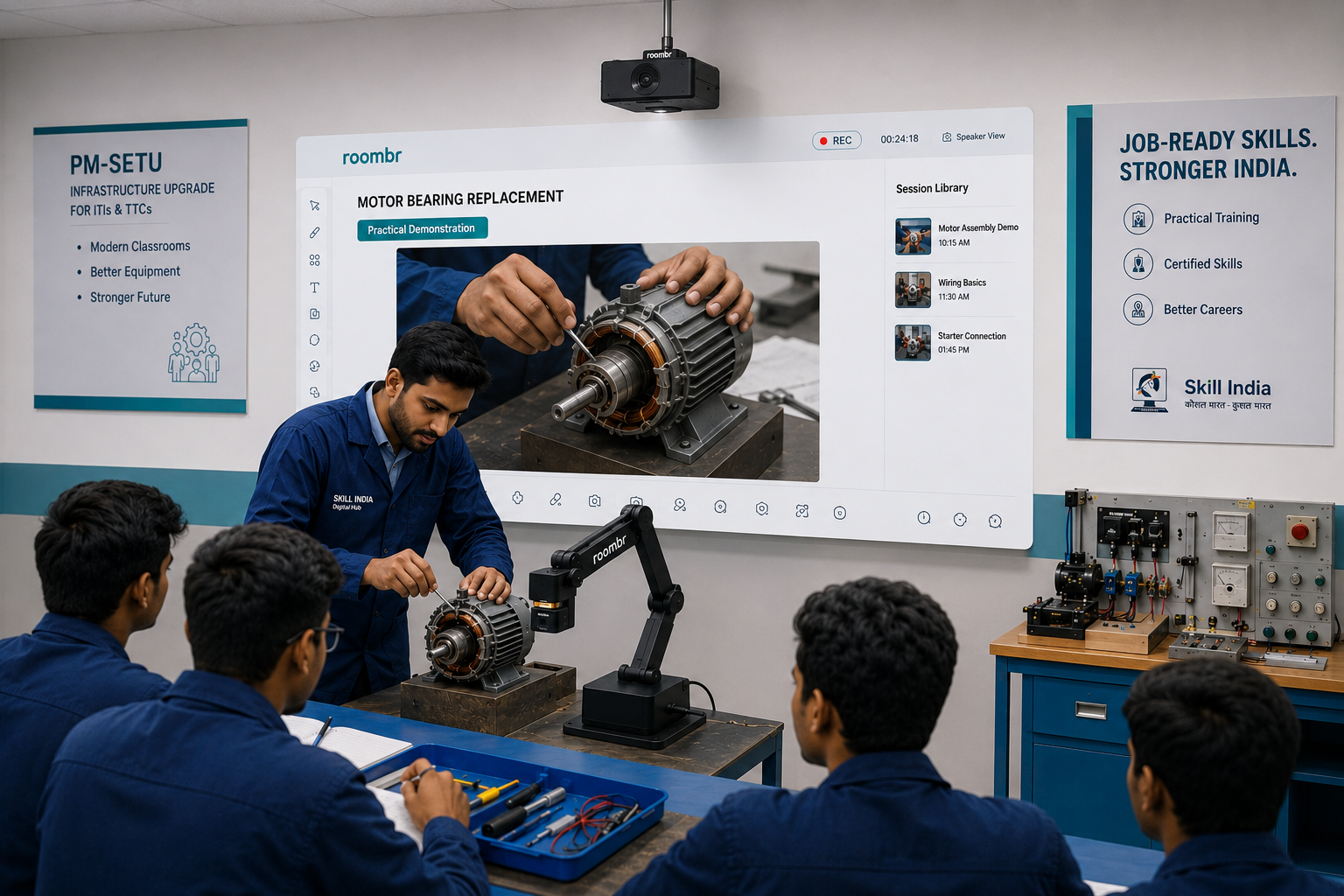
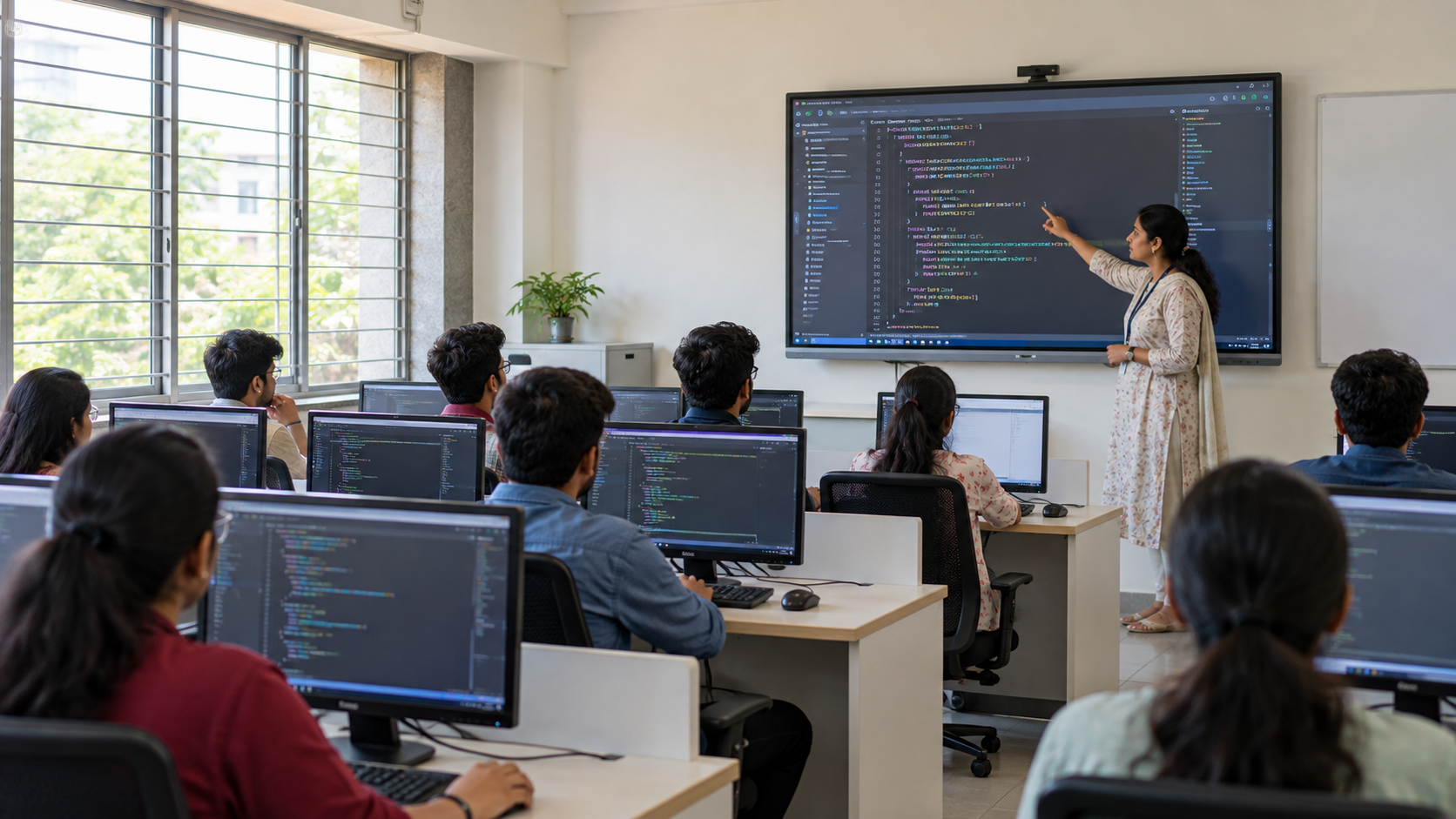
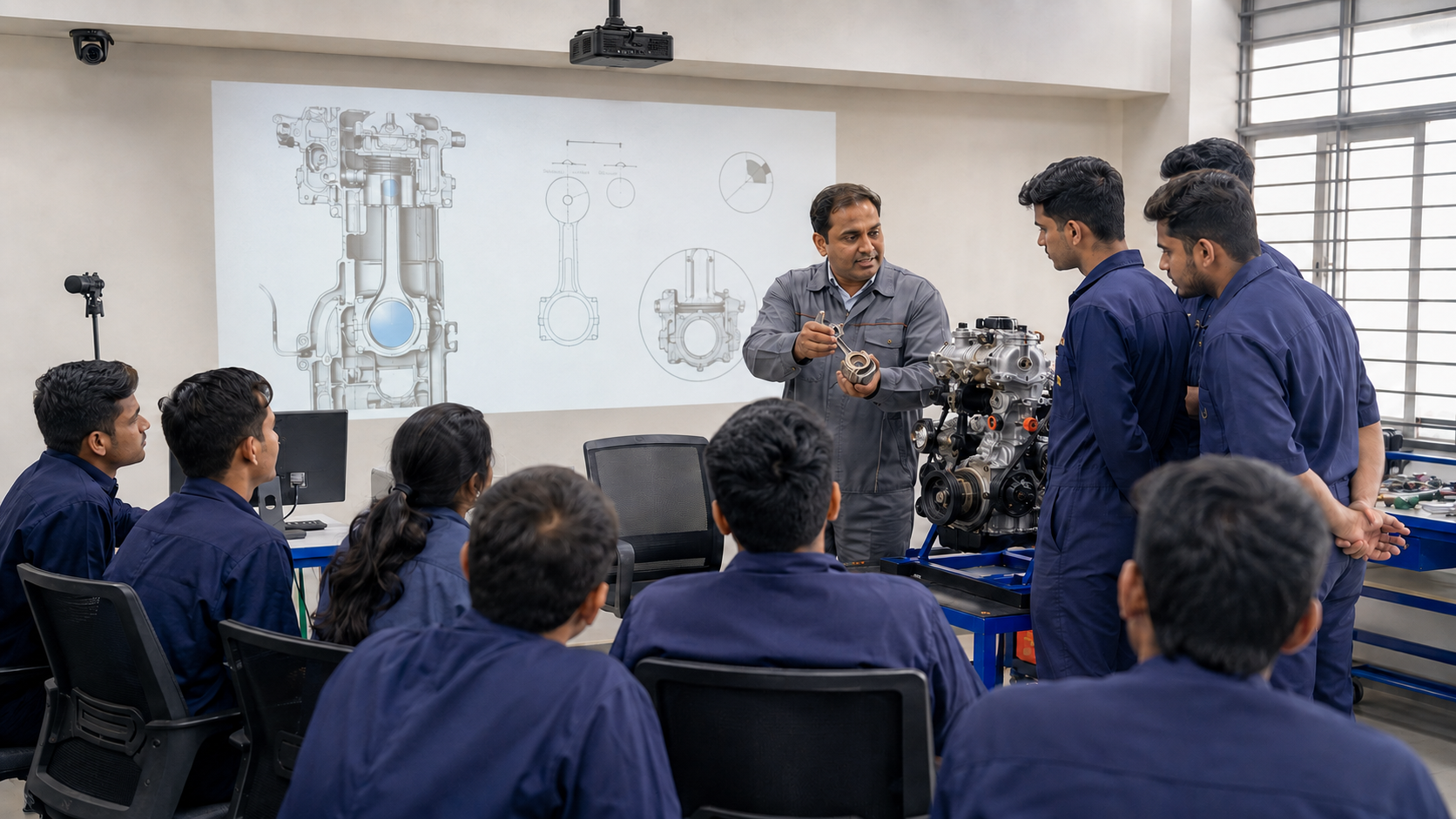
Recording a coding walkthrough and recording a welding demonstration are not the same task. One needs clean screen capture. The other needs a camera angle that clearly shows hand movement, tool positioning, and fine physical detail.
Classroom technology built for general lecture capture often struggles here. Trade-based technical training centers need setups where instructors can zoom in on a physical process and save that footage for students to revisit before their own practical assessment.
Reliability in Lower-Bandwidth, Semi-Urban centers
A large share of India's skill development institutes sit outside metro cities, often in semi-urban or rural regions where internet connectivity isn't consistent. This is a real, often overlooked constraint.
Any classroom technology adopted here needs to function reliably on modest bandwidth, store recordings locally when needed, and sync later rather than depend entirely on a live connection.
What to Look for in a Training Room Setup
If your institution is planning a training room setup upgrade, use this as a quick filter before comparing vendors.
Keep this list practical. A feature-heavy system that instructors avoid using isn't a solution; it's a bigger problem with a nicer screen.
Getting Started
The direction is clear. India's technical training centers are being pushed and funded toward better infrastructure, and classroom technology is a core part of that shift.
Roombr's digital classroom solutions are built with these constraints in mind, from multi-batch flexibility to reliable performance in lower-connectivity regions.
If you're further along and ready to plan a full classroom upgrade, our guide on building a digital smart classroom for skill training walks through the complete setup process step by step.
Frequently Asked Questions
1. What is a technical training center in India?
A technical training center is an institution that delivers hands-on, trade-specific skill training, often aligned with government schemes like PMKVY or run under ITI and NCVET-linked frameworks, preparing students for direct industry employment.
2. How is the government supporting technical training center upgrades?
Programs like PM-SETU and the Skill India Digital Hub are directing funding and infrastructure support toward modernizing ITIs and technical training centers, backed by MSDE's record FY2026–27 budget allocation.
3. What's the difference between a technical training center and a vocational institute?
Technical training centers typically focus on specific trade and industry-aligned skills, often tied to government certification frameworks. On the other hand, vocational institutes can cover a broader range of career-oriented, non-degree programs.
Ready to Build a Classroom That Matches the Investment?
India's technical training centers are getting more funding and more scrutiny than ever. The institutions that get ahead now are the ones rethinking their classrooms alongside their curriculum, not after.
Roombr's digital classroom solutions are built for exactly this shift: fast batch handoffs, close-up trade demo capture, and reliable performance even in lower-bandwidth centers.
See how Roombr fits into a modern training environment.

Foziya Abuwala
Share
Step Into the future of
Education with Roombr