
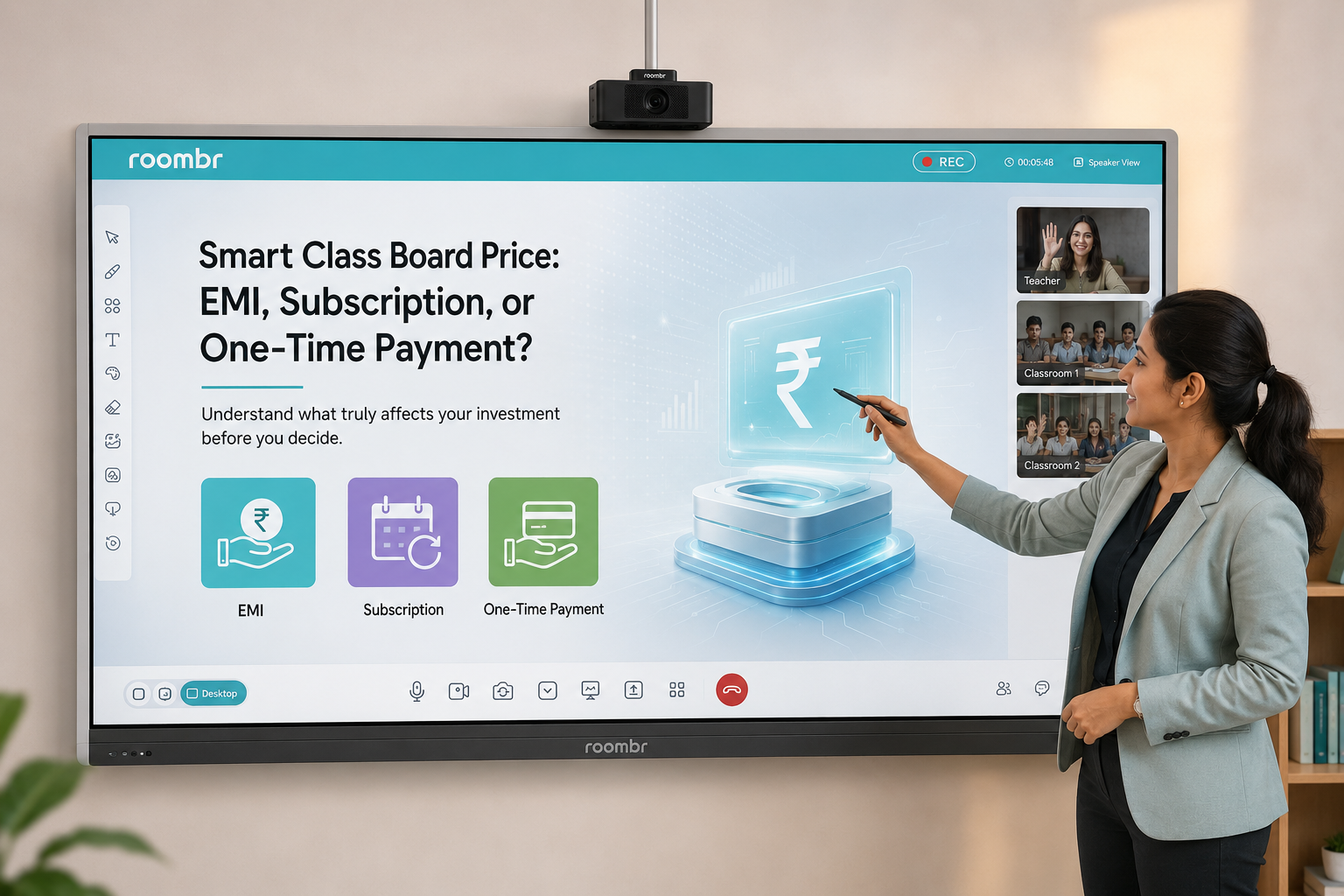
As digital learning becomes a strategic priority for institutions in India, educational leaders are paying closer attention to technology investments than ever before. Yet one question continues to surface during almost every procurement discussion: What is the real smart class board price?
The challenge is that classroom technology costs are no longer limited to hardware. Today's digital teaching environments often combine displays, software platforms, teacher tools, support services, and ongoing updates into a broader ecosystem. As a result, the amount a school ultimately spends can look very different from the price shown on a product brochure.
Understanding what influences cost is essential for making informed purchasing decisions. Schools and colleges that evaluate ownership costs, software requirements, support structures, and payment options alongside hardware specifications are often better positioned to maximize educational impact and budget efficiency.
This guide breaks down the key factors that influence smart class board pricing. It helps decision makers evaluate which purchasing approach delivers the best value for their classrooms and budgets.
Why Schools Often Misjudge Smart Class Board Price
One of the most common procurement mistakes is assuming that every quotation includes the same things.
In practice, two vendors may offer similar-looking classroom solutions while including very different levels of functionality and support.
A school may compare one classroom smart board price against another and choose the cheaper option. Months later, it discovers that software licenses, onboarding support, training, or future updates were never included in the original proposal.
Suddenly, the price comparison no longer looks so simple.
What May Be Included in a Smart Classroom Investment?
Depending on the provider, a digital classroom solution may include:
- Interactive classroom hardware
- Teaching and collaboration software
- Assessment and analytics tools
- AI-powered classroom features
- Installation and setup
- Teacher training
- Technical support
- Software updates
- Warranty coverage
This is why schools should compare overall value, not just hardware specifications.
One-Time Purchase: Ownership From Day One
A one-time purchase remains one of the most familiar procurement models for institutions.
Under this approach, the school pays the full cost of a smart board for classroom deployment upfront and immediately owns the hardware.
For schools and colleges with approved capital budgets, ownership can be appealing because there are no monthly payment commitments.
When Does a One-Time Purchase Make Sense?
This approach often works well for schools that:
- Have allocated capital expenditure funds
- Prefer asset ownership
- Are upgrading a limited number of classrooms
- Have internal resources to manage technology assets
The Costs Schools Sometimes Overlook
The initial purchase is only one part of the financial picture.
Schools should also plan for:
- Annual maintenance contracts (AMC)
- Software renewals
- Hardware upgrades
- Out-of-warranty repairs
- Future technology refresh cycles
These costs are not necessarily a disadvantage. The key is understanding them before making a purchasing decision.
Smart Class Board on EMI: Balancing Innovation and Budget
Not every school wants to make a large upfront investment.
This is where a smart class board on EMI can be valuable.
Instead of paying the full amount at once, schools can spread costs across manageable installments, making digital transformation easier to align with annual budgets.
Why Schools Choose EMI
EMI options can help schools:
- Preserve working capital
- Reduce upfront budget pressure
- Upgrade multiple classrooms faster
- Avoid delaying technology adoption
This is particularly useful when schools are planning a multi-classroom rollout rather than upgrading a single room.
The Questions Smart Buyers Ask
Before selecting an EMI option, decision-makers should ask:
- What is included in the financing structure?
- Is there a down payment requirement?
- Are support services included?
- Can additional classrooms be added later?
- What is the total repayment obligation?
The answers often matter more than the monthly installment amount itself.
Subscription Costs: The Often-Overlooked Part of Classroom Tech Budgets
When schools evaluate a digital teaching board price, hardware usually receives the most attention.
However, software increasingly plays a critical role in classroom effectiveness.
Teaching platforms, assessment tools, cloud-based collaboration features, content libraries, and AI-powered learning applications often operate through subscription models.
Not Every Cost Is a Hardware Cost
Depending on the solution, institutions may also need to budget for:
- Teaching software
- Content platforms
- Assessment systems
- Cloud storage
- Collaboration tools
- Analytics dashboards
Understanding these recurring costs helps schools create more accurate long-term budgets.
Why Subscription Costs Should Be Evaluated Separately
The goal is not to determine whether subscriptions are better or worse than ownership.
The goal is to understand:
- What is included
- What is recurring
- How costs may evolve over time
Schools that separate hardware costs from software costs are often able to make more informed procurement decisions.
Hardware-Only vs Bundled Smart Classroom Packages
Another factor that significantly affects smart class board price is the structure of the solution itself.
Many schools assume they need the same package as every other institution.
In reality, every school starts from a different point.
Not Every School Needs the Same Solution
Consider these scenarios:
A school that already has a strong digital ecosystem may not need a fully bundled solution.
Meanwhile, a school beginning its digital transformation journey may benefit from a unified classroom platform that combines hardware and software under one implementation plan.
The best solution depends on educational goals, existing infrastructure, and long-term technology strategy—not simply the lowest quote.
The Most Expensive Smart Board Is the One Teachers Don't Use
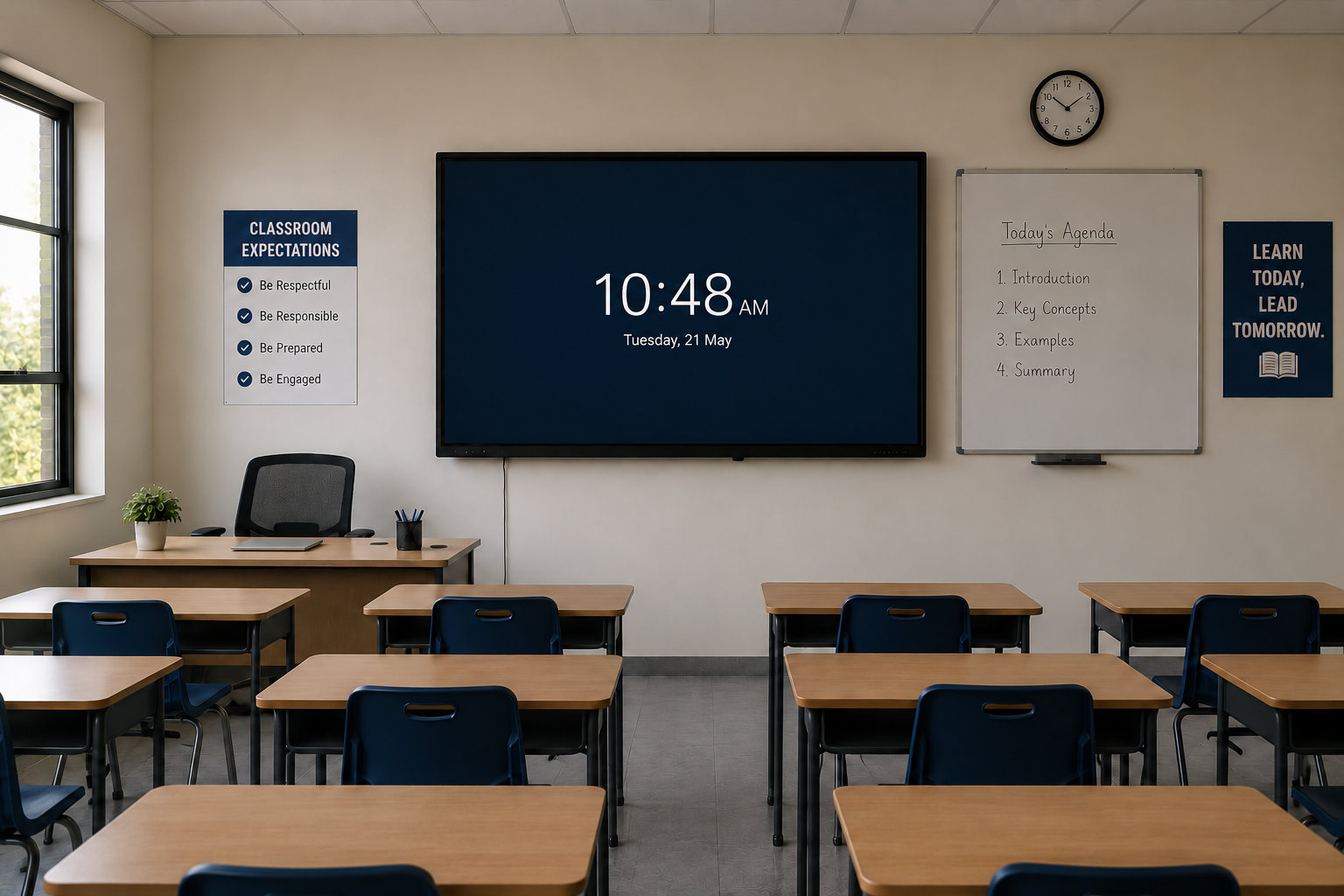
This may be the most important point in the entire purchasing process.
Schools and colleges often spend weeks comparing the classroom digital board price, but very little time evaluating how the technology will be used inside a classroom.
Technology adoption depends on teachers.
Not specifications.
Not brochures.
Not sales presentations.
A Common Procurement Mistake
One of the most common mistakes schools make is purchasing classroom technology based solely on demonstrations.
What looks impressive during a presentation may not fit seamlessly into daily teaching workflows.
This is especially true when teachers are not involved in the evaluation process.
Why Classroom Trials Matter
Before making a long-term commitment, schools should evaluate:
- Ease of use for teachers
- Student engagement levels
- Classroom workflow compatibility
- Technical requirements
- Training needs
A classroom trial often provides more valuable insights than a product demonstration because it reveals how the technology performs in a real teaching environment.
Flexibility Often Matters More Than Price
Institutions rarely fit into a single procurement model.
Some institutions prefer a one-time purchase because capital funds are already approved.
Others prefer EMI because it aligns better with annual budgeting cycles.
Some schools only need classroom hardware. Others require software tools. Many need an integrated solution that combines both.
This is why procurement flexibility is becoming increasingly important.
The ability to choose the right combination of hardware, software, financing, and implementation support often creates more value than focusing exclusively on the lowest price.
Questions to Ask Before Comparing Smart Class Board Prices
Before making a final decision, ask every vendor:
- What items and services are covered in the quoted price?
- Is the software included or sold separately?
- What support services are covered?
- Are software updates included?
- Can hardware and software be purchased independently?
- Are EMI options available?
- What maintenance responsibilities fall on the school?
- Is there an opportunity to test the solution before purchase?
The quality of these answers often reveals more than the quotation itself.
Key Insights
The true smart class board price goes far beyond hardware costs. Institutions must evaluate software ecosystems, support services, implementation requirements, training, and long-term ownership costs before making procurement decisions. A lower upfront price may appear attractive, but can result in higher total expenditure or reduced classroom effectiveness over time.
The most valuable investments are those that align with institutional learning goals, budget structures, and teacher readiness. Since every school has unique needs, comparing pricing models, EMI, subscription, and one-time purchase helps decision-makers understand the real cost of ownership. Ultimately, informed evaluation ensures better learning outcomes and sustainable digital transformation in classrooms.
Frequently Asked Questions
1. Is EMI better than a one-time purchase for schools?
It depends on the institution's financial priorities. A one-time purchase provides immediate ownership, while EMI can reduce upfront budget pressure and support faster classroom deployment.
2. What is usually included in a classroom smart board price?
The answer varies by provider. Some solutions include only hardware, while others may include software, training, support, implementation, and updates.
3. Why should institutions evaluate software costs separately?
Software often operates through recurring subscriptions. Understanding these costs separately helps schools create more accurate long-term budgets.
4. Should institutions test a smart classroom solution before purchasing?
Yes. Classroom trials help schools assess teacher adoption, usability, engagement, and implementation requirements before making a larger investment.
Explore the Right Smart Classroom Investment for Your School
Choosing the right procurement option is not just a financial decision but a strategic step toward improving classroom learning outcomes. Whether your institution is considering EMI, subscription-based software access, or a one-time purchase, the key is to align technology investment with teaching goals and budget cycles.
To help schools make the right choice, Roombr offers flexible deployment models designed to fit different institutional needs:
- One-time purchase option for institutions that prefer full ownership from day one
- EMI-based payment plans to ease upfront budget pressure and enable faster classroom upgrades
- Flexible software subscription models for schools and colleges that want scalable, continuously updated digital teaching tools
- Bundled hardware + software packages for a complete, ready-to-use smart classroom ecosystem
- Hardware-only solutions for institutions that already have existing software or digital infrastructure
Every school has unique infrastructure and adoption readiness. That is why hands-on evaluation matters. You can also request a guided walkthrough or demo to see how the solution performs in real classroom conditions.
Before finalizing any smart class board price, ensure teachers are part of the evaluation process. Their feedback often determines long-term success more than specifications or pricing models.
Start exploring options today for your institution.

Foziya Abuwala
Share
Step Into the future of
Education with Roombr