
Modern classrooms are changing fast across India. Yet somewhere between high-tech upgrades and actual student outcomes, many educators still struggle.
School management frequently hands teachers new tools without enough clarity on how they can improve daily teaching. Among recent investments, the standard smart board for classroom usage receives the most attention.
Let us separate fiction from facts and uncover what works for real-world educators.
Why Digital Classroom Infrastructure Often Fails
Across India, investment in digital classroom infrastructure has grown rapidly. Unfortunately, teaching outcomes have not always followed that same upward trend.
The tool itself is rarely the problem. The core issue lies in how schools implement it. Many institutions rush into an edtech investment without asking practical questions first.
Will this hardware fit into a teacher’s daily routine? Can it survive the harsh reality of a high-footfall smart class? Will it function properly with limited internet access?
Here is what usually goes wrong in schools:
- Management buys hardware that is incredibly difficult to maintain over time.
- Teachers receive patchy technical training or no support at all.
- Expensive equipment goes unused and becomes a white elephant within weeks.
These real-world failures lead to severe digital fatigue and wasted school budgets. More importantly, these bad experiences have created deep-rooted fears about educational technology as a whole.
Because early setups failed, administrators now believe that all interactive screens are a burden. Let us examine the biggest misconceptions holding schools back and separate the myths from the truth.
Top 5 Myths About Smart Boards for Classrooms
Many schools hesitate to upgrade their classrooms because of outdated information. We need to clear up the confusion around modern interactive touch displays.
1. The Usability Myth: Teachers Find New Tech Too Complicated
It is a common fear among administrators. The reality is that teachers do not resist technology itself. They simply resist bad technology.
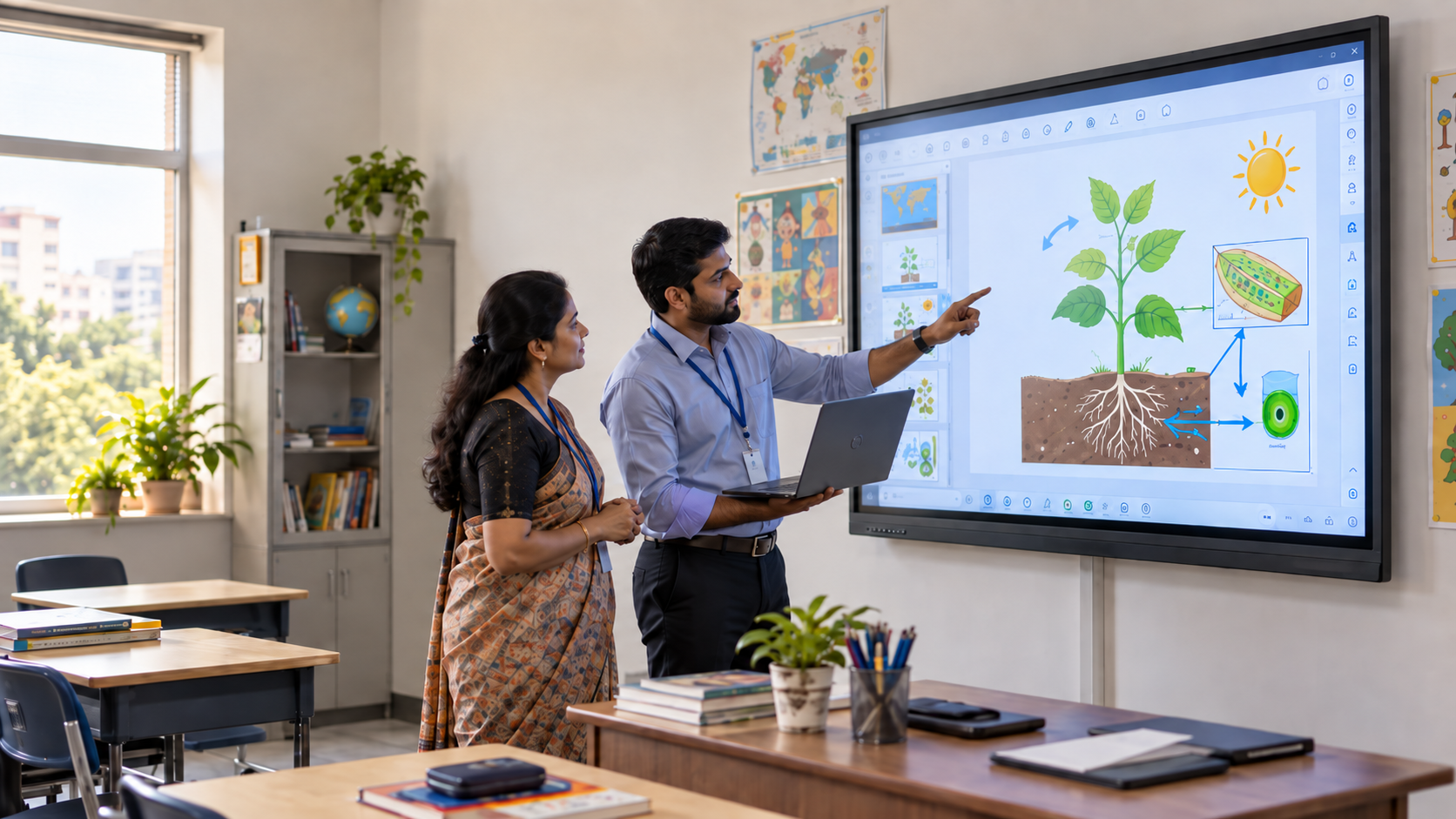
A modern digital smart board for a classroom must be intuitive. When educational tools mimic the simplicity of a smartphone, teachers use them eagerly. When an interactive flat panel (IFP) is clunky, educators abandon it instantly.
2. The Infrastructure Myth: Solutions Only Work in Elite Tier 1 Schools
This assumption used to be true, but it is outdated now. The best interactive board for classroom environments today is built specifically for local Indian conditions.
Classrooms in Tier 2 and Tier 3 cities deal with heavy dust, power fluctuations, and low connectivity. Modern NEP 2020-compliant tech functions reliably without continuous internet access.
3. The Engagement Myth: Digital Screens Only Distract Students
Screens certainly distract students when the learning material lacks engagement. Traditional chalkboards share the same problem.
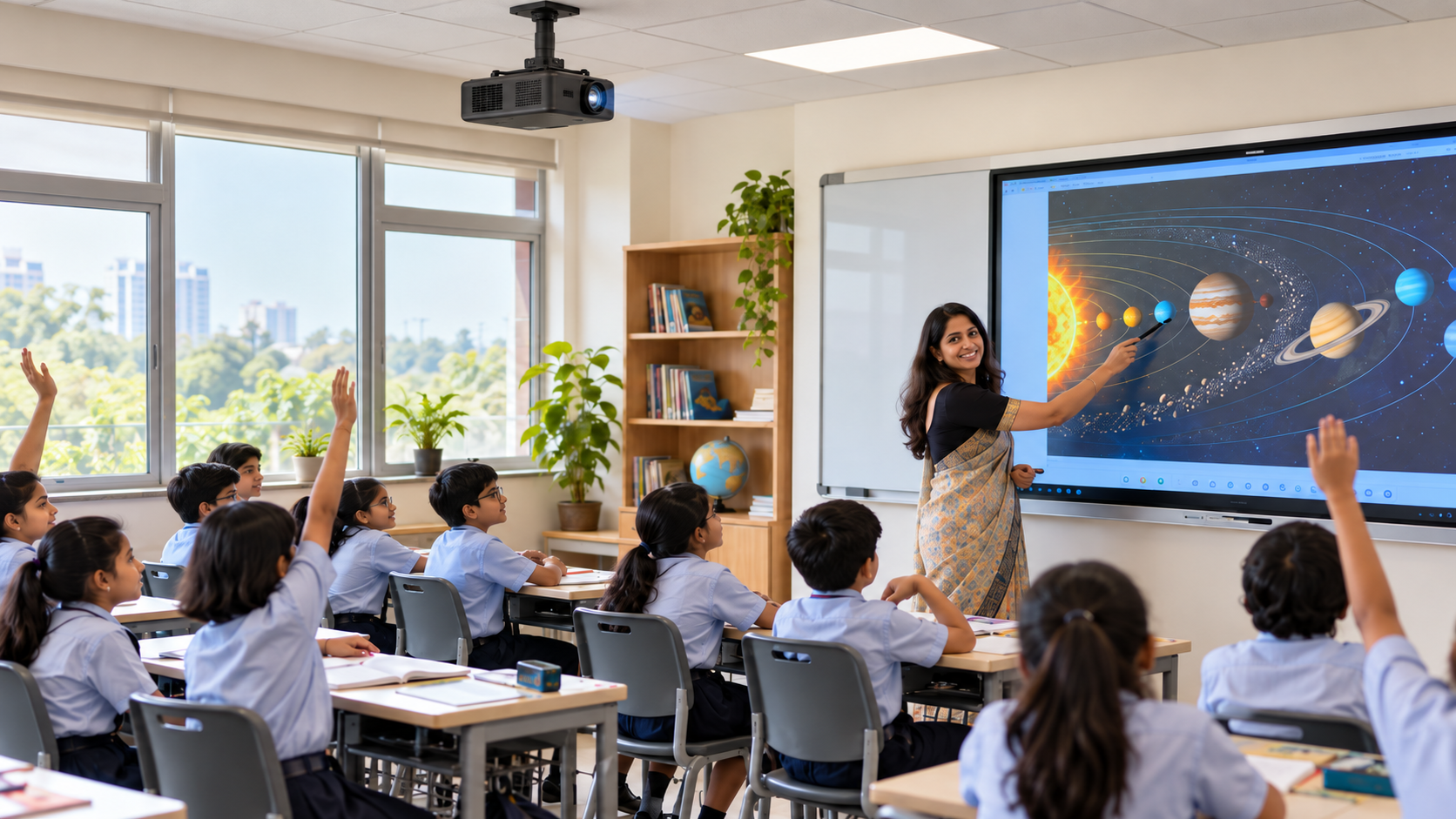
When used correctly, an interactive display for classroom teaching actually increases attention spans. These systems allow for group problem-solving, live annotations, and instant quizzes.
4. The Price Myth: The Upfront Sticker Price Tells the Whole Story
Administrators often evaluate the cost of smart boards for classrooms by looking only at the initial invoice. A seemingly cheap interactive panel price for a classroom frequently hides frustrating long-term expenses. Schools often end up paying extra for external webcams, mandatory software licenses, and constant IT repairs.
Conversely, a premium investment makes perfect sense when it delivers a complete educational ecosystem. The best digital solutions justify their cost through dedicated after-sales partnerships, minimal maintenance headaches, and built-in features that improve teaching. True value comes from long-term reliability, not just finding the cheapest piece of hardware.
5. The Interactivity Myth: Every Digital Screen is Fully Touch Enabled
Many digital displays do not let you write or interact with them at all. Some brands sell what are essentially glorified television screens.
A true interactive smart board for classroom use offers fluid writing with a stylus or finger. It allows multiple students to collaborate on the display simultaneously.
How to Select the Right Educational Technology
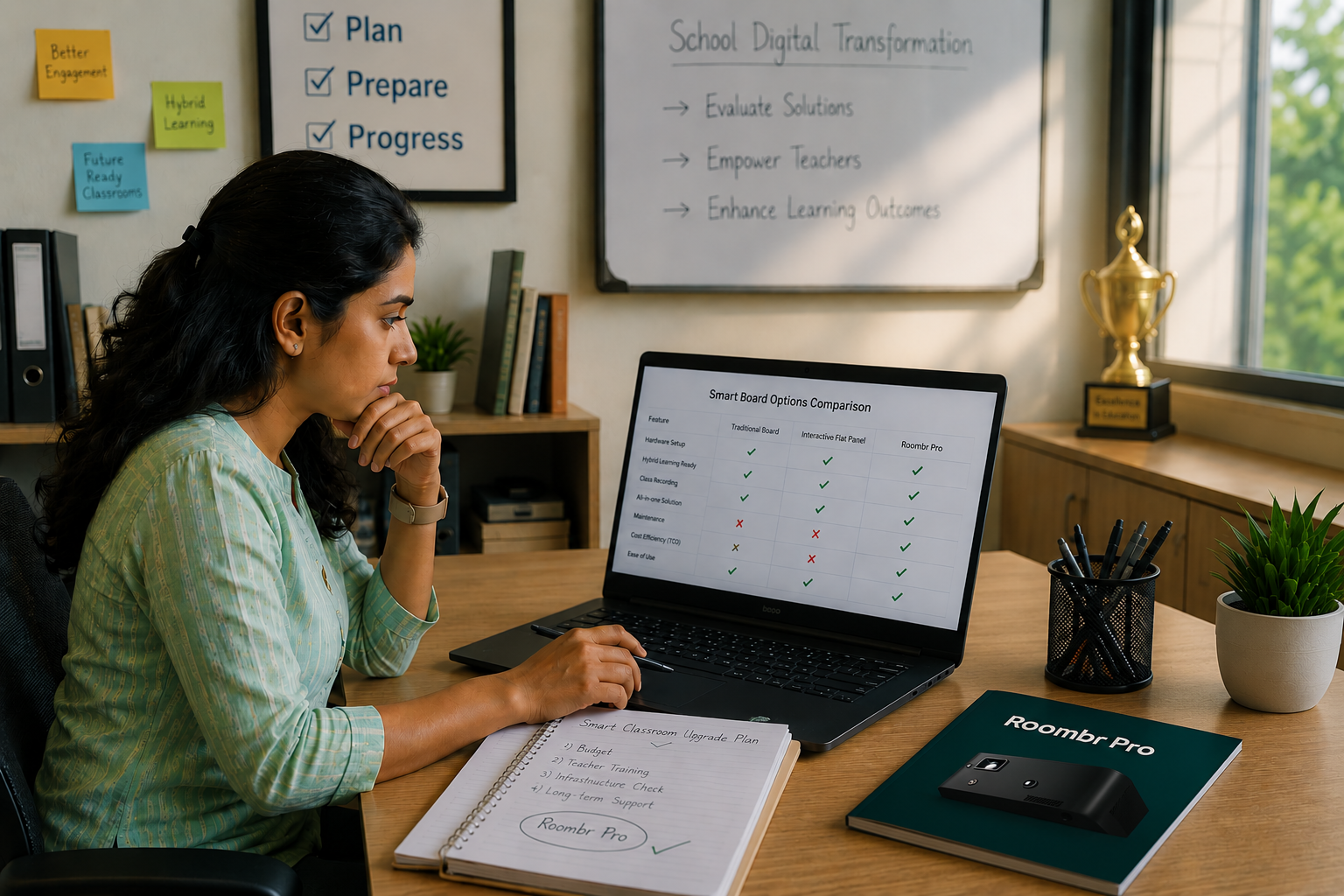
A smart tool only delivers real value if teachers want to turn it on every morning. School decision-makers must look for practical features before finalizing budgets.
When you look at the cost of a digital board for classroom, consider the hidden expenses. Software licensing, structural mounting, and IT support quickly add up.
Knowing the digital board price for a school classroom is only half the battle. School owners must understand how to choose educational technology that stands the test of time.
The system must run smoothly in bright daylight. It must allow teachers to save lessons instantly to the cloud. Most importantly, it should support hybrid learning tools without requiring external webcams.
Frequently Asked Questions About Classroom Technology
1. What is the average cost of a digital board for classroom setups in India?
The digital board price for a school classroom typically ranges from INR 100000 to INR 300000 or more, depending on screen size and features. However, schools must also budget for hidden costs like installation, separate webcams for hybrid classes, and recurring software fees.
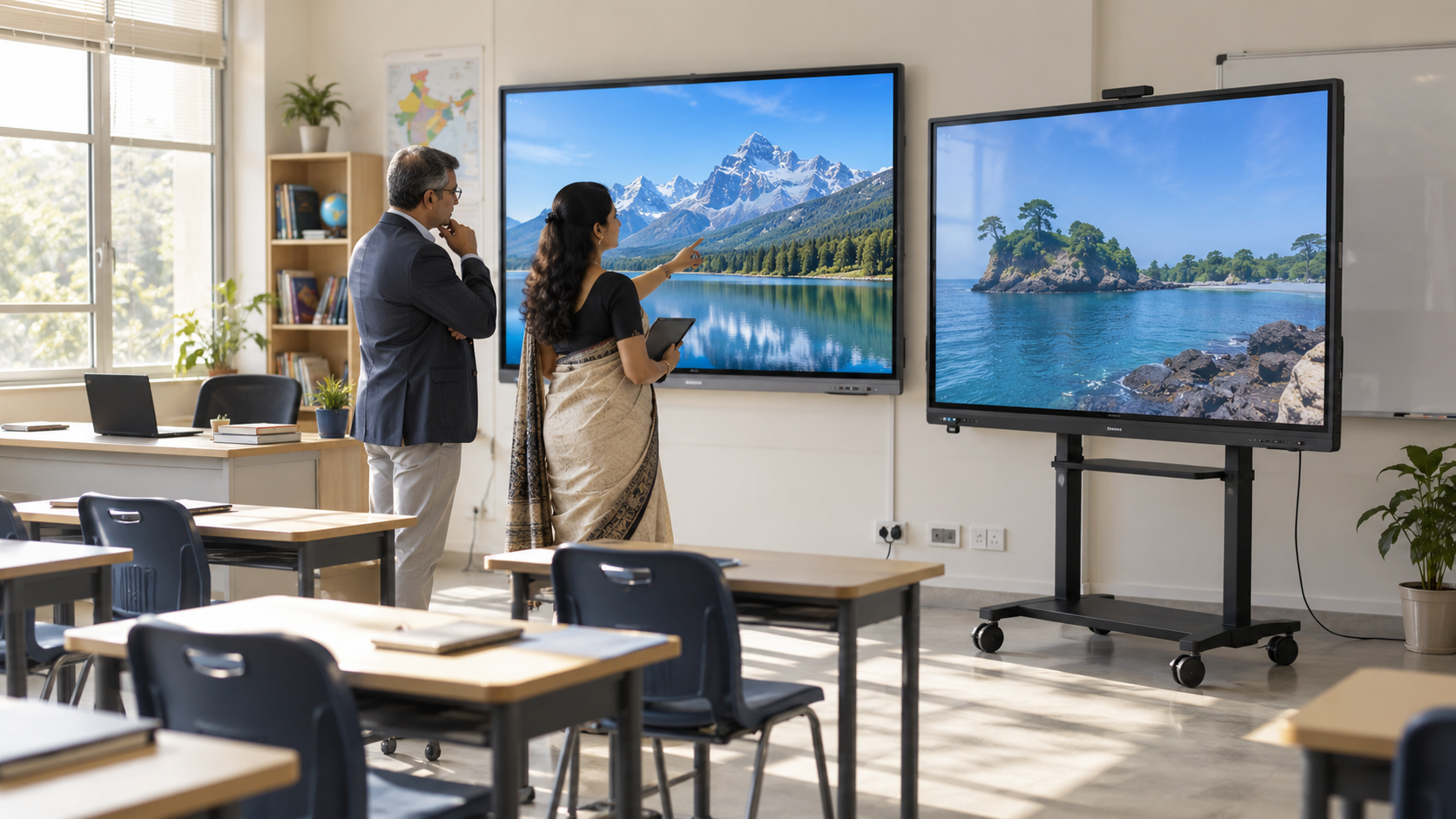
2. How does an interactive flat panel (IFP) differ from an all-in-one spatial classroom solution?
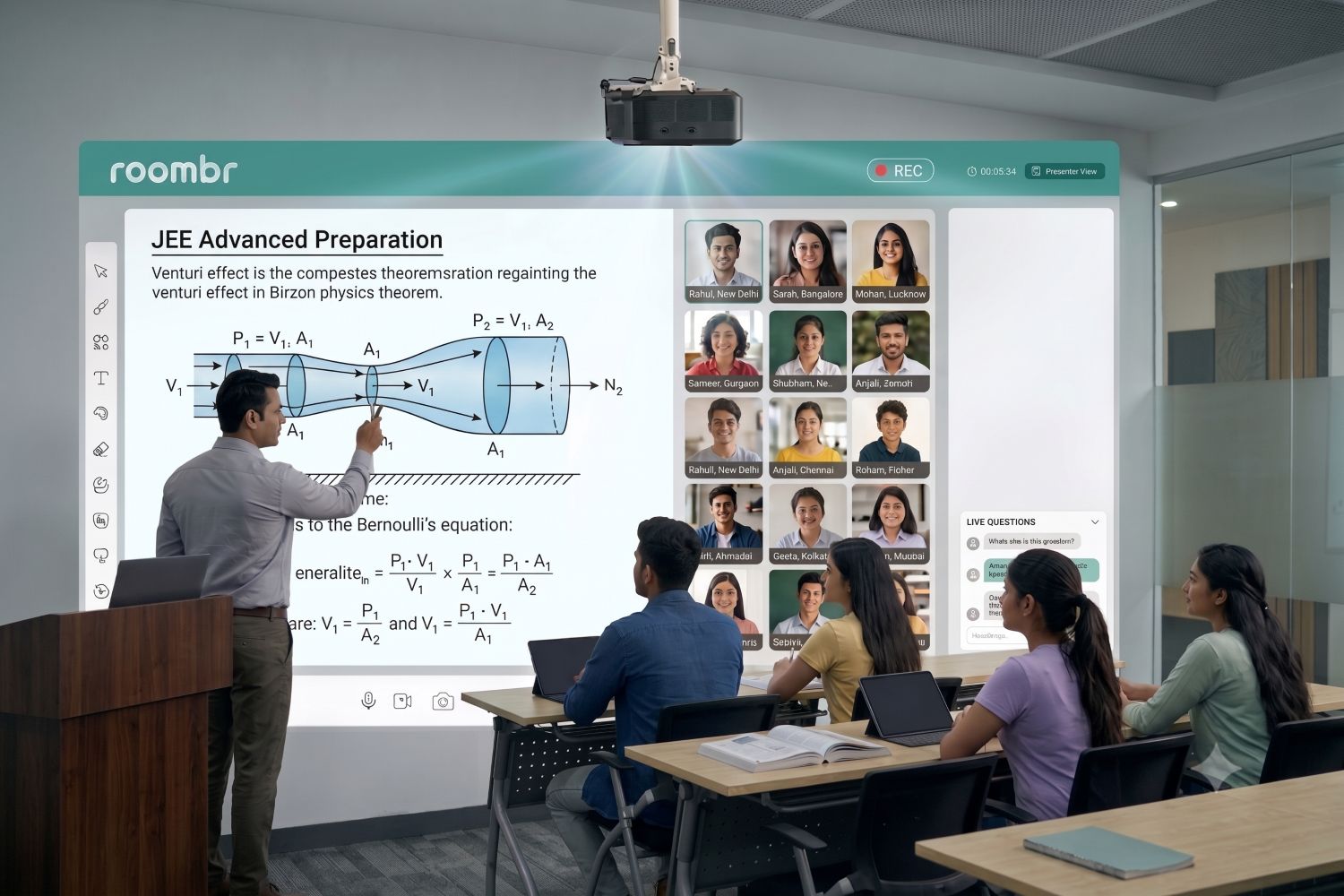
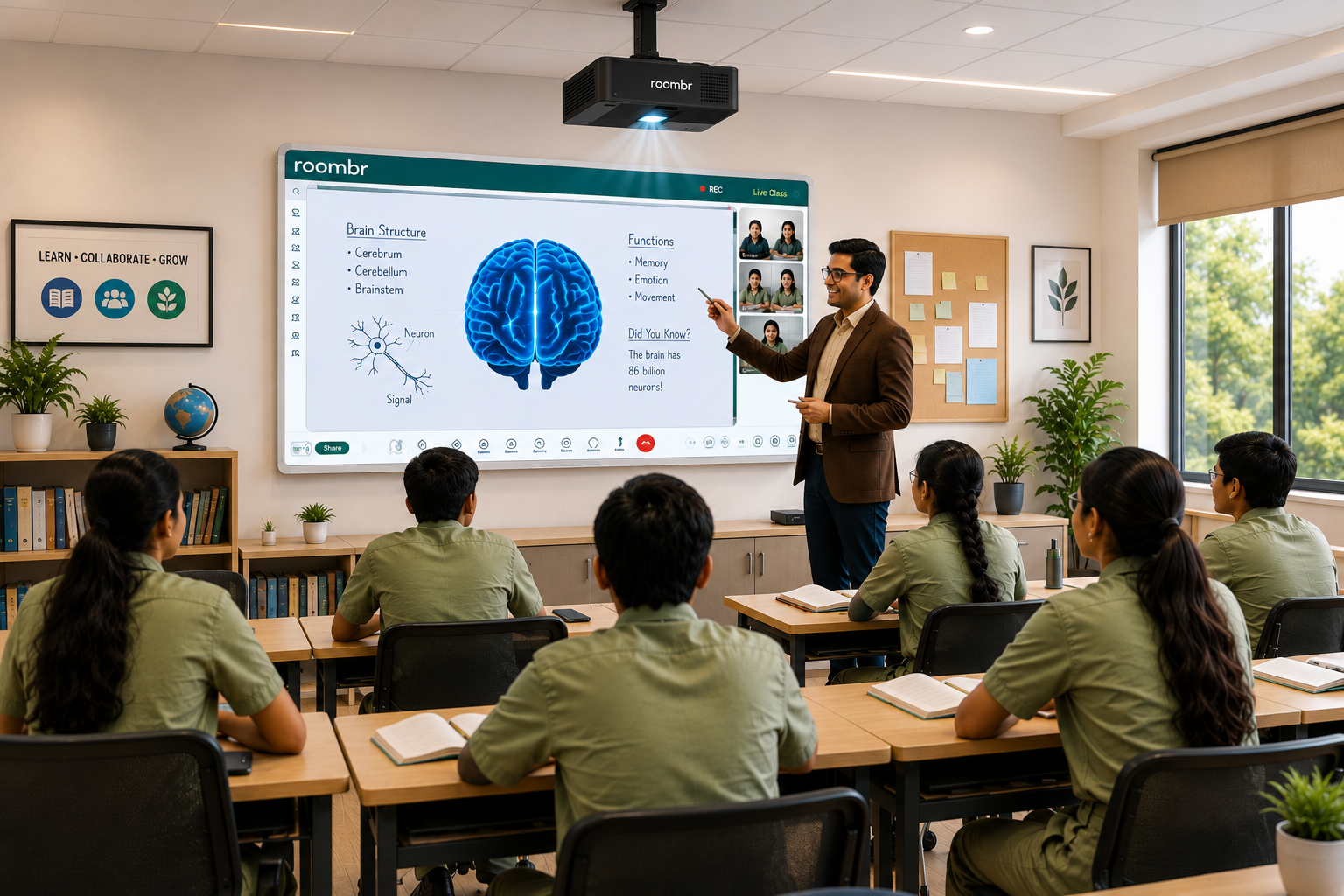
An interactive flat panel (IFP) is a large touchscreen monitor that replaces the traditional blackboard but requires external devices for hybrid teaching. An all-in-one solution like Roombr combines processing power, projection, audio, cameras, and automated cloud recording into a single system.
3. Can these smart classroom solutions operate without continuous internet?
Yes, premium educational tools are designed to work offline. Teachers can conduct lessons, use digital whiteboards, and run local applications without any active internet connection. The system simply syncs lesson data to the cloud once network access becomes available.
4. How do smart classroom solutions help schools follow NEP 2020 guidelines?
Modern NEP 2020-compliant tech shifts classrooms from textbook memorization to hands-on learning. Teachers can display interactive 3D models and run instant digital quizzes. This makes tracking student progress effortless for schools.
5. Why is an all-in-one smart board alternative better for hybrid learning?
Standard interactive panels only help students sitting inside the physical room. A true smart board alternative for Indian classrooms contains built-in cameras and audio tracking. Remote students see the lesson clearly without the school buying extra webcams.
Meet Roombr: The Ultimate Smart Classroom Solutions Upgrade
Traditional touchscreen displays can help teachers when chosen thoughtfully. However, many standard options fall short because they ignore the ground realities of Indian education.
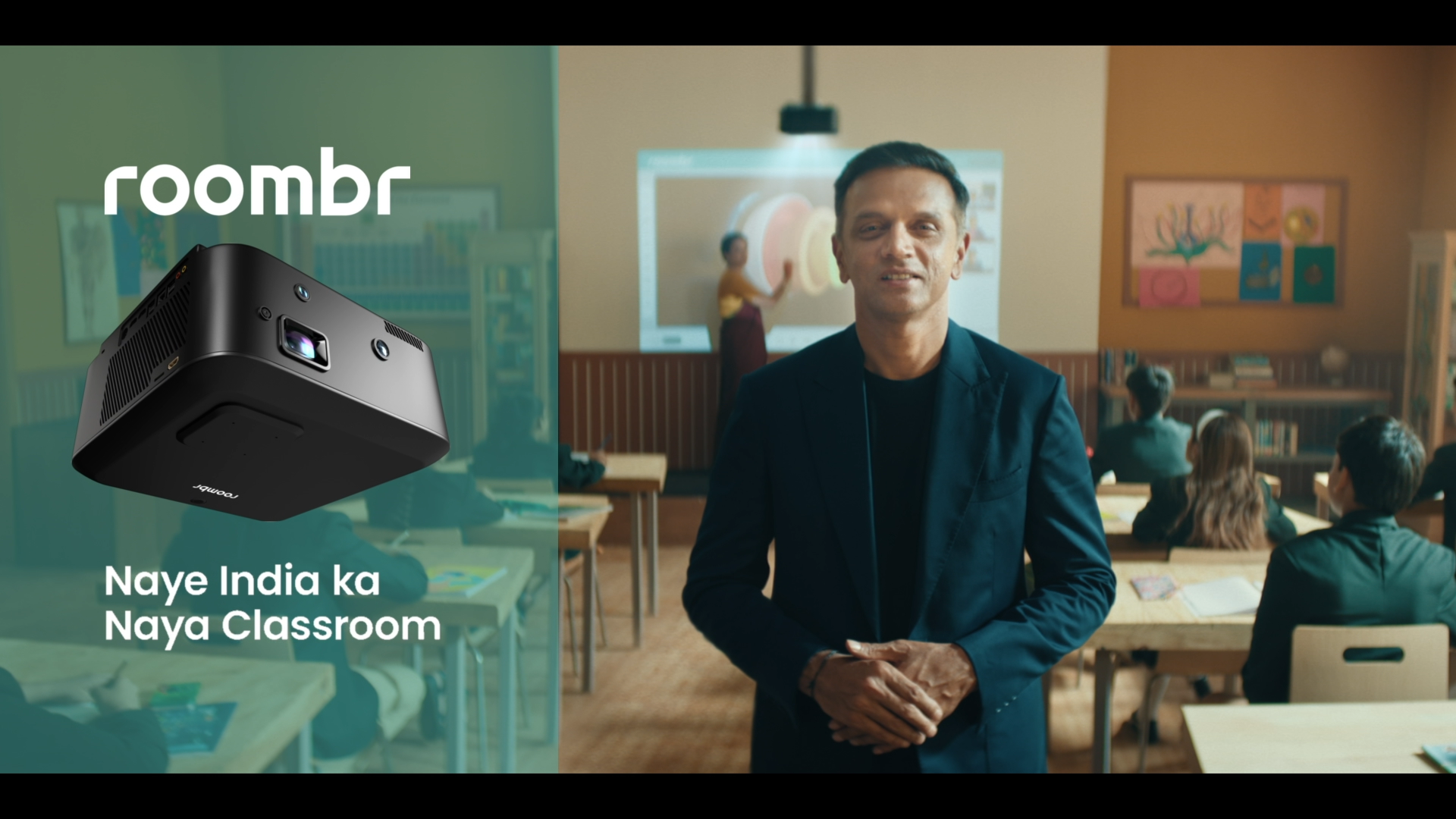
At Roombr, we believe technology must simplify the teaching process rather than complicate it. That is why our integrated solution—combining Roombr Pro (hardware) and Roombr Learn (software)—is built from the ground up for real schools.
An all-in-one tech is the definitive upgrade for forward-thinking schools and colleges looking for comprehensive smart classroom solutions.
Book a free digital classroom demo today and experience how seamless teaching can be.

Foziya Abuwala
Share
Step Into the future of
Education with Roombr