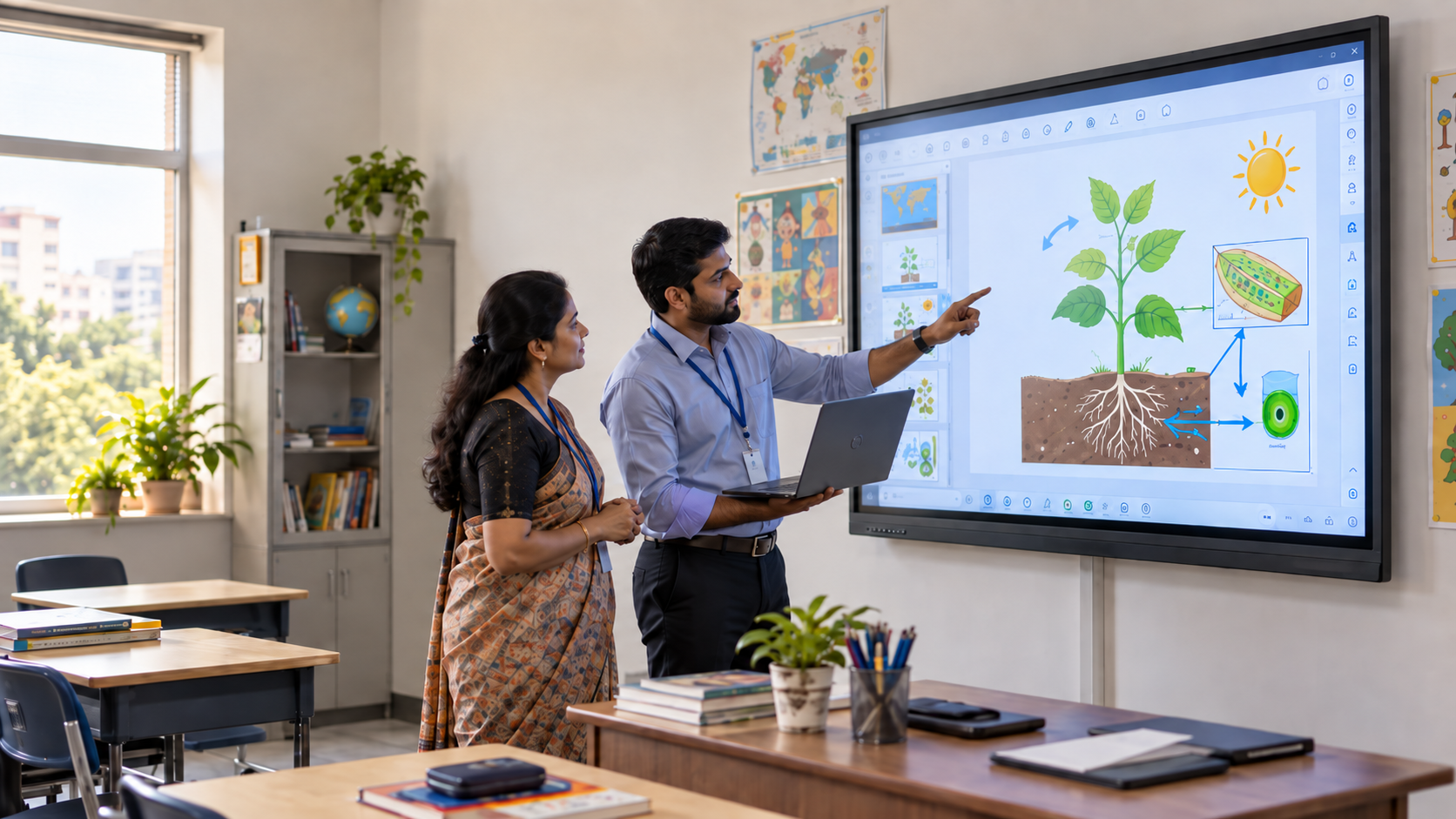

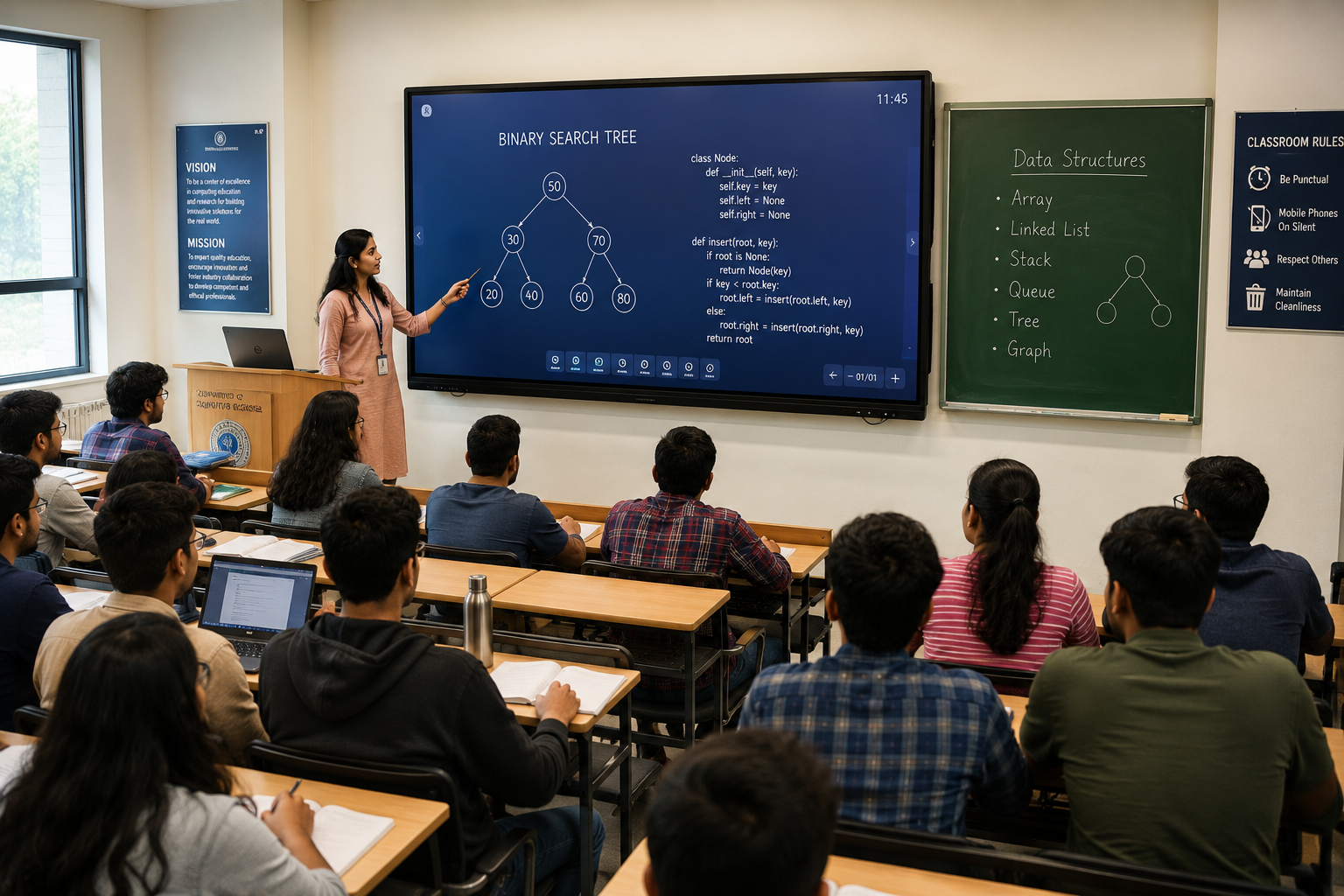
Schools and colleges across India are replacing chalkboards and projectors faster than ever. But before any institution signs a purchase order, one question comes up first: what is the actual smart board cost in India right now?
The honest answer is that there is no single number. Smart board cost depends on screen size, touch technology, operating system, and what the vendor bundles into the price.
This guide breaks down real 2026 pricing patterns, what drives them, and how to budget accurately for your classroom.
What Determines Smart Board Cost in India?
Two schools buying the "same" 75-inch board can end up with very different invoices. Here is why smart board costs vary so widely.
- Touch Technology: Infrared sensors cost less than capacitive touch panels.
- Screen Size and Resolution: Larger, sharper displays push the price up.
- Operating System: Dual OS boards (Android plus Windows) cost more than Android-only models.
- Software Licensing: Some vendors charge once. Others bill an annual renewal.
- Installation and Accessories: Wall mounts, stands, and cabling are often quoted separately.
- After-Sales Support: Extended warranty and teacher training can add to the total.
Industry data backs up how fast this category is growing in India. The Indian Interactive Flat Panel Display (IFPD) market reached a valuation of USD 287.9 million (~₹2,400 Crore) in 2025, with a projected 7.01% compound annual growth rate (CAGR) through 2034. Globally, displays of 90 inches or larger are experiencing the fastest growth at a 9.80% CAGR, driving increased market competition and varied vendor pricing. More brands are entering the market, and buyers are comparing more aggressively than before.
Types of Smart Boards and How They Affect Price
Not every board on the market uses the same underlying technology, and grouping them by architecture tier makes it easier to see how smart board cost rises with technical advancement.
Tier 1: Premium and Advanced Systems
Capacitive Touch Smart Boards
This is high-end consumer technology, the same touch response used in smartphones, applied to large-format screens. Capacitive boards support smooth, multi-user interaction and sit at the premium end of the pricing scale.
Electromagnetic Resonance (EMR) Boards
EMR boards use a specialized, pressure-sensitive stylus with embedded circuitry to register highly precise input. This technology is popular with online tutors and institutions focused on math and digital annotation, and it typically sits in the mid to premium price range.
Integrated Digital Teaching Devices (IDTD)
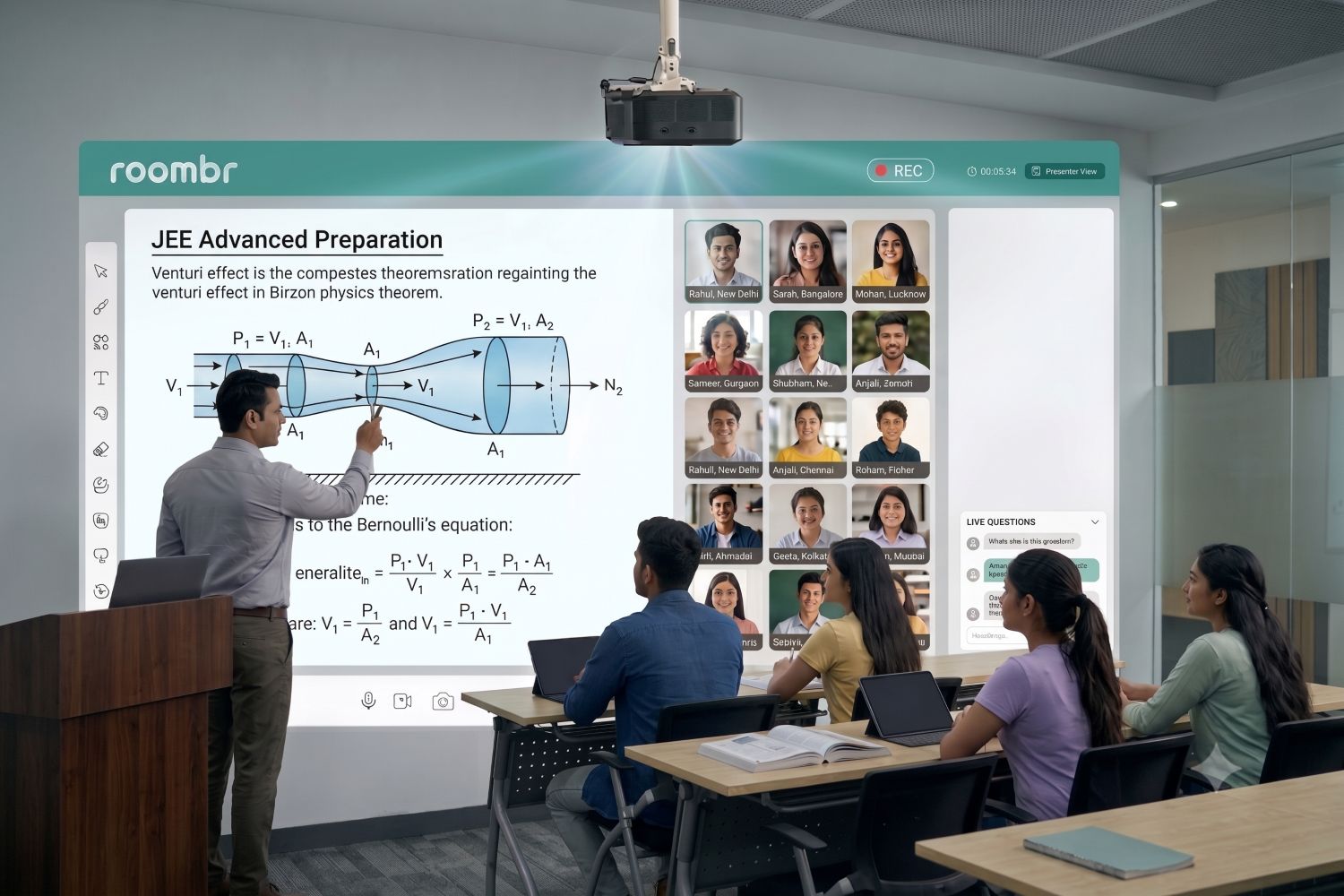
This is the most advanced evolution of projection-based classroom tech. Roombr is an example of this category, packing a computer, projection engine, and interactive tools into one self-contained unit. An internal DLP engine projects a 50 to 200-inch HD display onto a classroom wall at up to 1500 ANSI Lumens, with infrared touch tracking and an internal Windows 11 computer built in. This all-in-one design commands a higher price than standalone boards, but removes the need to separately budget for a PC, speaker system, and mounting display.
Tier 2: Mainstream and Standard Technology
Infrared Smart Boards
The current standard in Indian classrooms. Infrared sensors detect a finger or pen across the screen, striking a practical balance between durability, responsiveness, and cost. This is the most common starting point for schools digitizing their first few classrooms.
Tier 3: Legacy and Transitioning Technology
Projector-Based Interactive Whiteboards (IWB)
A traditional multi-device setup that pairs a standard whiteboard with a separate projector and touch sensor. IWB systems are among the most affordable ways to add interactivity, though they require more upkeep, including bulb replacement and regular calibration.
Optical and Camera-Based Smart Boards
A niche approach that uses corner-mounted cameras to track movement across the screen. Multi-touch accuracy is weaker than infrared or capacitive systems, and this format has mostly been phased out in favor of newer technology.
Tier 4: Obsolete and Low-Cost Retrofits
Portable or Clip-On Interactive Modules
A low-cost sensor retrofit that adds interactivity to an existing wall or whiteboard without replacing the surface. Useful for budget trials or single-room pilots, though technically basic compared to standalone systems.
Resistive Touch Smart Boards
An obsolete, pressure-based technology that requires physical force to register a touch. It remains in the lowest price bracket and has been largely replaced by light-based or electronic sensors.
Smart Board Price by Screen Size in 2026
Screen size is usually the single biggest factor behind smart board cost. Larger panels need more glass, stronger processors, and heavier mounting hardware. For schools comparing smart board prices in India, the size-wise ranges below provide a useful starting point before requesting vendor-specific quotations.
These ranges reflect general market patterns and are not fixed quotes. Actual smart board cost will vary by brand, model, and the vendor you shortlist, so always confirm final pricing directly before budgeting.
Smart Board Cost by Budget Tier
Beyond screen size, it helps to think in tiers. Here is how classroom smart board price typically breaks down across three common buying categories.
Entry-Level Boards
- Estimated cost: ₹50,000 to ₹80,000
- Features: Android OS, smaller display, limited touch points
- Best for: One-room tuition centres, pilot projects, first-time digital classrooms
These boards handle basic lessons well but usually skip premium extras like dual cameras or built-in AI tools.
Mid-Range Boards
- Estimated cost: ₹90,000 to ₹1.5 lakh
- Features: HD or Full HD display, responsive multi-touch, classroom software
- Best for: Standard school classrooms with 45 to 60 students
This is where most Indian schools land, since it balances smart boards for classroom cost against real classroom performance.
Premium Boards
- Estimated cost: ₹1.5 lakh to ₹2.5 lakh and above
- Features: UHD display, dual OS, 20-plus touch points, wireless sharing, premium audio
- Best for: Auditoriums, hybrid classrooms, higher education lecture halls
The upfront cost of a smart board for classroom setups at this tier is higher, but institutions using them daily with large groups often see the best long-term value.
Reality of Digital Board Cost for Classroom Teaching
Buyers often search for digital teaching board price and cost of digital board for classroom alongside smart board pricing.
In practice, digital boards for teaching follow the same general pricing factors as smart boards. The final cost can vary based on screen size, touch technology, operating system, software, installation, and the features included in the vendor’s package.
If your shortlist includes both smart boards and digital teaching boards, compare the complete specifications and inclusions rather than relying on the product name or headline price alone.
Hidden Costs Behind Smart Board and Digital Board Pricing
Searches for terms such as classroom digital board price and digital classroom board price have increased significantly over the past year. That shift usually means one thing: buyers are pricing out the full classroom setup, not just the board itself.
The sticker price rarely tells the whole story. These extras often get missed during budgeting:
- Wall Mount or Stand: ₹3,000 to ₹12,000 if not already included
- Software Licensing: One-time fee for some vendors, annual renewal for others
- Installation and Setup: Sometimes bundled, sometimes billed separately
- Teacher Training: Occasionally included, often an add-on cost
Focusing only on the upfront purchase price can give a misleading picture. Total cost of ownership, which accounts for these extras over several years, is a far more reliable way to compare vendors.
What Should a Smart Board Quote Include?
For a deeper cost comparison, see our guide to interactive flat panel pricing.
Smart Board Cost vs. All-in-One Digital Classroom Systems
A standalone smart board is only one piece of a working digital classroom. Most institutions also need a computer, camera, speakers, and microphones to actually run lessons, record sessions, or support hybrid learning.
Buying these separately adds up quickly, and installation becomes more complex with every extra device. This is where all-in-one digital classroom systems change the math. Instead of pricing five components individually, the entire setup is quoted and installed as one unit.
When comparing smart board costs against an all-in-one system, look past the initial invoice. Factor in installation time, ongoing maintenance across multiple devices, and how many separate vendors you will need to call when something breaks.
If you are still weighing a traditional board against a full interactive system, this comparison of smart boards and interactive whiteboards breaks down the practical differences in more detail.
Who Should Buy a Smart Board?
Different institutions get value from smart boards in different ways.
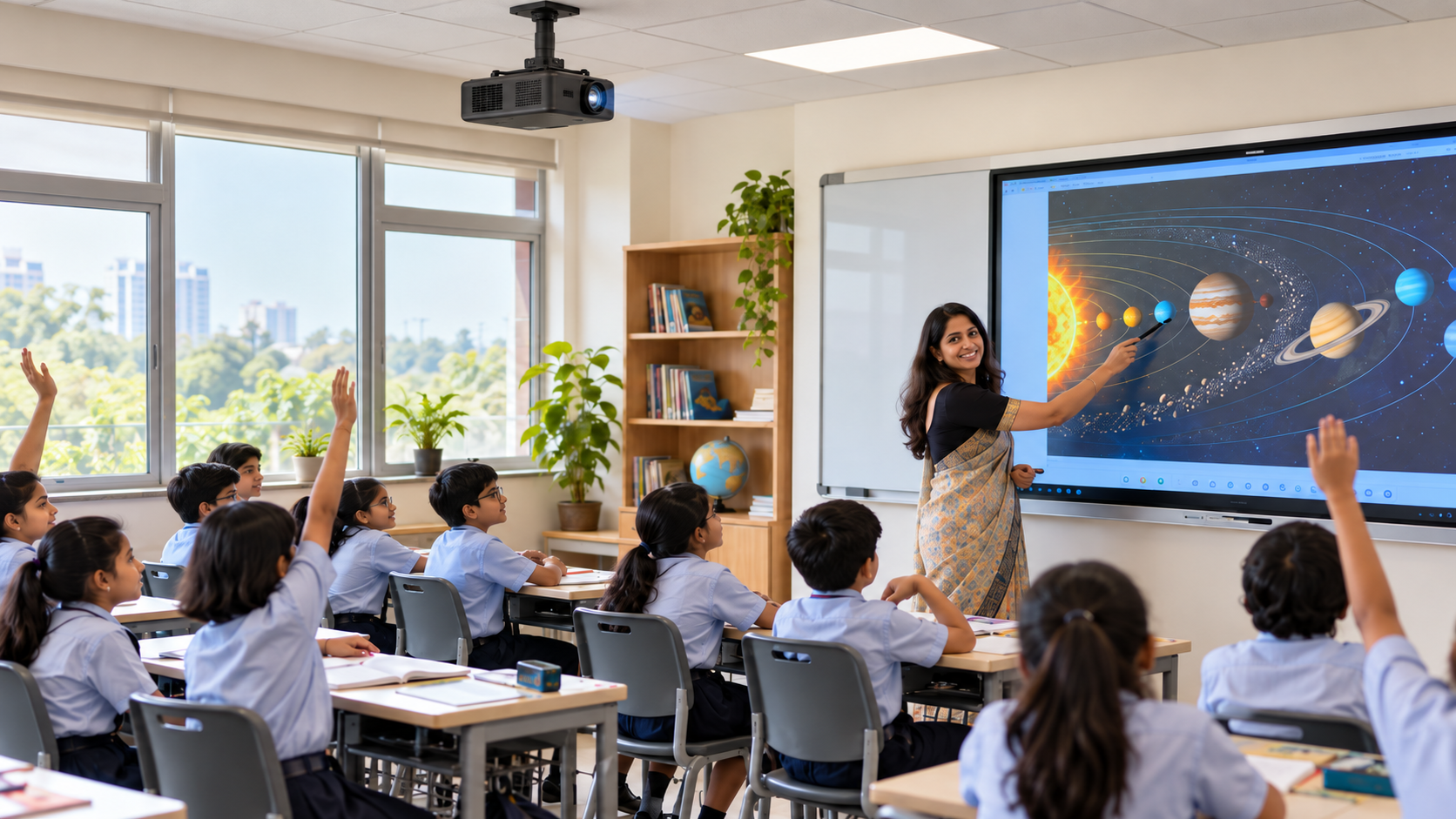
- Schools and Colleges: Daily lesson delivery, curriculum storage, and recording lectures for students who miss class.
- Coaching Centres: Running hybrid batches, training large groups, and building a library of recorded sessions.
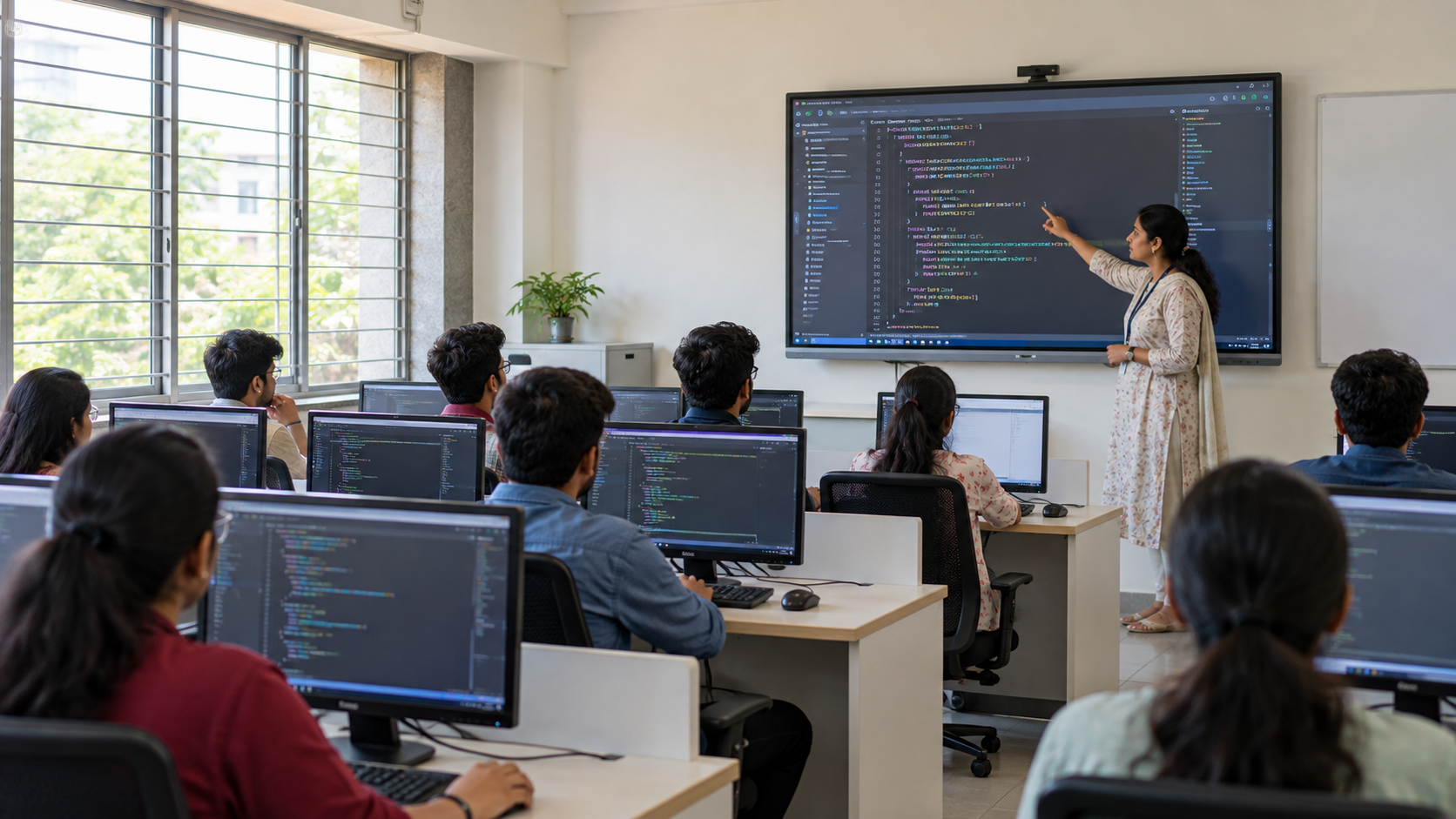
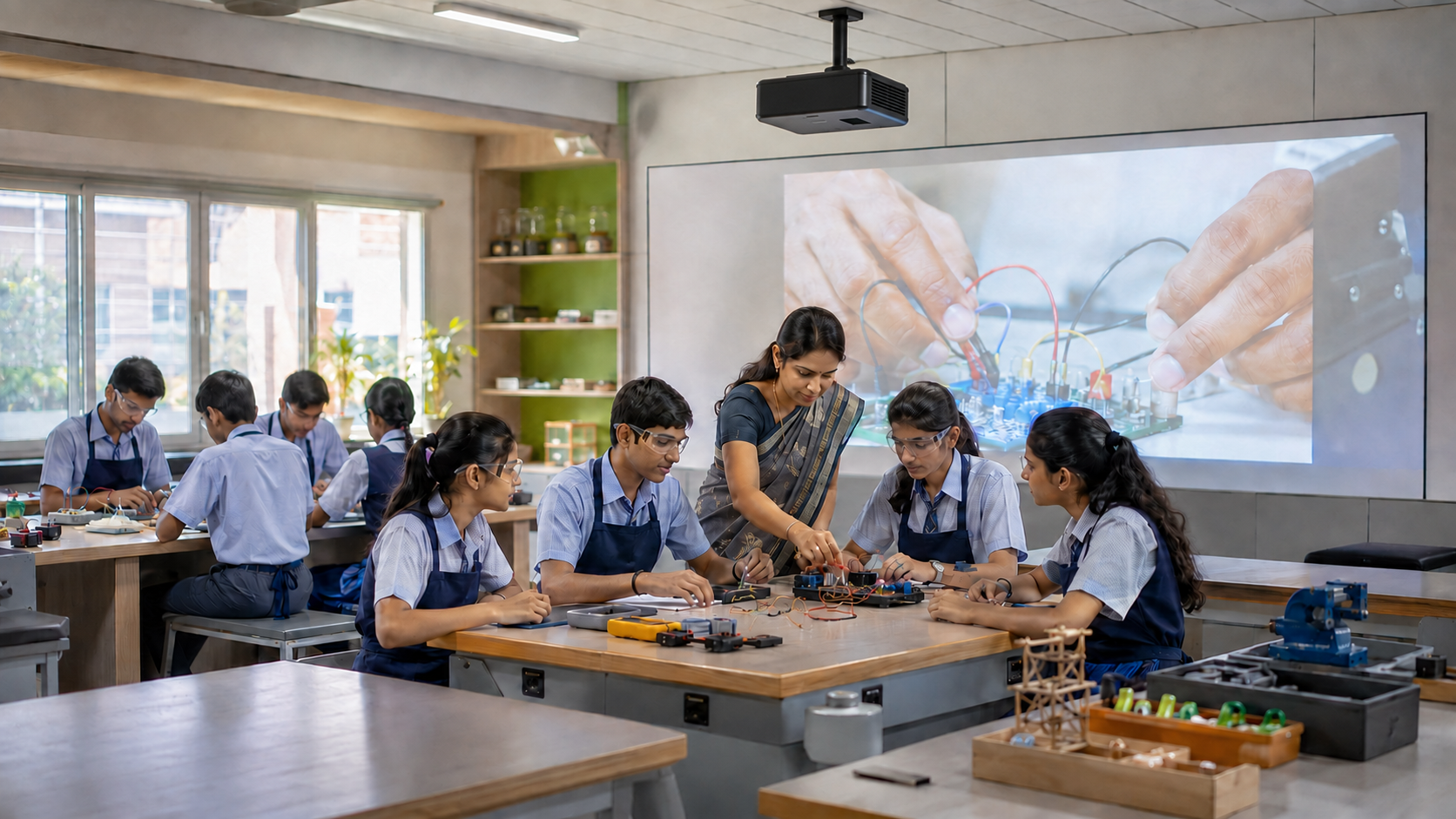
- Skill Training Institutes: Demonstrating technical processes step by step, recording practical sessions for trainee revision, and standardizing instruction across multiple batches or trainers.
- Private Tutors and Online Educators: Creating course content, hosting live sessions, and mixing live plus recorded teaching.
Smart Board Cost With Installation: What to Budget For
The board itself is only part of the total spend. A realistic budget should include:
- Hardware Cost: Varies by size and technology
- Software Licensing: Confirm if renewal fees apply
- Wall Mount or Stand: Typically ₹3,000 to ₹12,000 if not bundled
- Training and Setup: Ask upfront whether this is included or billed separately
Institutions that plan for these line items rarely face budget surprises after purchase.
Why Roombr Offers a Different Approach to Smart Board Cost
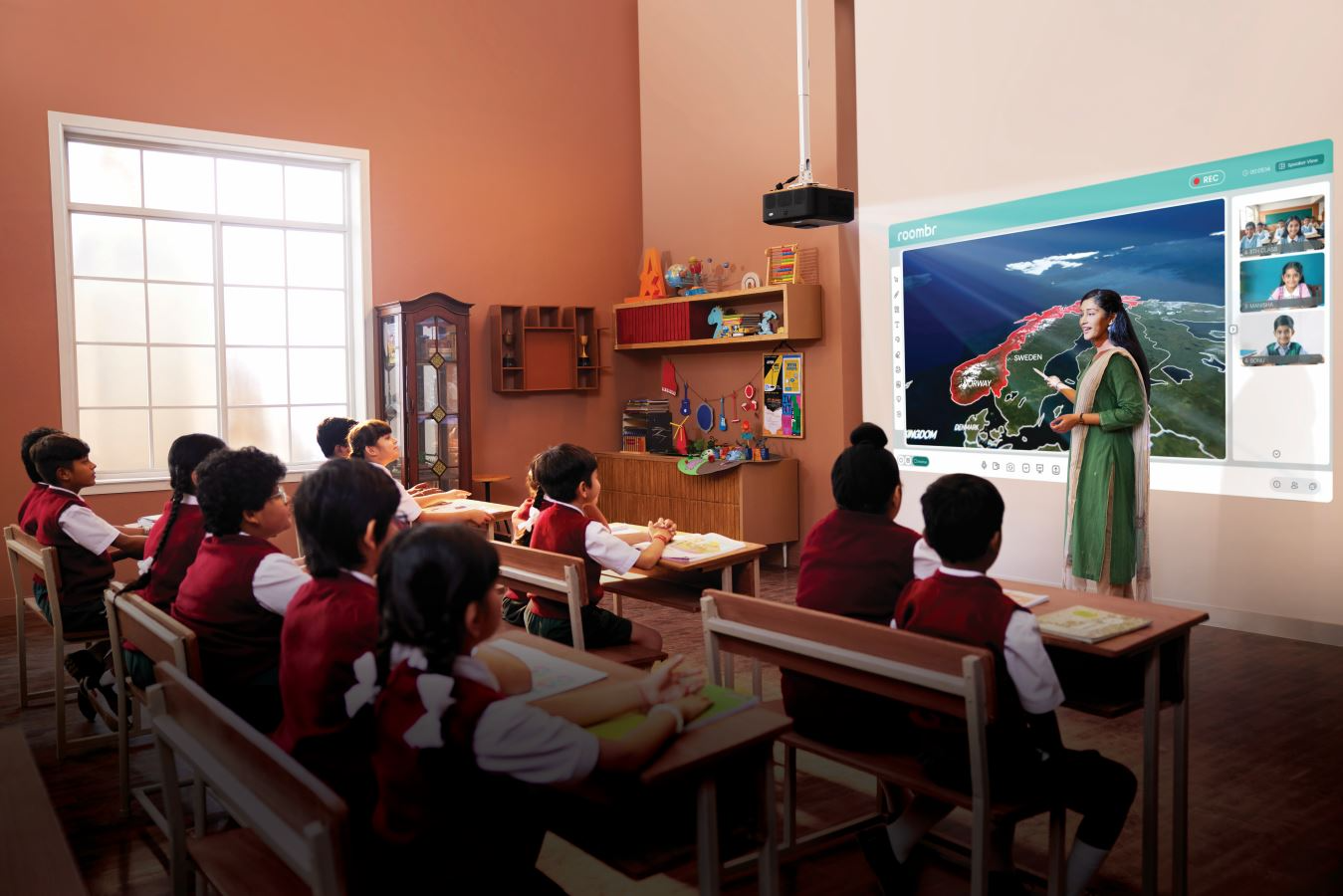
Most smart board cost comparisons stop at hardware. Roombr Digital Classroom takes a different approach by combining the display, computer, camera, and microphone into a single patented, plug-and-play system.
This means:
- No separate purchases for a PC, webcam, or speakers
- AI-powered lesson tools and automatic lecture recording included by default
- Lower total cost over time, since nothing extra needs to be added later
For institutions weighing a standard board against a fully integrated classroom, Roombr's approach to pricing is worth reviewing before you finalize a vendor.
Roombr does not sell just a smart board. It offers a holistic digital classroom solution built specifically for institutions across India.
Final Thoughts
Smart board cost in India is not a fixed number. It shifts based on screen size, touch technology, software, and what the vendor bundles into the final quote.
Before you commit to a purchase, map out the total cost of ownership rather than just the sticker price. Installation, training, and software renewals add up over a board's lifespan.
Compare vendors on more than just price. Ask about warranty terms, support response times, and whether the system can grow with your institution's needs.
Frequently Asked Questions
1. What is the smart board cost in India in 2026?
Most smart boards in India range from ₹50,000 for basic models to over ₹3 lakh for premium boards, depending on size and features.
2. How much does a smart board for a classroom cost?
A standard classroom smart board typically costs between ₹80,000 and ₹1.5 lakh, which covers HD displays and multi-touch support suited to a 40- to 60-student classroom.
3. Is installation included in smart board cost?
Sometimes. It depends entirely on the vendor, so always confirm before purchase whether mounting, cabling, and setup are bundled into the quote.
4. What is the cost difference between a smart board and a digital board for the classroom?
There is rarely a meaningful price difference. Both terms describe similar hardware, and cost depends more on size and features than on which term the vendor uses.
5. Can schools buy smart boards on EMI or bulk pricing?
Yes. Many suppliers offer flexible purchase plans. Bulk orders across multiple classrooms often come with reduced per-unit pricing. Roombr offers flexible financing support to help institutions spread out the investment.
6. Do smart boards work offline?
Most do. Core teaching functions work without internet access, and connectivity is generally only needed for cloud-based apps or content libraries. Roombr is built to work smoothly both online and offline, adapting to a classroom's connectivity needs.
Get a No-Obligation Quote From Roombr Digital Classroom
Budgeting for the right smart board cost gets simpler when you're not juggling separate vendors for hardware, software, and installation. Roombr offers India's first patented, all-in-one digital classroom solution, combining the display, computer, camera, and microphone into a single, compact, plug-and-play system. AI-powered lesson tools and automatic lecture recording come built in, with no add-ons needed later.
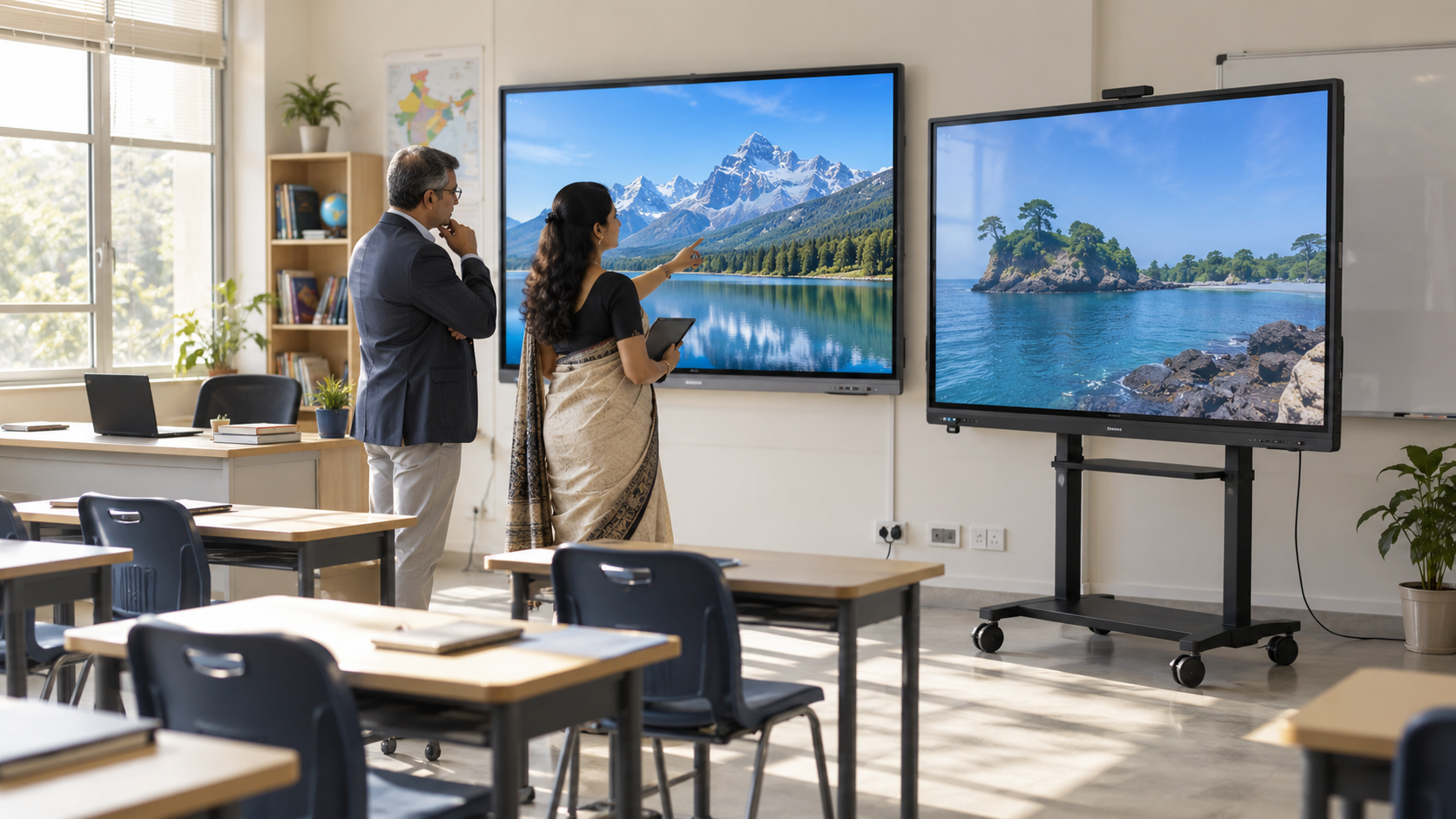
Worth knowing as you compare options: standalone interactive flat panels in India typically max out around 110 inches. Roombr's projected display scales from 50 up to 200 inches, so students at the back of a large classroom get the same clarity as those up front.
Instead of pricing a board, a PC, and a camera separately, institutions get one system, one installation, and one point of support. Over the life of the setup, this approach often works out more cost-effective than assembling components on your own.
Book a free demo and request a free quote to see how an integrated classroom compares to a standalone board on your budget. Reach out at +91 9686659444 or learn@roombr.com for a customized, no-obligation quote.

Foziya Abuwala
Share
Step Into the future of
Education with Roombr