
India has set a clear deadline. By 2026-27, every Grade 3 child should read with understanding at 60 words per minute. They should also read and write numbers up to 9,999. This is the target set under the NIPUN Bharat Mission.
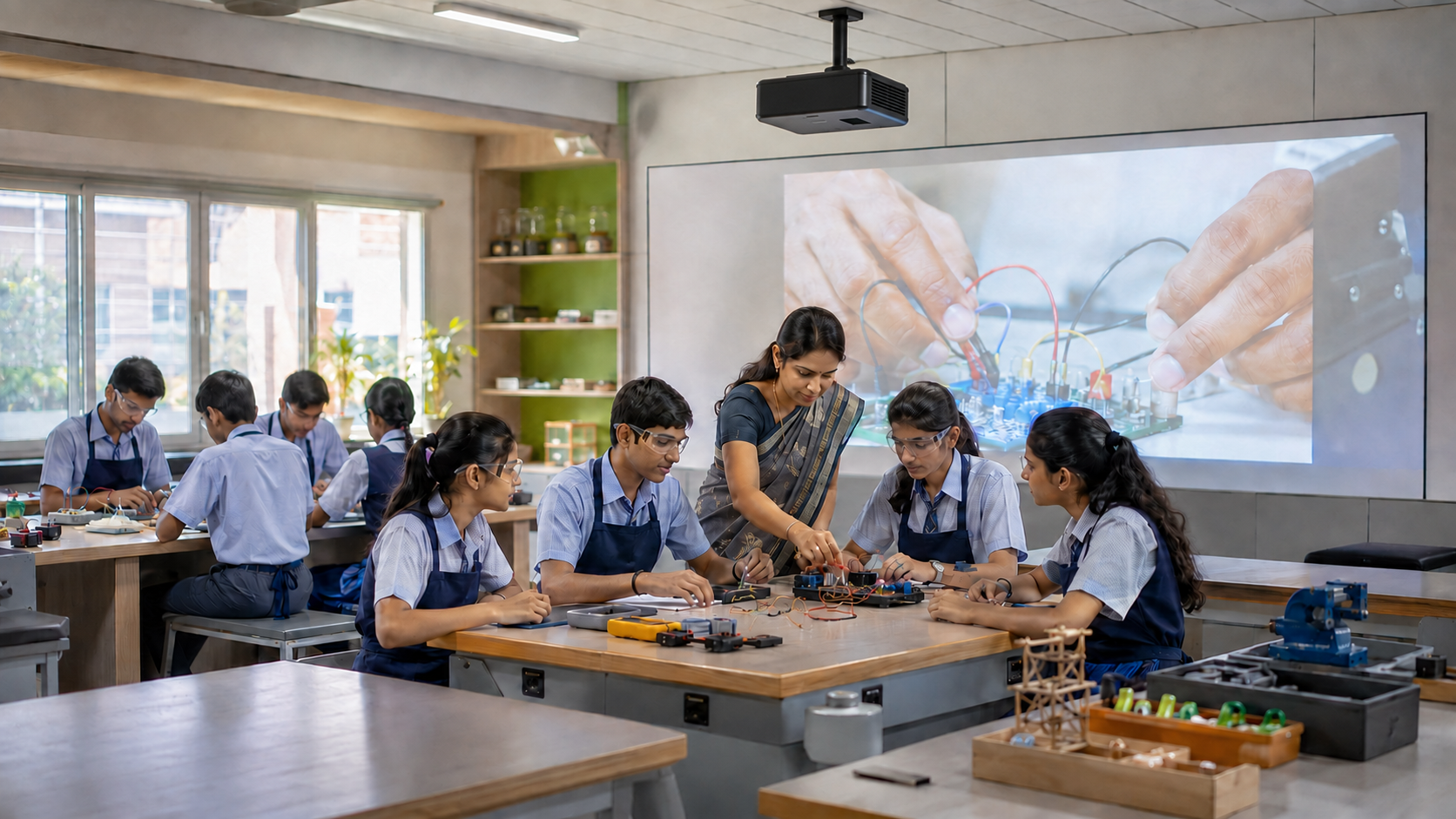
For schools, the pressure is real. Teachers manage 40-plus students in one room. Meeting this benchmark needs more than good intentions. It needs the right classroom tools.
What Is NIPUN Bharat and Why FLN Matters for Grade 1–3
NIPUN Bharat launched in July 2021 under the Ministry of Education. It falls under the National Education Policy 2020 and the Samagra Shiksha scheme.
The mission targets children aged 3 to 9 years, from Balvatika to Grade 3. Its goal is simple. Every child should read, write, and solve basic math by the end of Grade 3.
This is not a small task. ASER 2024 data shows India made its largest FLN gains in two decades. But the work is far from done, and classrooms need practical support to keep that momentum going.
The FLN Challenge in Indian Primary Classrooms
Foundational learning is hard to scale. A teacher cannot give one-on-one reading practice to 40 children in 40 minutes.
NIPUN Bharat's own guidelines point to specific needs:
- Teaching in the child's home language
- Play and activity-based pedagogy
- Meaningful assessment through games and quizzes
- Consistent tracking of each child's progress
Traditional chalk and textbook methods struggle to deliver all four at once. This is where technology starts to matter.
Why Digital Classroom Solutions Matter for Foundational Literacy and Numeracy
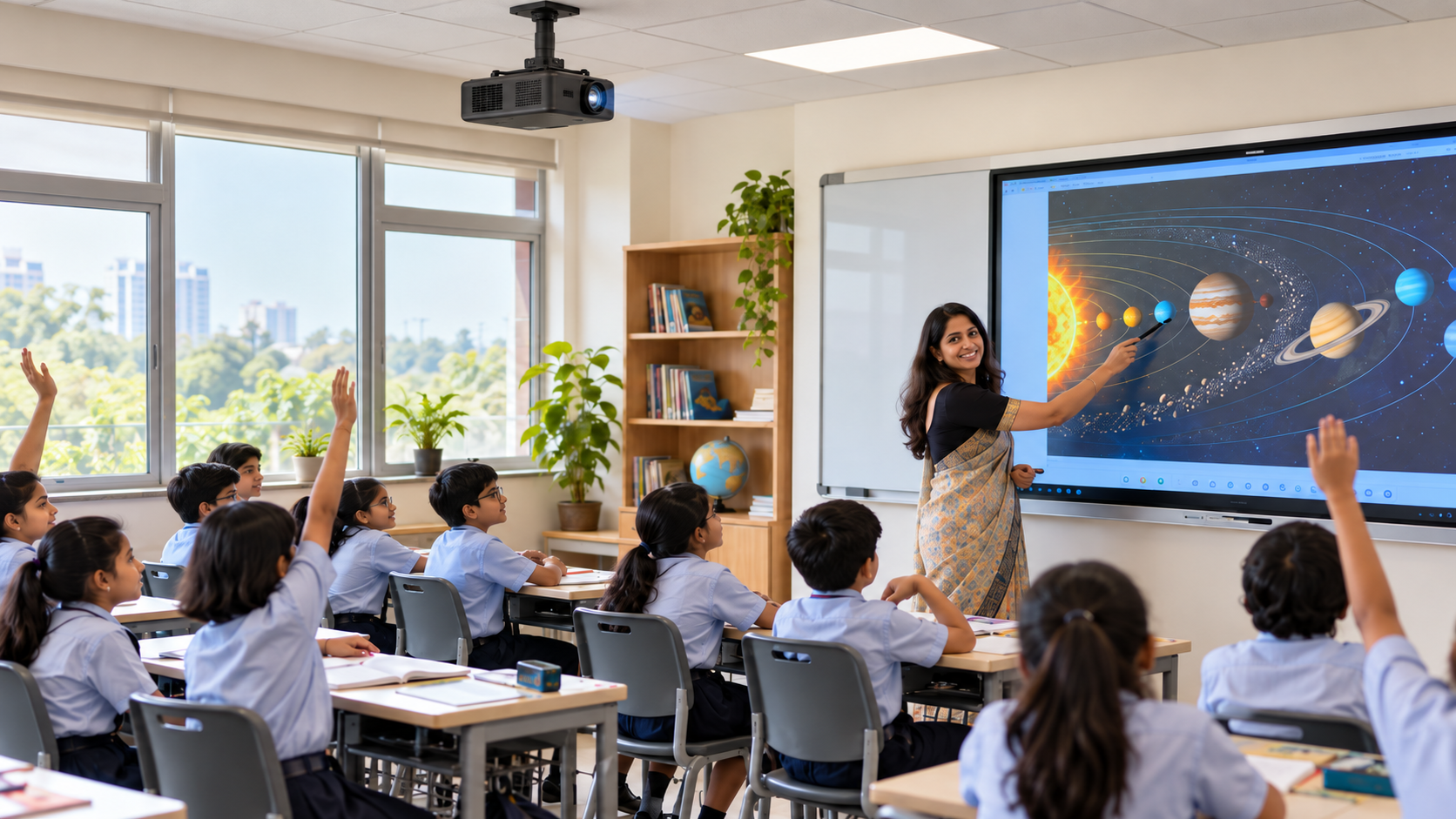
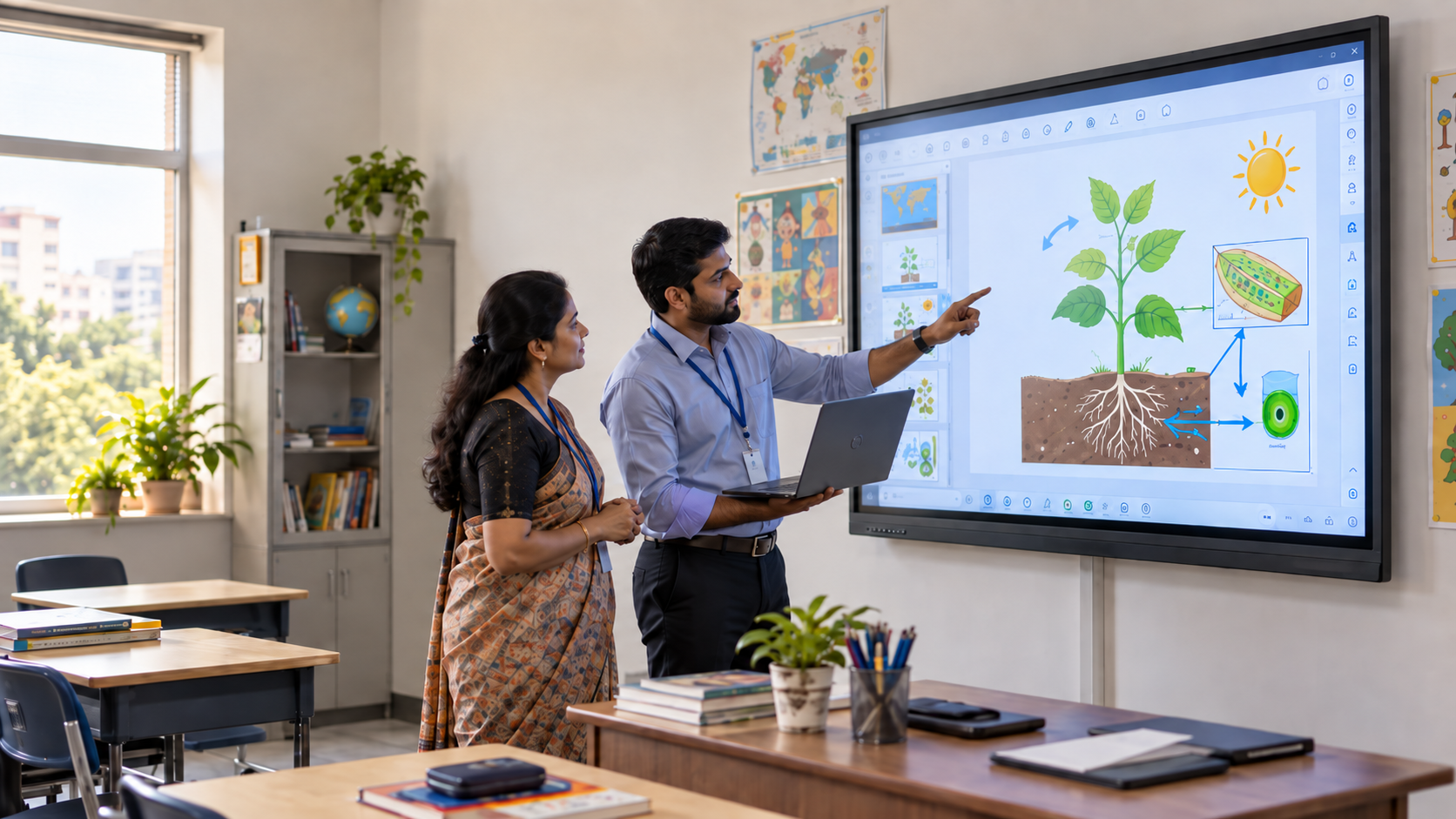
Digital classroom solutions turn policy goals into daily classroom habits. They do not replace the teacher. They give the teacher tools to reach every child, not just the ones in the front row.
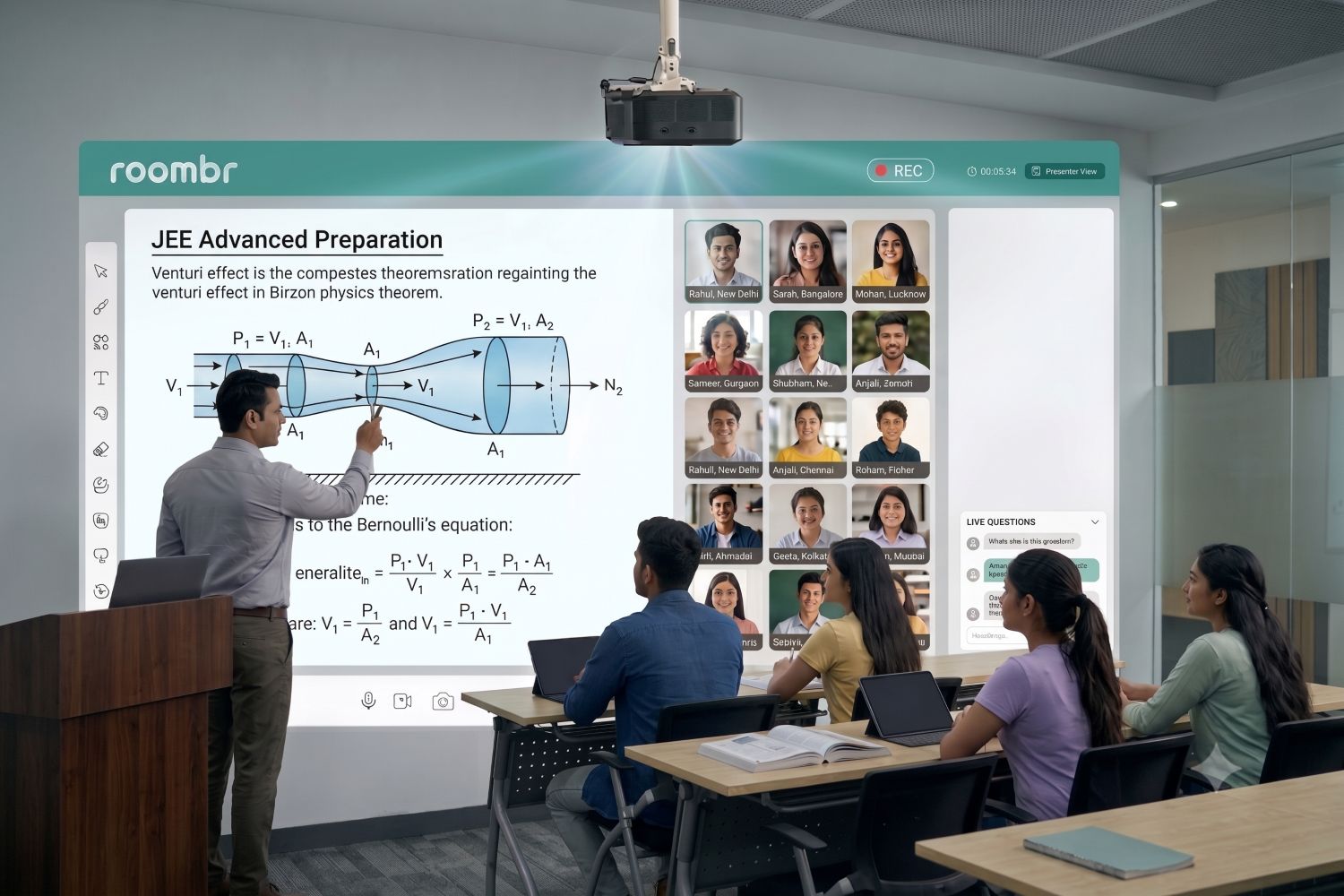
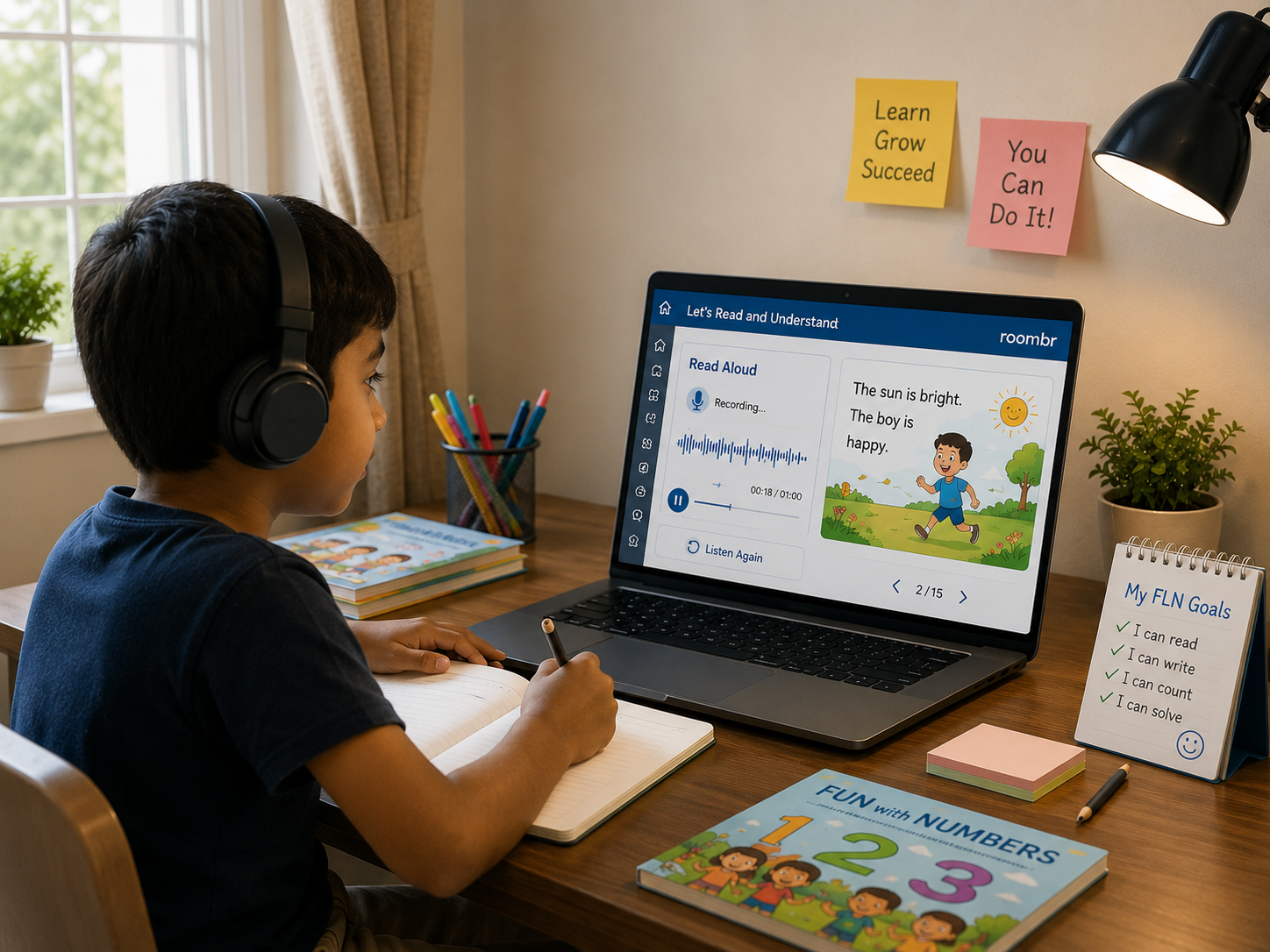
A modern digital classroom can record a lesson once and let a struggling student replay it as many times as needed. That kind of repetition is what builds reading fluency.
For digital learning at the foundational stage, the technology has to be simple. Young children cannot navigate complex menus or long instructions.
How Digital Classroom Solutions Support Reading Fluency
Reading fluency is built through repetition, sound, and visual connection. Here is how the right tools help.
1. Read Aloud Recording and Playback
Teachers can record themselves reading a passage. Students replay it at their own pace. This supports children who need more time without slowing down the whole class.
2. Visual Phonics and Word Building
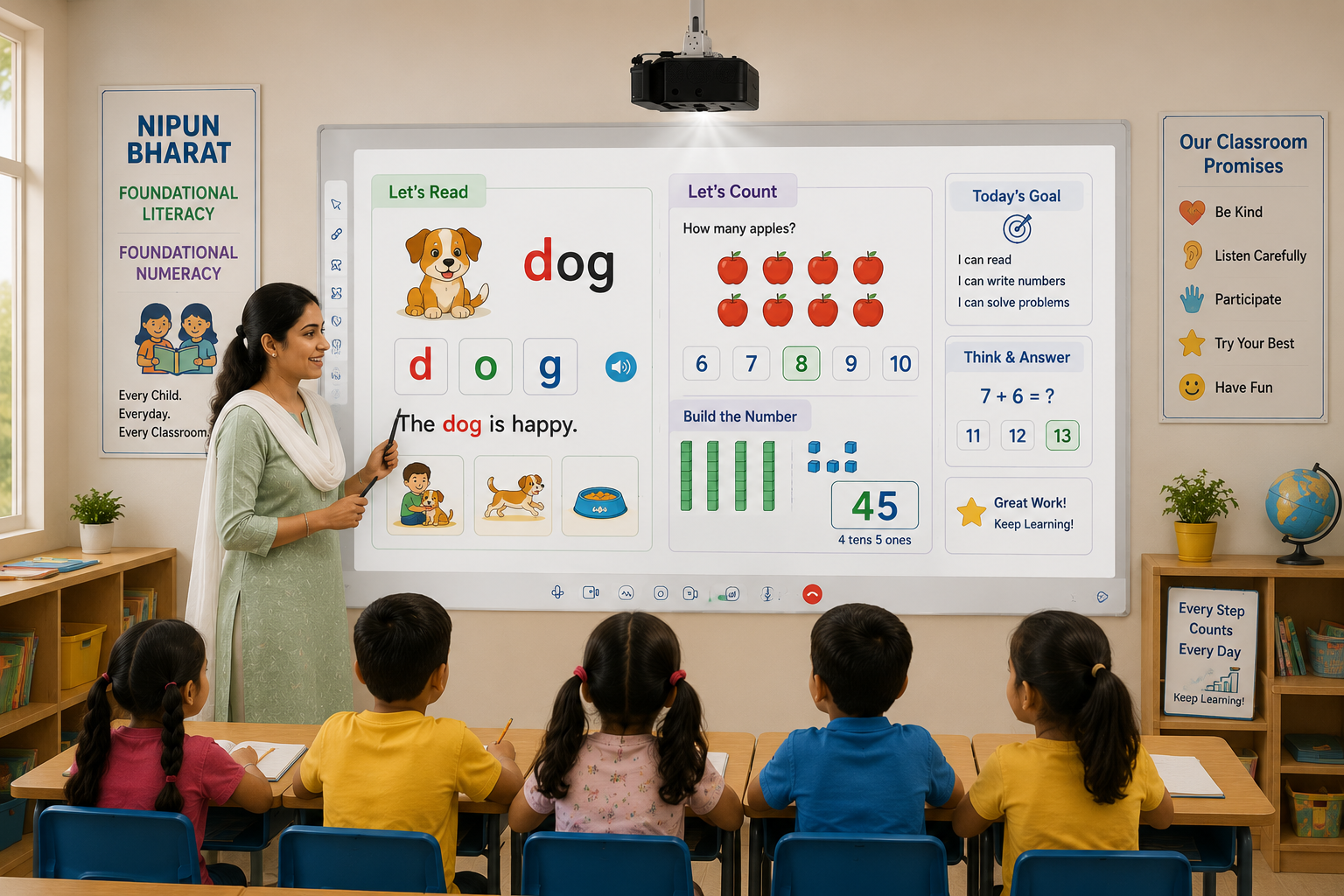
Interactive screens let children tap letters to build words. They see and hear the word form in real time. This strengthens the link between sound and print.
3. Home Language Support
An interactive digital classroom can switch between English and regional languages. NIPUN Bharat specifically calls for teaching in a child's home language, especially in early grades.
How Digital Classroom Solutions Build Number Sense in Early Grades
Number sense means understanding what numbers mean, not just memorising them. Digital tools make this concrete for young learners.
- Visual counting tools that show quantity, not just digits
- Place value blocks that students can drag and arrange on screen
- Simple gamified quizzes for addition and subtraction practice
- Instant feedback so mistakes get corrected before they become habits
A child struggling with place value can see ten blocks grouped into one ten sticks. That visual clicks faster than a worksheet ever will.
NIPUN Bharat Grade 3 Targets at a Glance
What to Look for in Digital Classroom Solutions for Schools
Not every classroom tool fits a six-year-old. Before choosing digital classroom solutions for schools, check for these basics.
- Simplicity first. Young children need large buttons and clear icons, not adult-style dashboards.
- Offline reliability. Many schools still face patchy internet, so the tool should work without constant connectivity.
- Built-in teacher training. A tool is only useful if teachers feel confident using it daily.
- Multilingual content. This directly supports NIPUN Bharat's home language teaching goal.
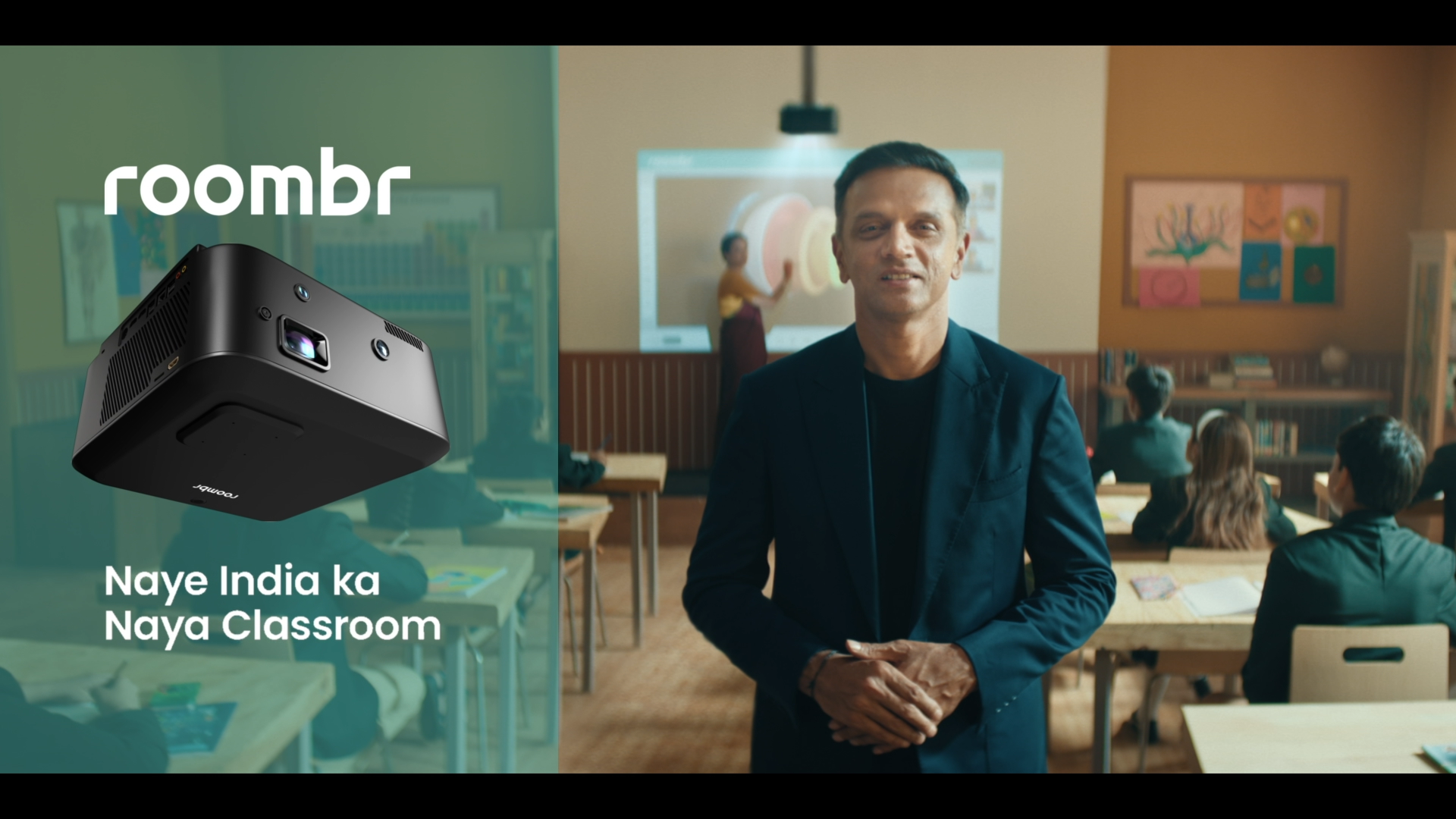
Roombr's digital classroom setup includes lesson recording, playback, and multilingual support. These map directly to what early grade FLN teaching needs, without adding extra complexity for young learners or their teachers.
Frequently Asked Questions
1. What are digital classroom solutions for foundational literacy?
They are classroom tools like interactive displays and lesson recording software that help young children practice reading and number skills through repetition, sound, and visuals.
2. What is the NIPUN Bharat Mission's target year?
NIPUN Bharat aims to achieve universal foundational literacy and numeracy by the end of Grade 3 by the 2026-27 academic year.
3. How can technology help build numeracy skills in Grades 1 to 3?
Visual tools like digital place value blocks and gamified quizzes help children understand what numbers represent, not just memorise them.
4. Does NIPUN Bharat apply to private schools too?
Yes. The mission covers Balvatika to Grade 3 across government, government-aided, and private schools nationwide. That said, for private schools, participation and adoption of the framework are strongly encouraged rather than mandatory.
5. How can schools track FLN progress in Grades 1 to 3?
Digital classroom solutions let teachers log reading speed, comprehension, and number skills after each session. This creates a simple, ongoing record instead of relying only on term-end exams.
Bringing FLN Goals Into Everyday Teaching
NIPUN Bharat sets a clear national target. Reaching the goal comes down to daily classroom practice, not policy alone.
The right digital classroom solutions give teachers a practical way to deliver repetition, visual learning, and home language support at scale. That is the bridge between policy and real classroom outcomes.
Schools that start early will find the 2026-27 deadline far less daunting.
Roombr's digital classroom tools are built around this need. Lesson recording lets young readers repeat a passage as many times as it takes. Multilingual support keeps instruction in a child's home language, just as NIPUN Bharat recommends. For schools working toward their FLN targets, it's a practical starting point, not just another piece of hardware.

Foziya Abuwala
Share
Step Into the future of
Education with Roombr