

Until recently, classrooms across India relied heavily on chalkboards and lengthy lectures. Students copied notes quietly. Teachers delivered content. Assessments decided who was paying attention.
That model isn't gone. But it's no longer enough.
Parents now expect more from schools. Institutions are judged on learning outcomes and accreditation scores. And students disengage fast when a class doesn't feel relevant. This is why interactive learning has moved from buzzword to necessity in Indian classrooms.
This shift matters more than it sounds. A landmark meta-analysis of 225 studies in undergraduate STEM courses, published in the Proceedings of the National Academy of Sciences (Freeman et al., 2014), found that failure rates under traditional lecturing were about 55% higher than under active learning, and exam scores rose by roughly half a letter grade when students learned actively instead of passively. That's not a marginal difference — it's one of the most cited findings in education research, and it's the foundation this entire approach rests on.
For K-12 and higher education, the real question isn't whether interactive learning works. It's how to bring it into everyday classroom practice.
Let's break down ten clear, practical benefits.
10 Benefits of Interactive Learning in Today's Digital Classroom
1. Keeps Students Engaged for Longer
Attention spans shrink fast in a lecture — most teachers notice focus drifting within 10 minutes. A quick problem to solve, a live poll, or a real-life example resets that attention.
Engagement isn't just "keeping students busy." It's directly tied to how well they retain and apply what they learn. For administrators tracking NAAC feedback or parent satisfaction, higher classroom participation is often the first visible sign of interactive learning taking hold.
2. Builds Critical Thinking Instead of Rote Memorization
Indian education has long leaned on memorization. Interactive learning pushes back on that directly. Students are asked to question, apply, and critique, not just recall.
Picture a political science class where students role-play opposing parties debating a bill. They don't just learn what the textbook says. They understand context, trade-offs, and consequences. This is the kind of thinking that rote learning never builds.
3. Strengthens Collaborative Learning
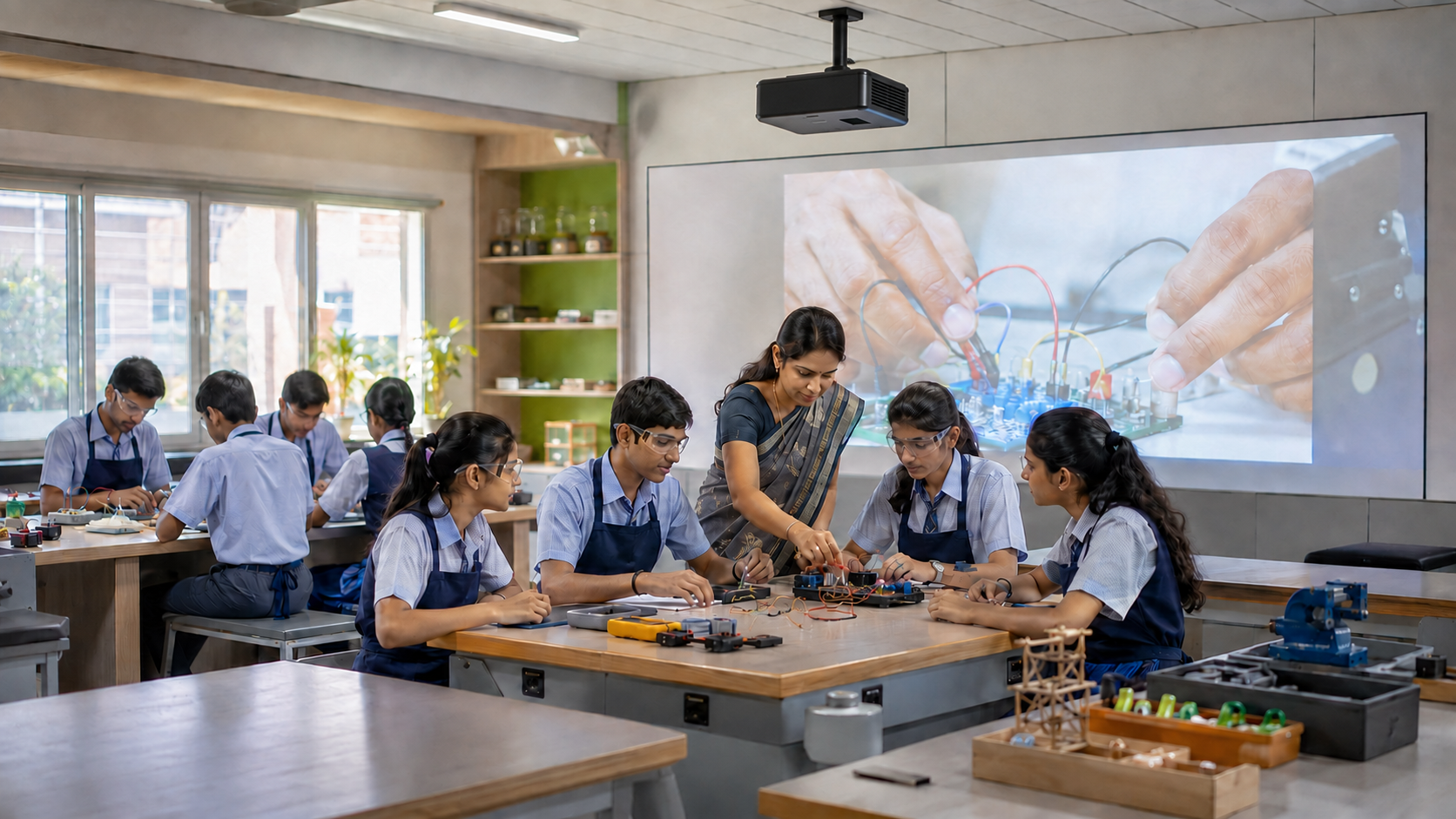
Modern workplaces run on collaboration. Yet many classrooms still reward only individual performance. Interactive learning introduces group projects, peer problem-solving, and shared presentations that change that dynamic.
Something interesting happens here: students who rarely speak up in a full class often open up in a small group. That's the quiet power of an interactive classroom. It gives every learning style, including the quieter ones, a way in.
4. Bridges Theory with Real-World Practice
"Where will I actually use this?" is a question interactive classrooms answer directly, through case studies, role-plays, and applied projects.
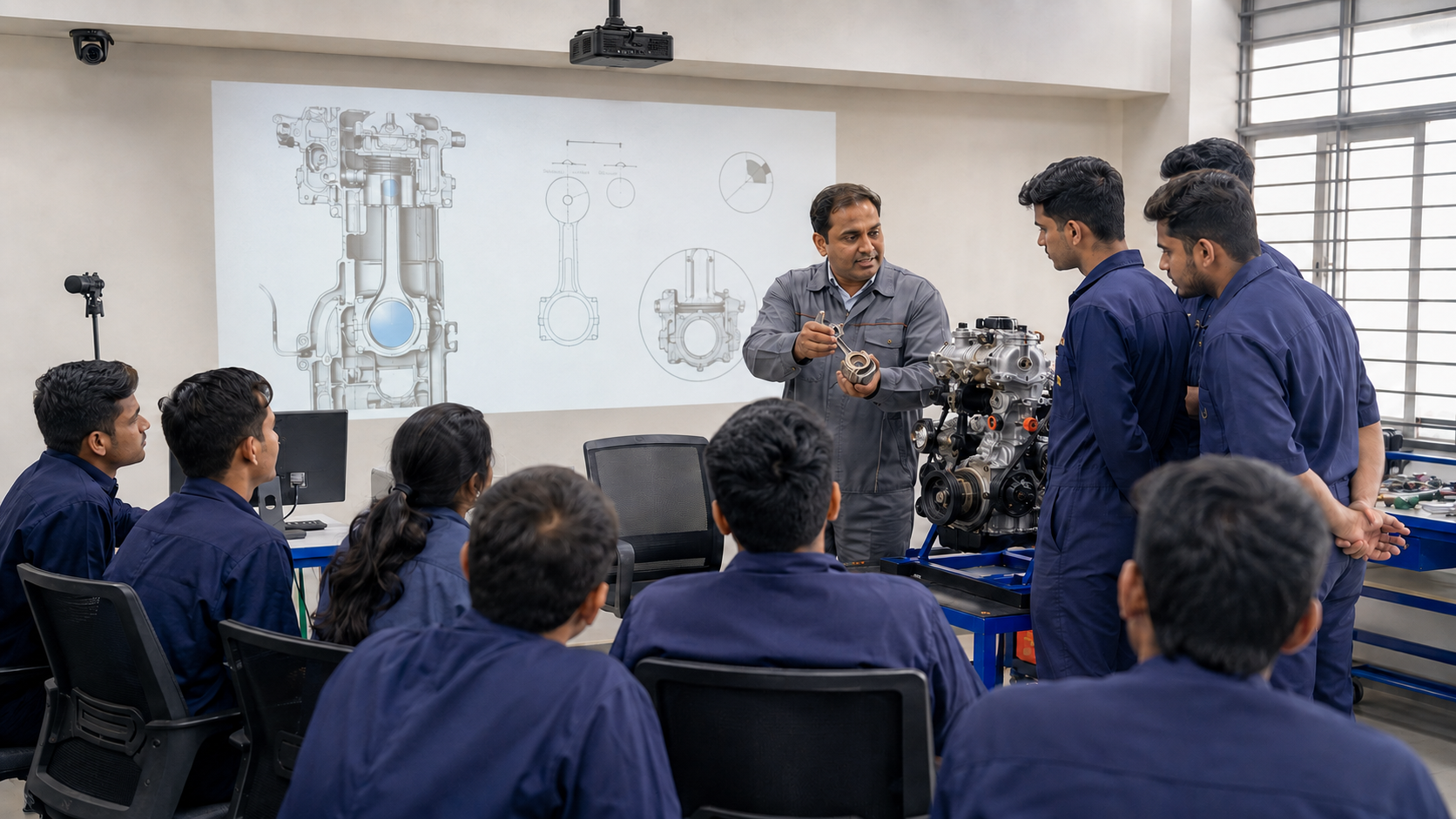
In a commerce class, for example, students could run a mock business — handling budgets, marketing, and customer complaints — instead of just memorizing accounting terms. Lessons like this stick. And for universities, demonstrating this kind of practical readiness has a direct link to placement outcomes.
5. Adapts to Different Learning Styles
Every classroom has a mix of learners, including visual, auditory, and kinesthetic. Traditional lecture-based teaching rarely serves all three at once. Interactive teaching tools are built precisely to close that gap.
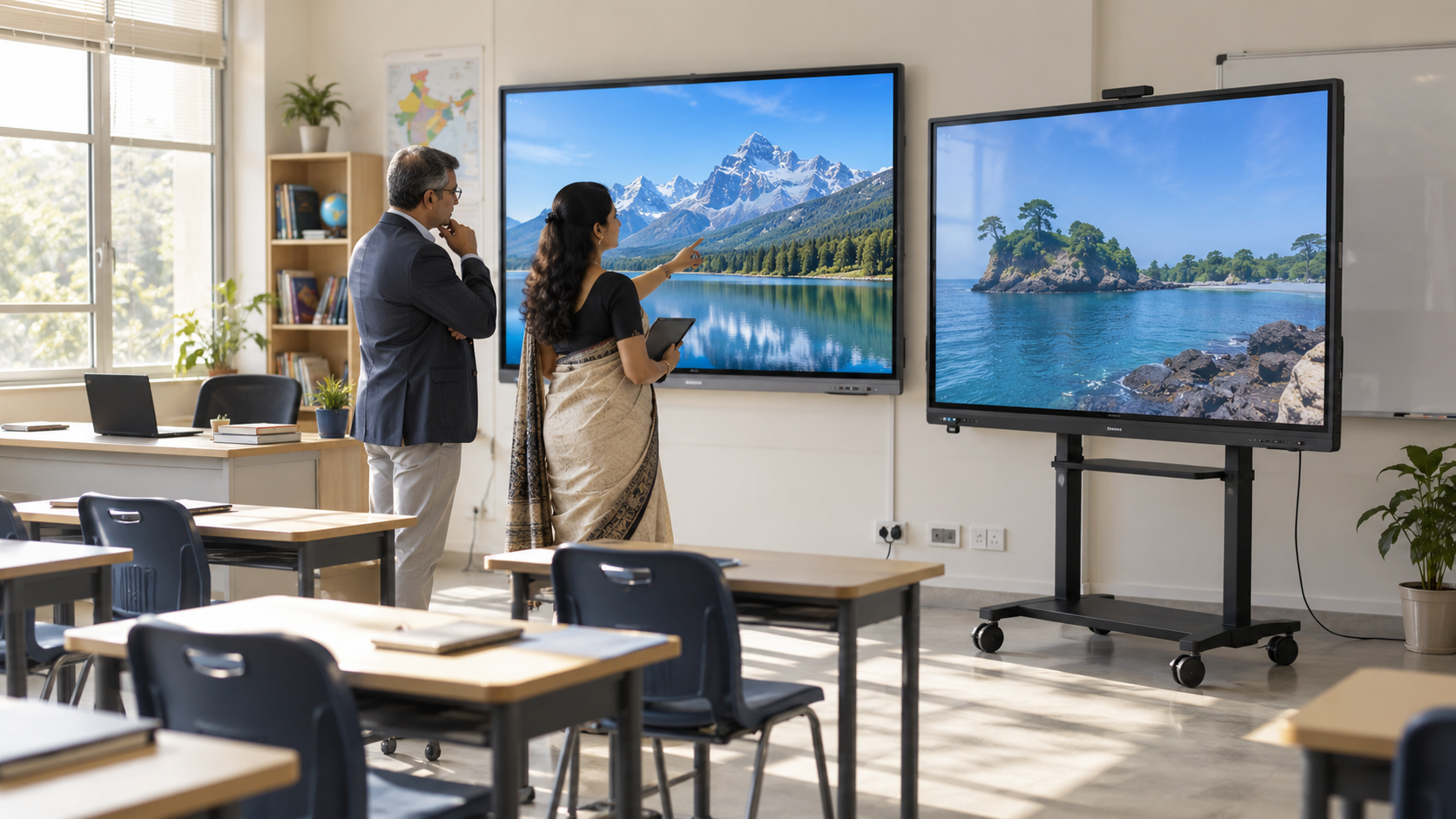
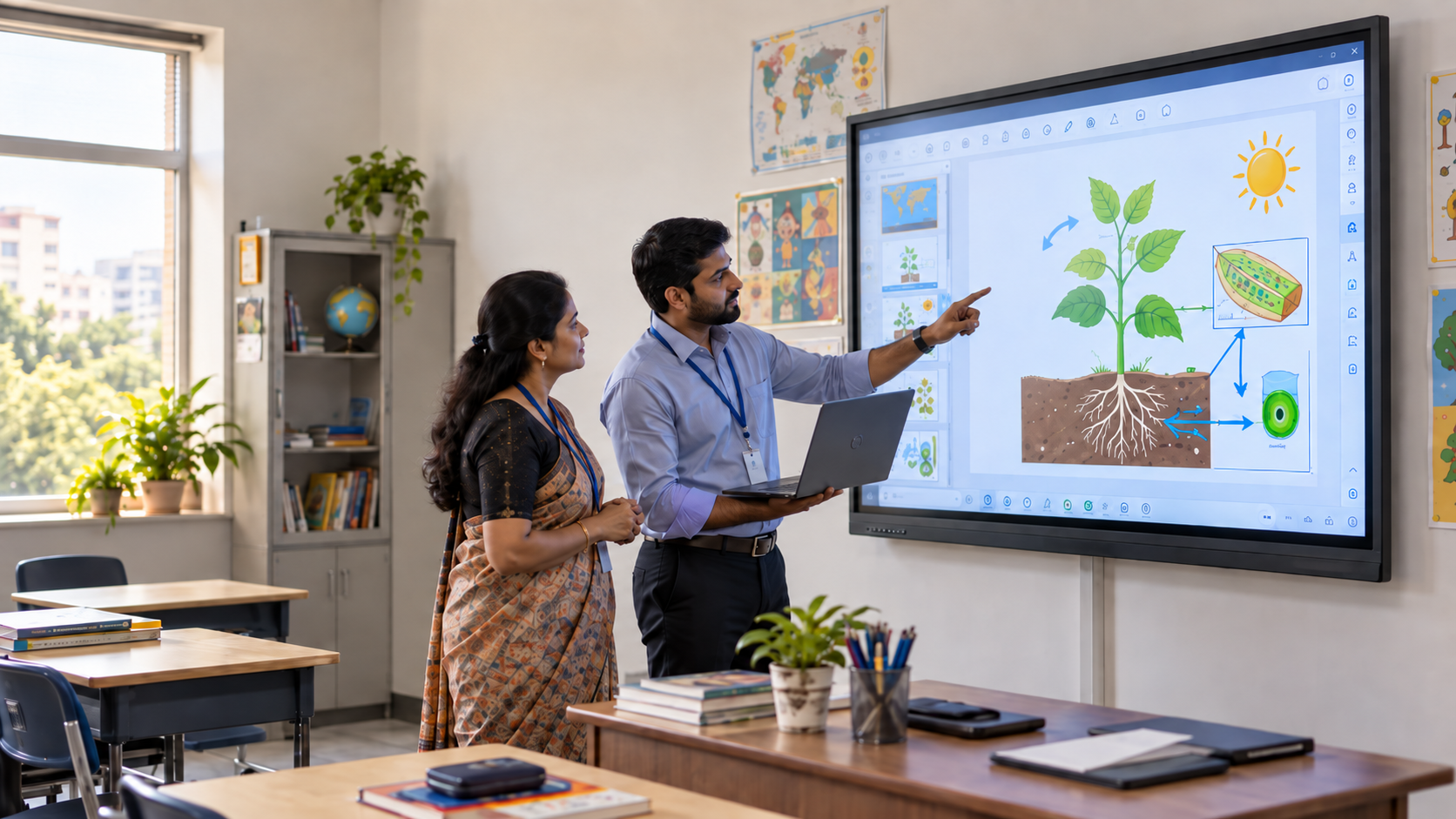
One practical detail worth knowing: many modern classroom displays support dual-touch interaction, meaning two students can work on the same board simultaneously. This is a small feature that matters a lot for group-based activities in a mixed-learning-style classroom.
6. Makes Classroom Management Easier
Boredom is often the root cause of discipline issues. If students are actively debating, building, or solving problems, they naturally have fewer chances to disengage.
Teachers consistently report interactive classrooms feel calmer, not because rules changed, but because attention is occupied productively. For school leaders, that means more effective teaching hours without extra pressure on staff. This is a genuine benefit of interactive learning for teachers, not just students.
7. Enables Blended and Hybrid Learning Models
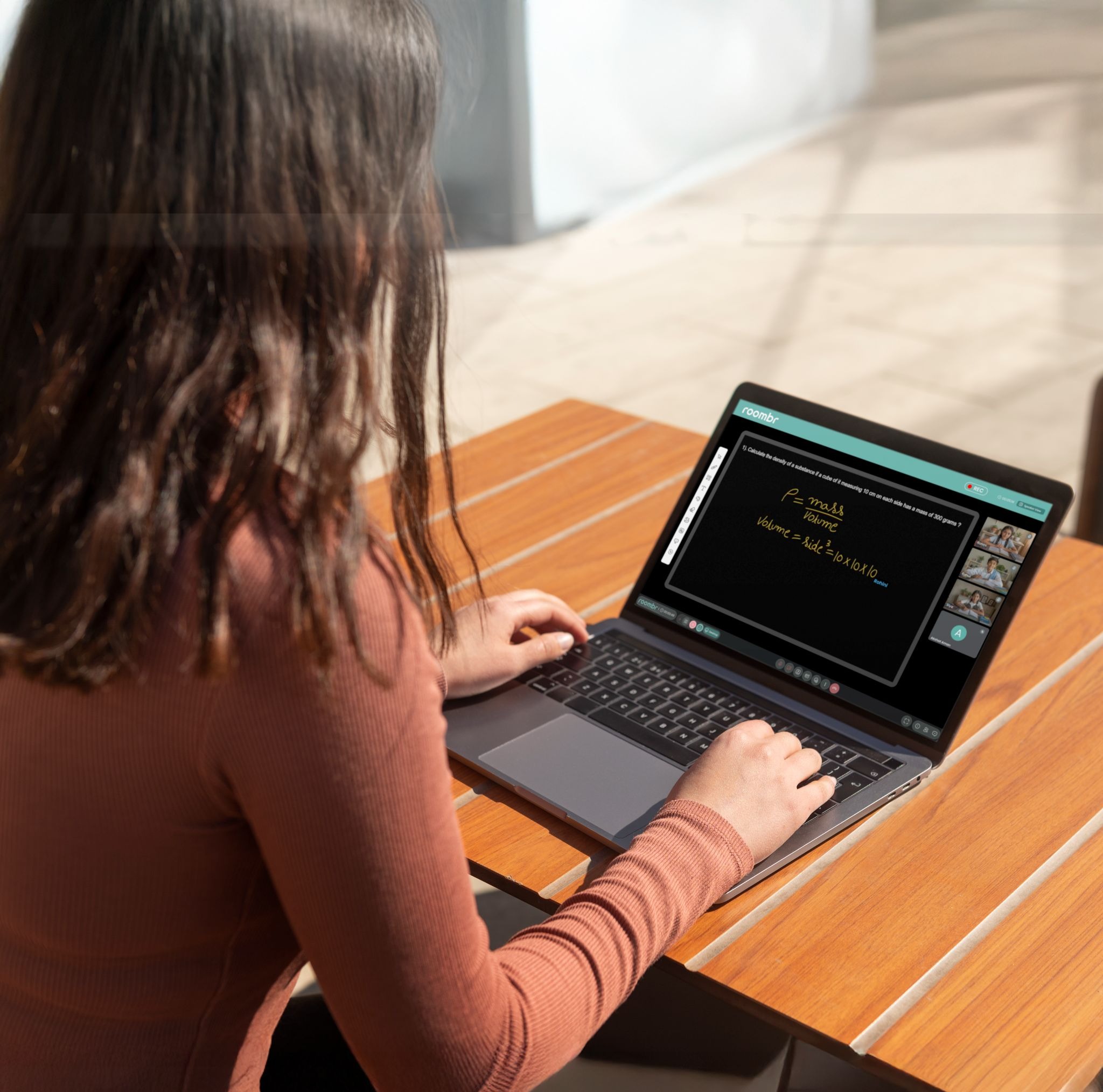
Flexibility is no longer optional for Indian schools and colleges. Parents expect both physical and digital resources to work together — and India's National Education Policy (NEP) 2020 explicitly encourages blended learning as a way to personalize instruction and extend access beyond the classroom walls, according to NCERT's Central Institute of Educational Technology.
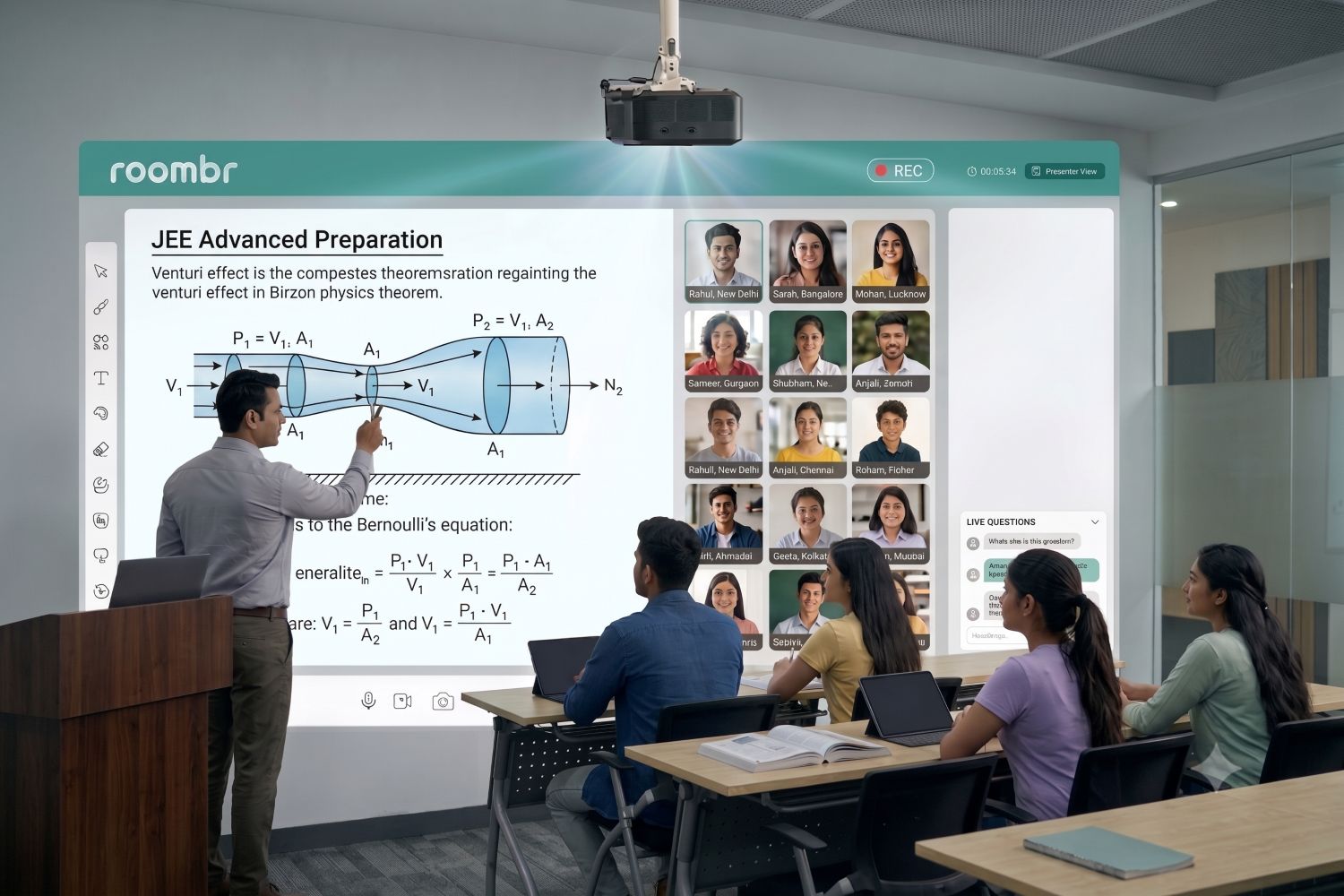
A science teacher might explain a concept in class, then share a digital classroom simulation for students to revisit at home. This continuity matters, and it's why sessions that record and save automatically, with AI-assisted replay, have become such a practical addition to Indian classrooms. Students who missed a point in class can go back and find it themselves, without waiting on the teacher.
8. Builds Problem-Solving and Decision-Making Skills
Textbooks rarely prepare students for real-life decisions. Interactive learning is built for this. It challenges students to take limited information, weigh their options, and make a decision.
A geography project asking students to plan a sustainable city on a fixed budget has no single right answer. But the process — trade-offs, negotiation, group decision-making — is what higher education and employers look for.
9. Creates a More Inclusive Classroom
Not every student has the confidence to raise a hand mid-lecture. Anonymous polls, breakout groups, and project-based tasks give quieter students a way to participate without being put on the spot.
For institutions focused on equity, this goes beyond a feel-good benefit. Inclusivity now directly impacts accreditation standards in Indian higher education, making interactive classrooms a measurable asset.
10. Improves Long-Term Learning Outcomes
Education is ultimately judged by outcomes. Parents want results, boards want scores, and accreditation bodies want measurable proof. Interactive learning consistently delivers on this front.
Schools that adopt these methods tend to see:
- Higher exam performance
- Greater participation in assessments
- Stronger project quality
- Better long-term retention of concepts
For universities, this often translates into stronger graduate employability. For schools, it means better board results and stronger parent trust.
Interactive Learning vs. Traditional Teaching: A Quick Comparison
Frequently Asked Questions
1. What is interactive learning in the classroom?
It is a teaching method where students actively participate through discussion, technology, and hands-on activity, rather than passively receiving information through lecture alone.
2. How does interactive learning help students?
It improves engagement, retention, and critical thinking by giving students an active role in building understanding, instead of just absorbing content. Research on active learning links this approach to measurably lower failure rates and higher exam performance.
3. What are some interactive activities for the classroom?
Common examples include live polls, group debates, role-play exercises, project-based assignments, and digital simulations that students can revisit outside class hours.
4. Is interactive education suitable for both schools and colleges?
Yes. K-12 classrooms benefit through role-play, group work, and visual tools that support foundational learning. Whereas higher education applies it through case studies, project-based assessments, and outcomes-based learning models aligned with NAAC and NBA standards.
5. What technology supports interactive learning?
Touch-based digital displays, session recording with replay, and collaborative dual-touch boards are common interactive teaching tools used in modern Indian classrooms to support blended and hybrid learning models.
Closing Thoughts
Interactive learning isn't a teaching trick. It's a direct response to how students, parents, and regulators now define a good education. It makes classrooms easier to manage, helps students learn more effectively, and supports institutions working toward accreditation goals under frameworks like NEP 2020.
The real question for decision-makers isn't whether the interactive education system works. It's whether your institution can afford to fall behind by ignoring it.
Discover how Roombr can help bring interactive learning into your classrooms.

Foziya Abuwala
Share
Step Into the future of
Education with Roombr