
Every accreditation visit, every curriculum review, every faculty meeting eventually circles back to the same question: can you prove that students actually learned what you say they learned?
Not attendance. Not pass percentages. Actual, demonstrable evidence of skill and knowledge gained.
Assessing student learning outcomes is built to solve this challenge, and it's a task most institutions get only partially right. They write the outcomes. They run the exams. But the link between the two — the evidence trail that shows this assessment proves that outcome — is where most departments struggle.
This guide breaks down how that link is built: the methods, the tools, the common mistakes, and how classroom technology fits into the picture.
It happens at the program or course level, not the individual student level. A single student's grade tells you how they performed. Outcome assessment tells you whether your teaching design itself is working — for everyone.
That distinction matters more than it sounds. Here's why.
Why Assessing Student Learning Outcome Is Different From Grading
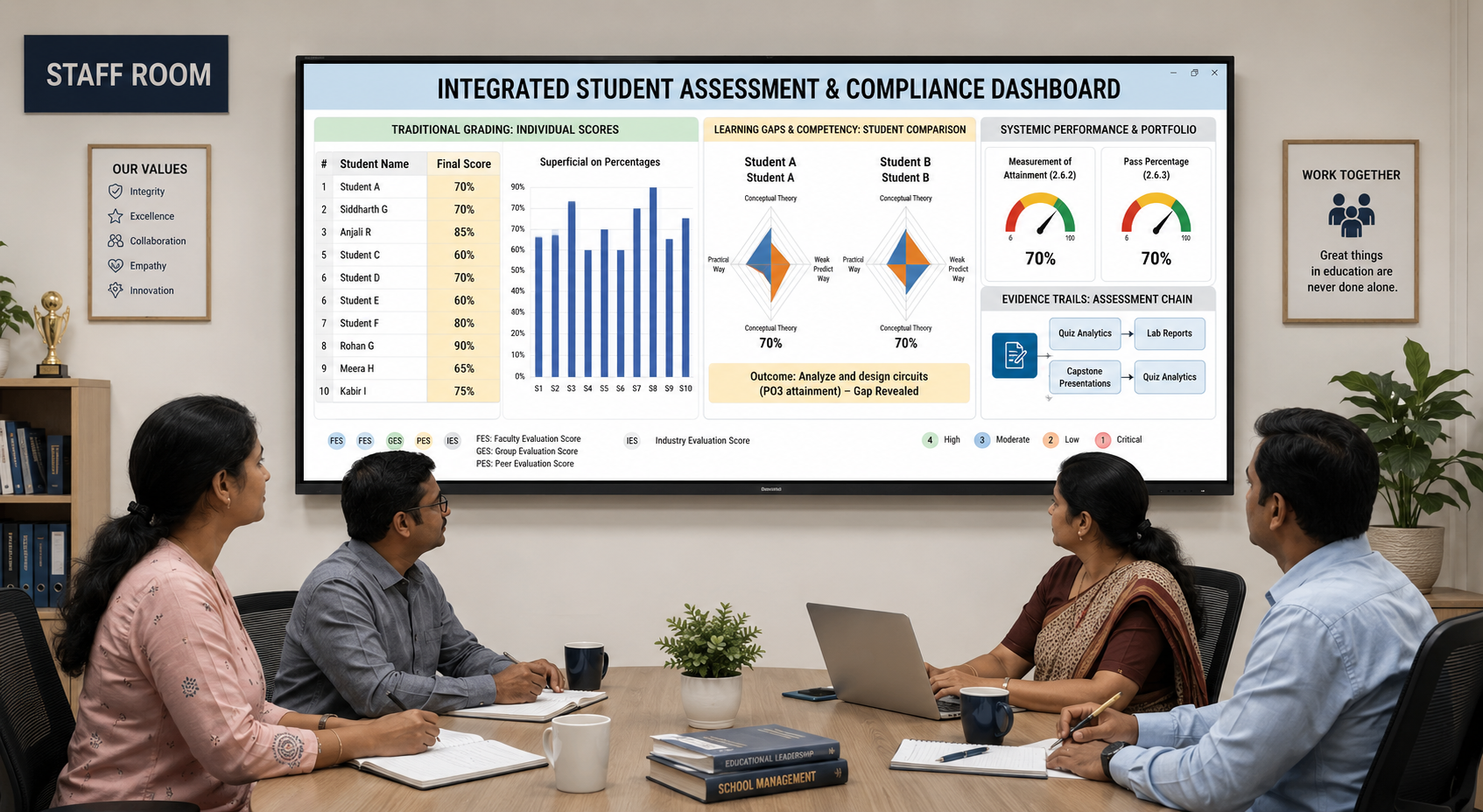
A grade answers: "How did this student do in this test?"
Outcome assessment looks at a broader question: "Did our instructional approach successfully equip the whole class with the skills we set out to teach?"
Consider two engineering students who both score 70% on a circuits exam:
- Student A lost marks on conceptual questions but nailed practical wiring.
- Student B did the opposite — strong theory, weak hands-on application.
Their grades are identical. Their learning gaps are not. Outcome assessment is the process that catches this difference — because it looks at what kind of evidence backs up the score, not just the score itself.
NAAC applies this same logic under Criterion 2.6 of its Self-Study Report format. It separately evaluates whether outcomes are clearly stated (2.6.1), whether their attainment is actually measured (2.6.2), and pass percentage as a distinct, later indicator (2.6.3). The reason is simple: pass percentage alone doesn't prove outcome attainment.
Direct vs. Indirect Assessment Methods
Every credible outcome-assessment framework rests on two categories of evidence. Mixing both gives you a far more reliable picture than either alone.
Direct methods should always form the backbone of your evidence. They're what accreditors and internal quality cells trust most, because they're tied to actual student work rather than opinion.
Indirect methods fill in the "why" behind the numbers. If direct assessment shows students consistently underperform on a specific competency, an exit survey might reveal why — poor sequencing, unclear instructions, or a resource gap.
Practical Rule of Thumb: Aim for at least 70% direct evidence and 30% indirect evidence in any outcome report. Direct-only reporting looks thin to auditors; indirect-only reporting looks unverifiable.
Assessment Methods Used to Evaluate Learning Outcomes
Direct assessment methods break down even further based on exactly when they occur during the teaching process.
Formative Assessment Methods
These happen during the learning process. The goal is to catch gaps early, while there's still time to fix them.
- In-class quizzes and polls after a concept is introduced
- Peer review of draft assignments
- 60-second reflection notes ("What topic left you the most confused today?")
- Low-stakes practice problems before a graded test
Summative Assessment Methods
These happen at the end of a learning unit. The goal is to certify what was achieved.
- End-of-semester exams
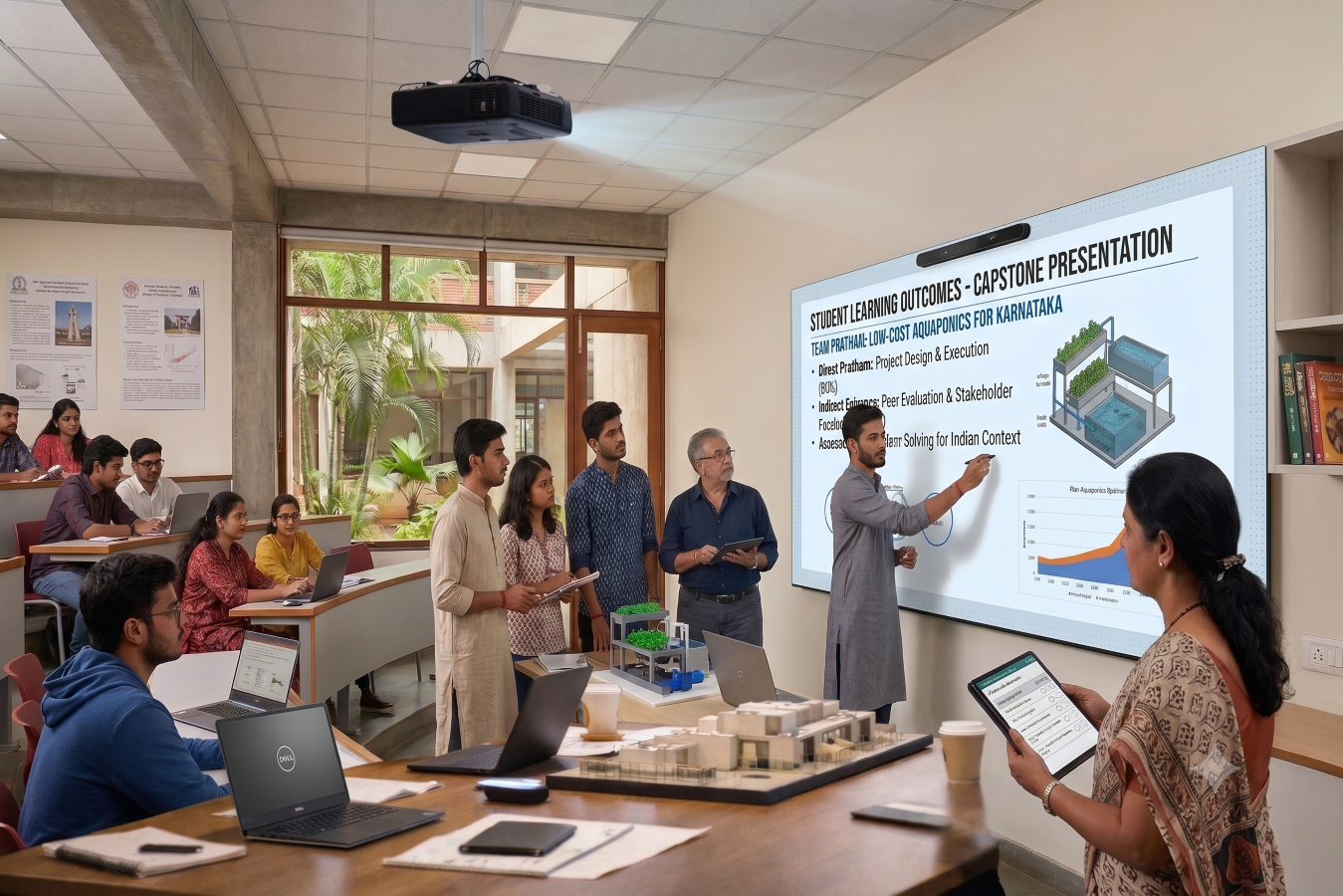
- Final projects and capstones
- Portfolio submissions
- Viva voce and oral defenses
Choosing the Right Mix by Discipline
A one-size-fits-all approach rarely works. Classroom assessment techniques should match how the discipline builds competency:
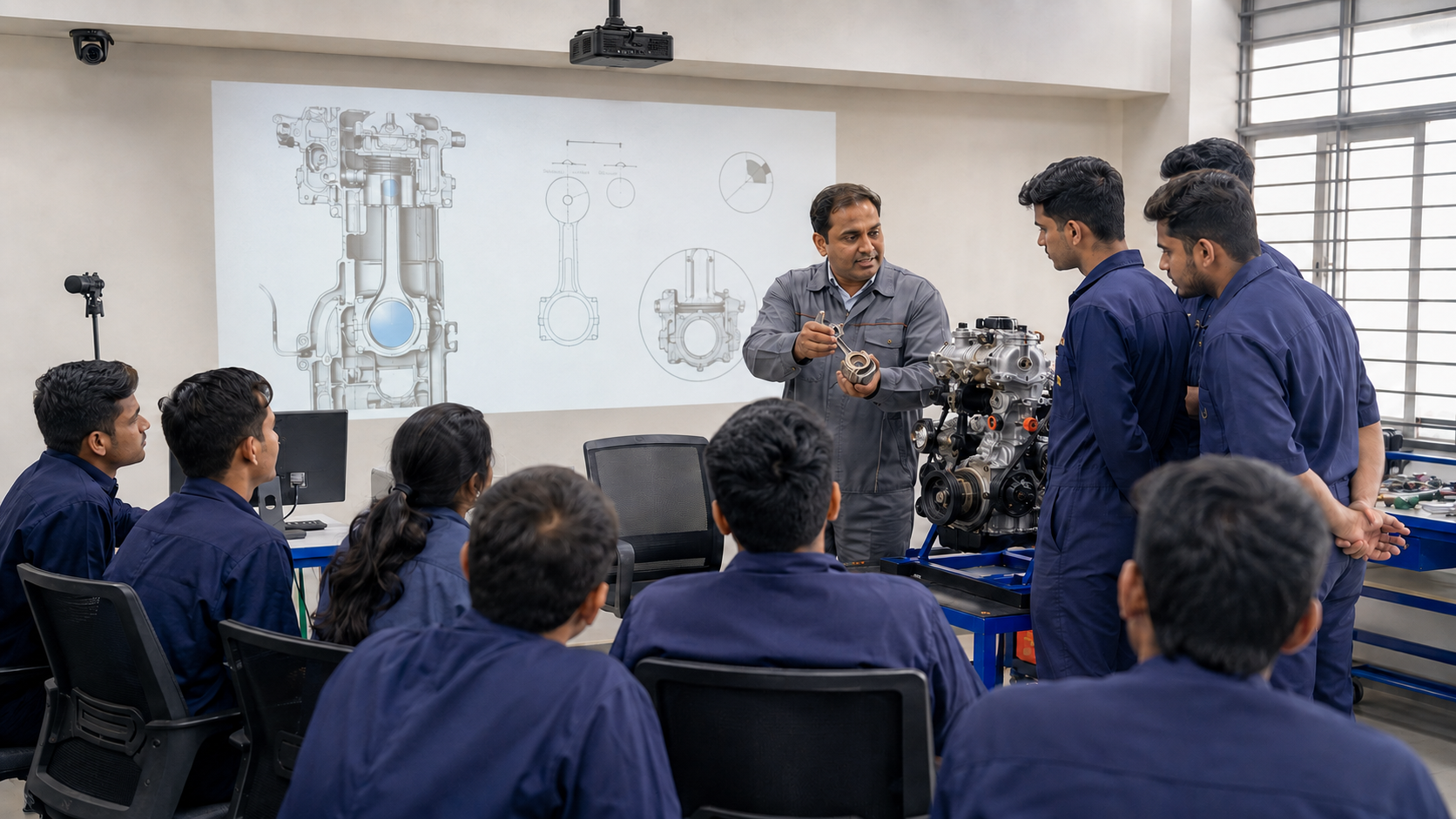
- Engineering & Lab Sciences: Lean heavily on direct, practical assessment (lab performance, viva, project builds) over theory-only exams.
- Humanities & Social Sciences: Essays, seminar participation, and structured peer critique carry more weight than multiple-choice testing.
- Professional Programs (Nursing, Management): Case-based assessment and simulations tend to map most accurately to real-world outcome statements.
Classroom Techniques for Continuous Evidence Collection
The biggest practical obstacle to outcome assessment isn't designing the framework. It's the manual effort of collecting evidence consistently, every week, across every section.
This is where most departments quietly give up midway through a semester. Manually tagging quiz scores to specific outcomes, or re-reviewing lecture recordings to check whether a concept was actually taught the way the syllabus claims, eats hours faculty don't have.
A few practices help close that gap without adding faculty workload:
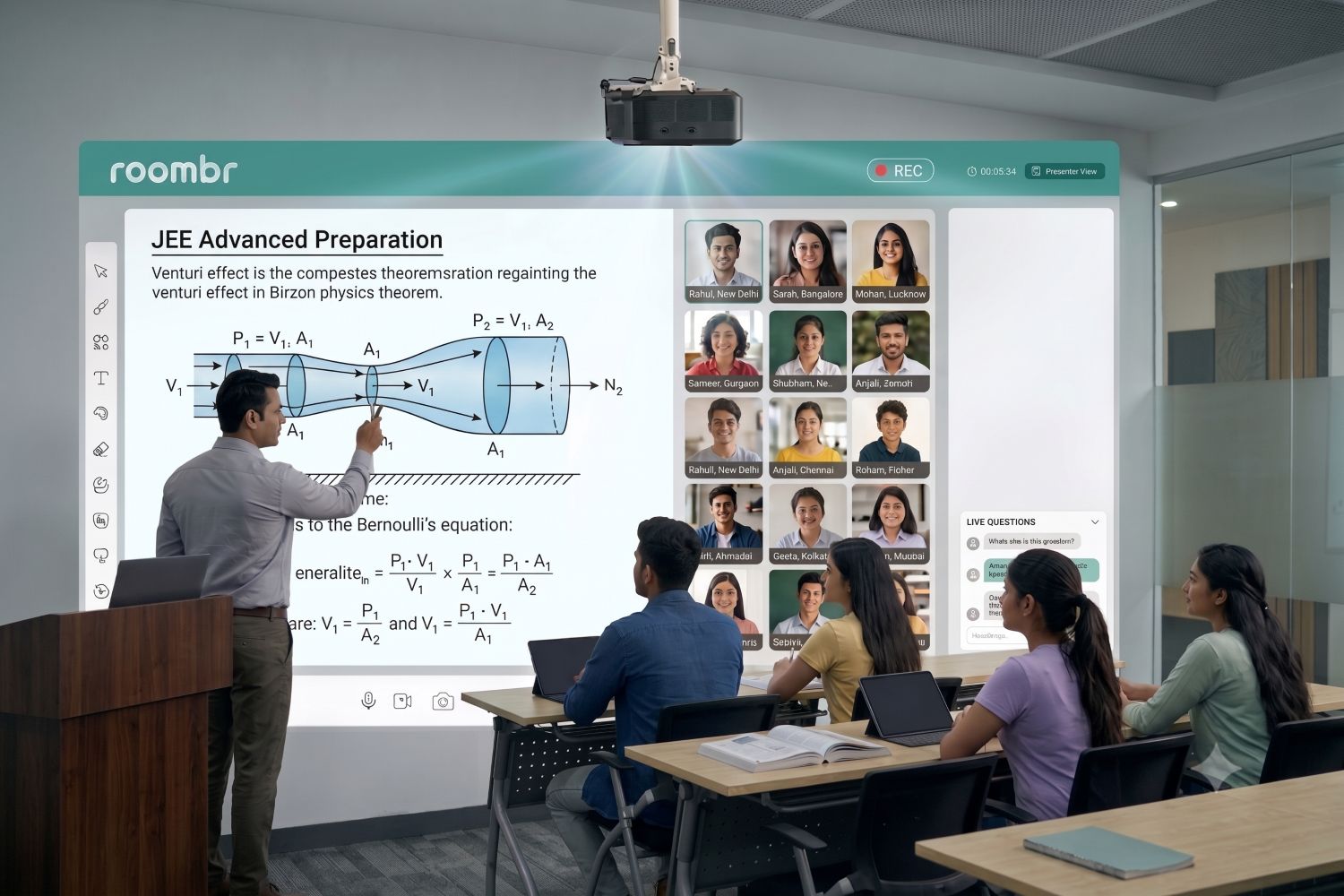
- Auto-Recorded Sessions: Every lecture saved automatically, so evidence of what was actually taught (not just planned) exists without extra effort
- In-Lesson Quiz Analytics: Instant, disaggregated results by topic, not just a single score
- Session Replays: Instructors can rewatch specific lecture clips to confirm that the actual lesson matched the required learning objectives.
An integrated classroom system like Roombr Learn is built around exactly this. It combines an all-in-one interactive teaching hardware with software that automatically records and replays sessions. So the evidence trail for outcome assessment builds itself in the background instead of becoming a separate administrative task at the end of the term.
Writing Measurable Learning Outcomes (Before You Can Assess Them)
You cannot assess an outcome that was never written to be measurable in the first place. This is the single most common failure point departments run into.
A measurable learning outcome should be:
- Specific: Names an exact skill, not a vague aspiration
- Action-Based: Built around an observable verb (analyze, design, calculate, evaluate)
- Assessable: Tied to a method that can actually produce evidence
- Level-Appropriate: Matched to the course's academic level, not copy-pasted across years
Weak vs. Strong Outcome Statements
Notice the pattern: strong statements use verbs from Bloom's Taxonomy — analyze, design, evaluate, construct — because these verbs point directly to an assessable action. "Understand" and "appreciate" don't, which is exactly why they're so hard to grade consistently across faculty.
Turning Assessment Data Into Curriculum Improvement
Collecting evidence is only half the job. The second half — and the part accreditors scrutinize most closely — is what you did with it.
A simple, repeatable cycle:
- Collect: Direct and indirect evidence, mapped to specific outcomes
- Analyze: Identify which outcomes are consistently under-attained across sections
- Act: Adjust teaching method, resequence content, or add remedial sessions for the specific gap
- Re-Assess: Verify the fix worked in the next cycle
Outcome assessment also feeds directly into your program's broader CO-PO attainment framework, which maps how course outcomes and program outcomes connect to NBA and OBE compliance documentation. Once that mapping is in place, the assessment data collected here becomes the reporting evidence institutions submit during accreditation cycles.
Common Mistakes That Undermine Outcome Assessment
- Assessing Only at the Exam Level: Missing the formative signals that could have flagged a gap earlier
- Treating Pass Percentage As Proof Of Attainment: A class can pass an exam while still missing the specific competency the outcome describes
- No Feedback Loop: Collecting data every semester but never adjusting teaching based on it
- Outcome Statements That Were Never Measurable To Begin With: See the table above
Final Thoughts
Assessing student learning outcomes isn't a compliance checkbox — it's the mechanism that tells you whether your teaching is actually working, department by department, semester by semester.
Get the outcome statements measurable, mix direct and indirect evidence in the right proportion, and build a real feedback loop. Do that, and the accreditation paperwork becomes a natural byproduct of good practice, not a scramble before the audit.
Frequently Asked Questions
1. What is the difference between direct and indirect assessment of learning outcomes?
Direct assessment measures actual demonstrated skill through exams, projects, or rubrics. Indirect assessment captures perception and self-reported learning through surveys and feedback — useful for context, but not a substitute for direct evidence.
2. What are examples of formative assessment in higher education?
Common examples include in-class quizzes, peer review of drafts, one-minute reflection papers, and low-stakes practice problems — all designed to catch learning gaps while there's still time to address them.
3. How often should learning outcomes be assessed?
Most institutions assess formatively throughout the semester and summatively at the end of each course, then review attainment data at the program level once a year for curriculum planning.
4. What makes a learning outcome measurable?
A measurable outcome uses a specific, observable action verb — such as "design," "analyze," or "calculate" — rather than vague terms like "understand" or "appreciate," and is tied to an assessment method that can produce evidence.
5. Can classroom technology help with assessing student learning outcomes?
Yes. Auto-recorded sessions, quiz analytics, and replay review reduce the manual effort required to collect and verify evidence, which is often the biggest practical barrier to consistent outcome assessment.
Make Evidence Collection Effortless
Collecting outcome data shouldn't mean extra administrative work for already-stretched faculty.
Roombr removes the manual tracking from the process entirely. Our integrated hardware and software ecosystem works quietly in the background of every lecture. It automatically records sessions, categorizes them by topic, and pulls instant quiz analytics into one clear dashboard.
You get a running evidence trail for every single course, and your educators get their time back.
Curious to see how this actually looks in a live lecture environment? Request a Roombr Walkthrough

Foziya Abuwala
Share
Step Into the future of
Education with Roombr