

University expansion should not create academic drift. Yet that is what happens when one campus teaches a course differently from another. Lecture quality changes. Assessments vary. And soon, the same degree starts producing uneven results.
For vice chancellors, deans, chief academic officers, and IT leaders, the real challenge is not just access. It is consistency. You need a system that protects academic rigor, supports learning outcomes, and keeps every branch campus aligned with the same academic standard. That is also where outcome-based accreditation frameworks become impossible to ignore.
Why Campuses Struggle to Match Main-Campus Course Outcomes
Multi-campus institutions usually face three predictable problems.
First, the teaching experience changes when different faculty members interpret the same syllabus differently. Second, assessments become uneven when branches use different tools or timelines. Third, academic leadership loses visibility into what is actually being delivered.
That is why course outcomes often drift away from the original intent of the program. UGC’s Learning Outcomes-based Curriculum Framework (LOCF) says outcomes should guide curriculum planning, teaching, assessment, and periodic review. It also says institutions should use outcomes to maintain standards and ensure comparability. In other words, the system is supposed to be aligned end to end.
The Silent Threat to Your University Accreditation Status
Accreditation bodies look closely at whether institutions have stated and measured programme and course outcomes. NAAC’s manuals include programme and course outcomes under student performance and learning outcomes. When one branch produces weaker results than another, the issue is no longer just academic. It becomes an institutional quality signal.
Why Duplicate Faculty Cannot Replicate Original Lecture Quality
Hiring secondary lecturers for the same syllabus sounds practical. In reality, it often creates a different student experience at every branch.
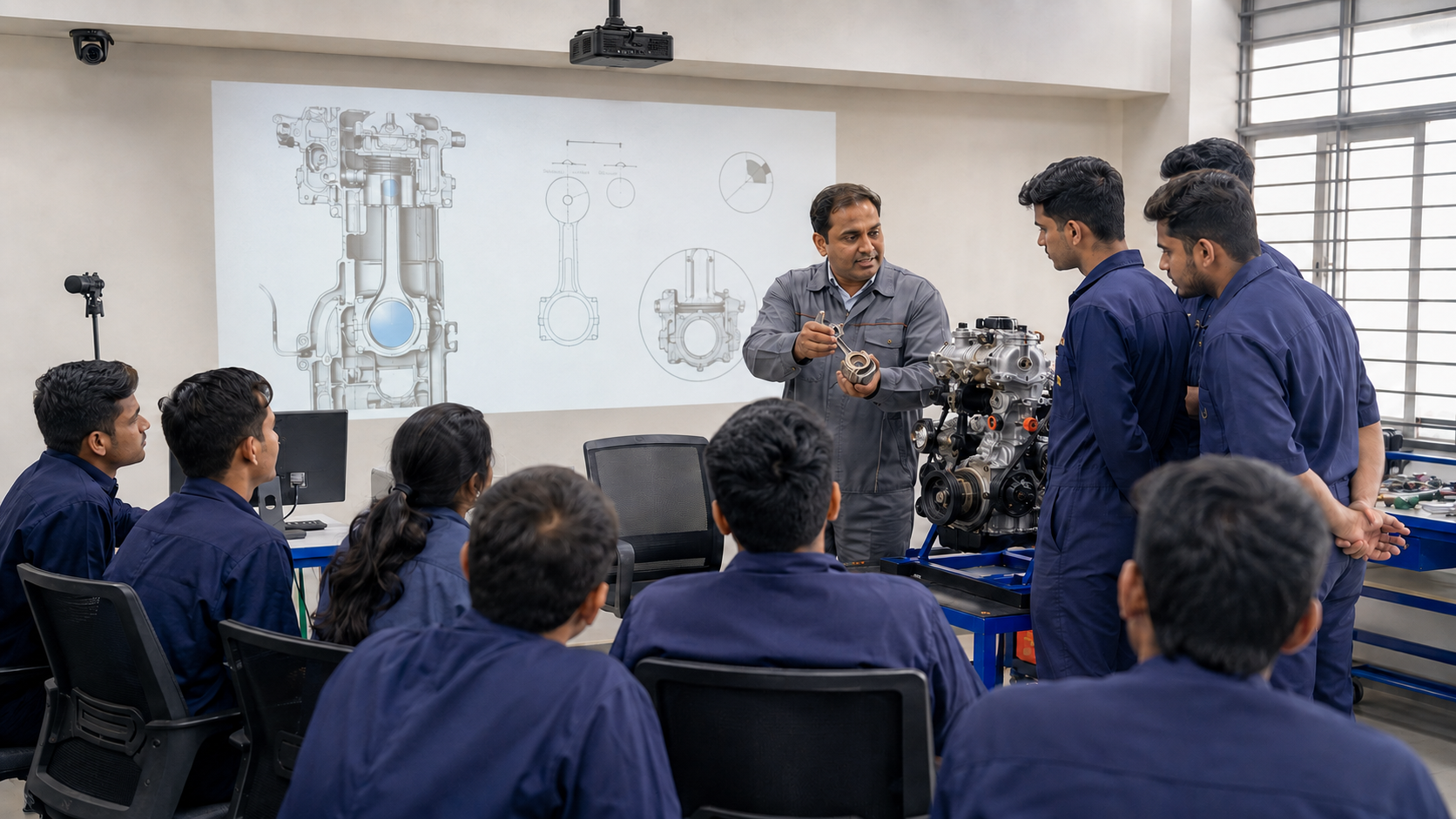
Even strong faculty members teach with different pacing, examples, and interaction styles. That is not a staffing problem. It is a consistency problem. For higher education systems that want predictable outcomes, the teaching model itself must be standardized.
How Digital Classroom Infrastructure Protects Academic Rigor
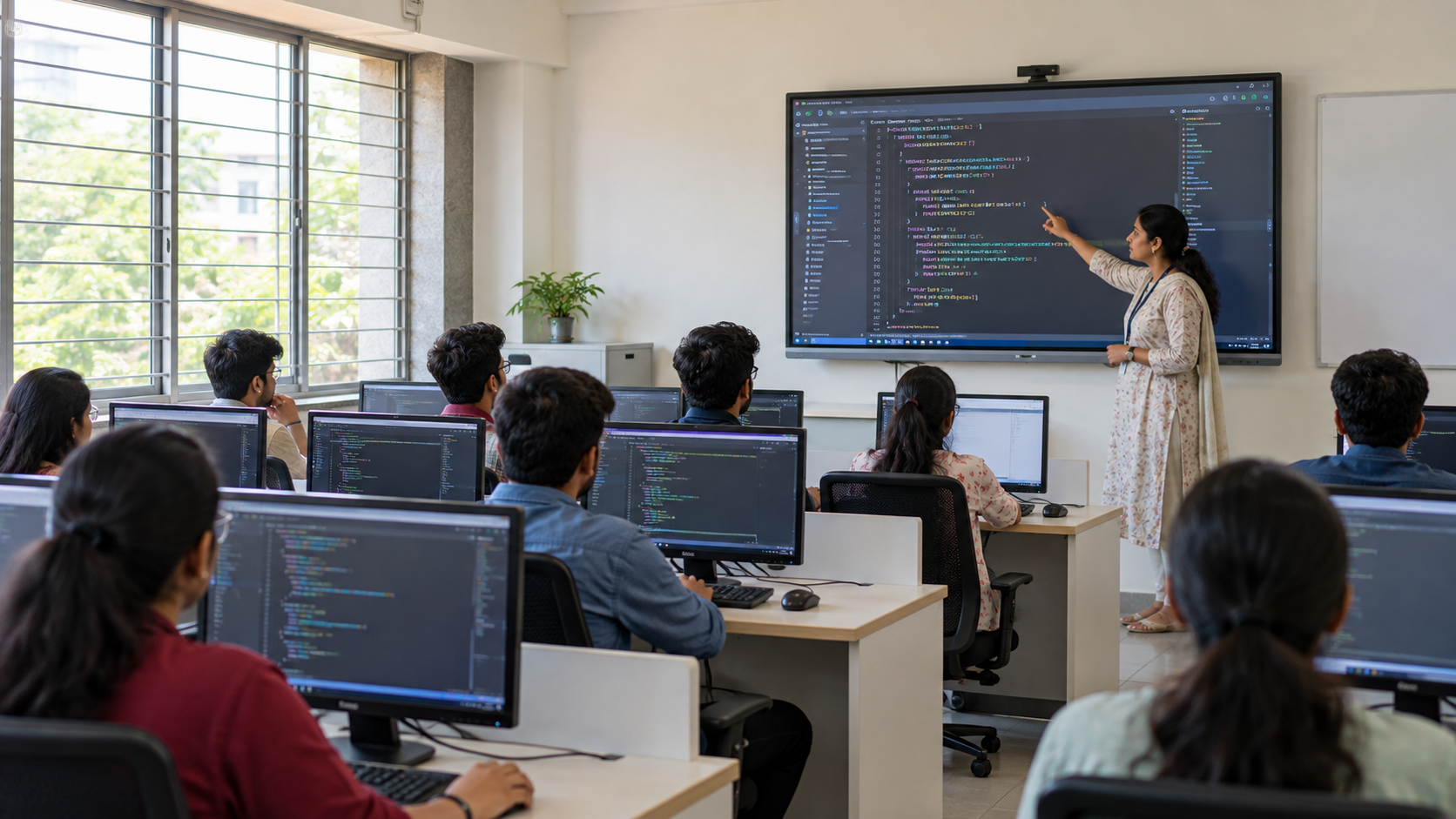
A modern digital classroom strategy solves the gap at the source. Instead of trying to copy teaching quality campus by campus, the university delivers one high-quality lecture experience everywhere.
This is where synchronous distance learning becomes more than a convenience. It becomes a control mechanism for quality. UGC’s Quality Mandate stresses that outcome-based education should align resources, curriculum, processes, and assessment to intended outcomes. A centralized model makes that alignment much easier to enforce.
1. Broadcast Life-Size Lectures With Zero Latency
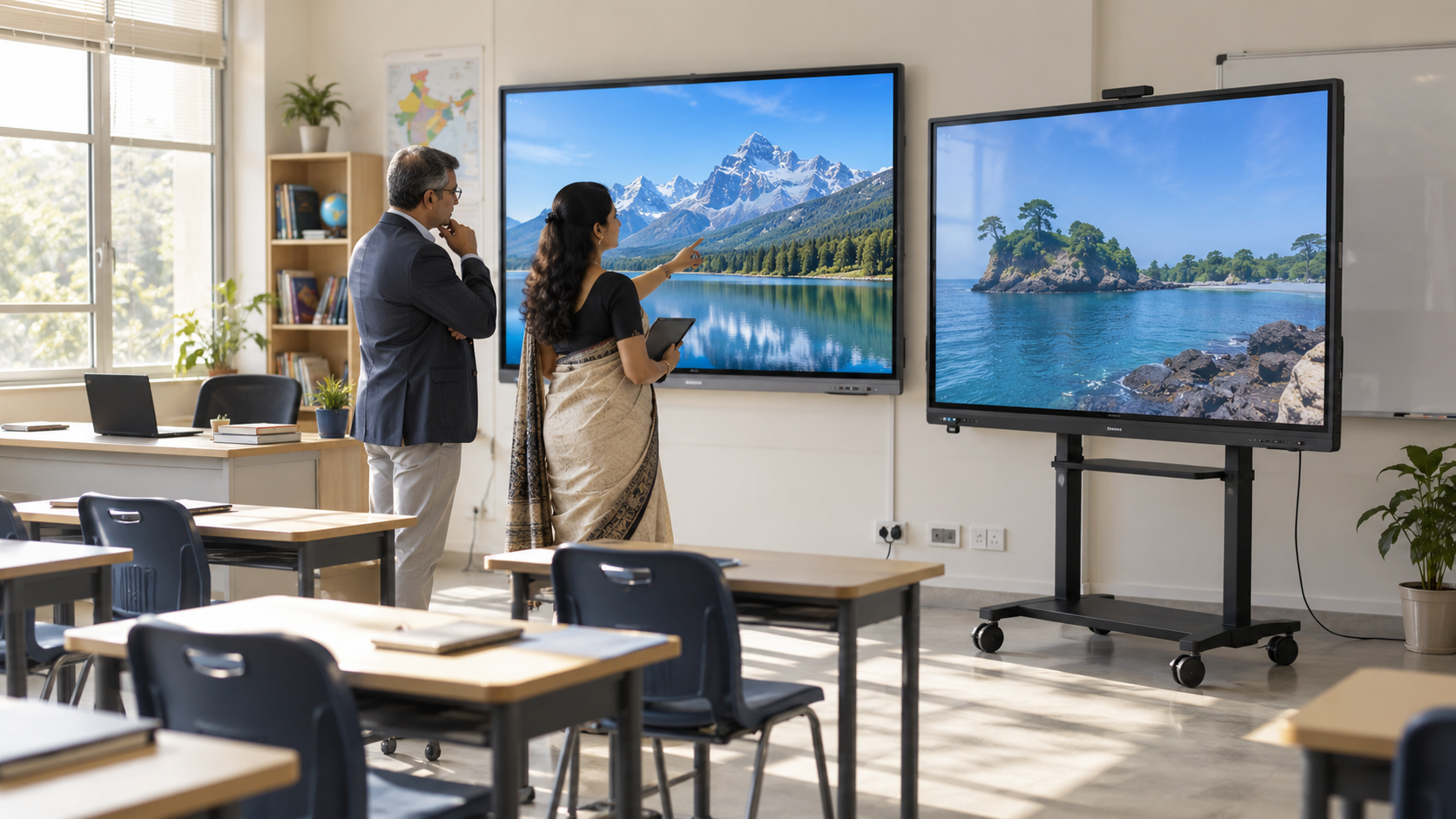
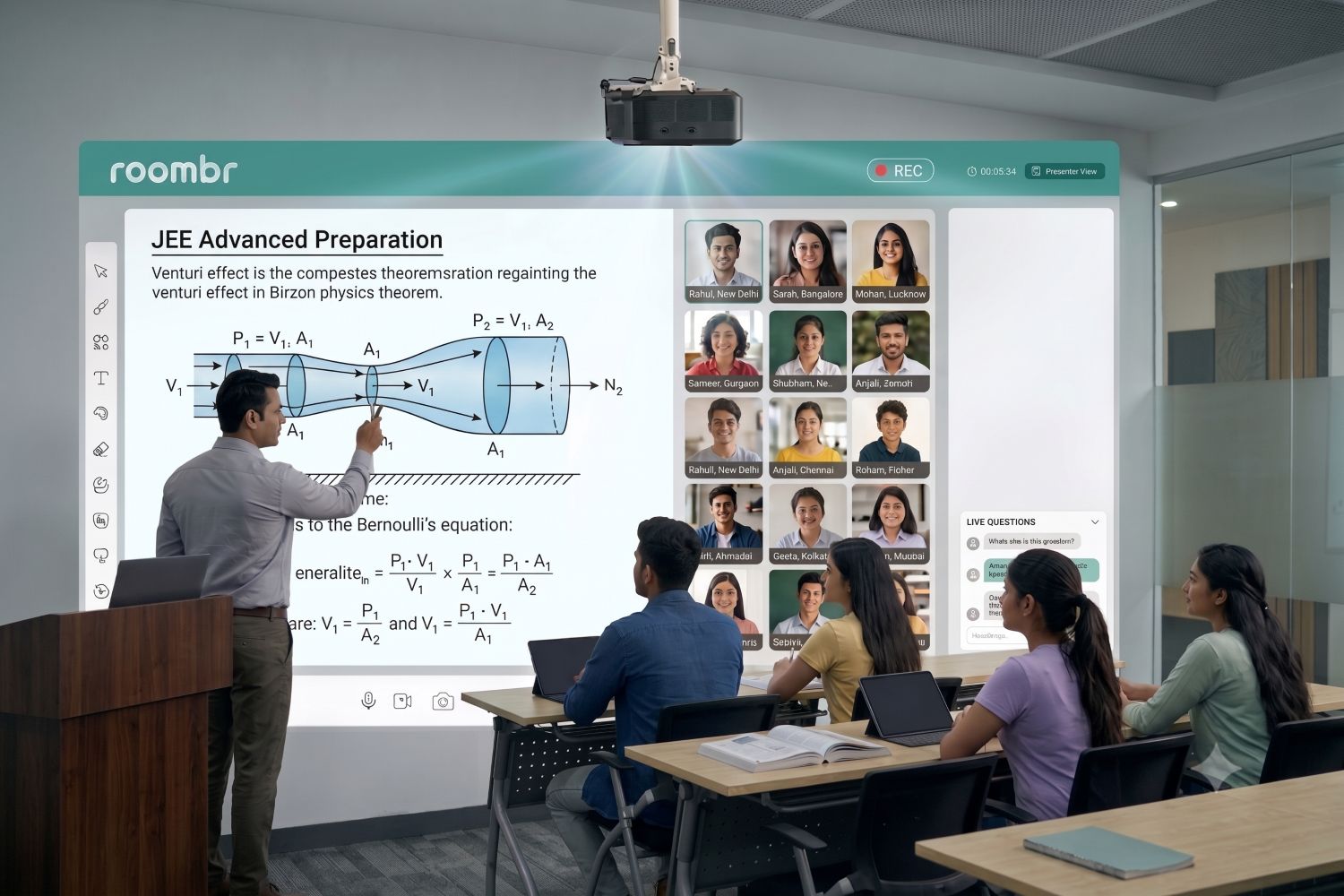
A strong multi-campus setup should make remote students feel present in the main classroom. That means clear visuals, stable audio, and low-lag interaction.
When lecture delivery is consistent, course outcomes are easier to protect. Students receive the same explanation, the same examples, and the same instructional emphasis across every campus.
2. Foster Two-Way Interaction So Remote Learners Feel Seen
Many university branches serve working professionals and adult learners. They do not just need content. They need responsiveness.
With two-way audio, shared displays, and real-time question handling, instructors can support adult learner engagement without splitting the class into separate teaching silos. That matters because engagement is often what keeps remote learners on track through difficult modules.
3. Synchronize Syllabus Completion Through Centralized Computing
A centralized digital infrastructure helps every branch progress through the same module on the same timeline.
That means the same unit can be completed, reviewed, and assessed at the same point in the semester. For leadership teams, this makes course outcomes far easier to track and defend. For quality teams, it creates cleaner evidence during audits and reviews.
Track Learning Outcomes With One Measurement Layer
Universities do not fail on outcomes because they lack data. They fail because the data is fragmented.
When the main campus, remote branch, and faculty teams all use different methods, leadership cannot clearly see whether course objectives and learning outcomes are being achieved. A unified system fixes that by combining teaching, attendance, participation, and assessment data in one place.
UGC’s LOCF framework says learning outcomes should be used to design teaching-learning strategies, assess student learning levels, and review academic standards. That makes measurement a core part of the curriculum model, not an afterthought.
Here is the practical version:
- Push digital assessments to all campuses at the same time.
- Use shared assessment tools to compare performance fairly.
- Track student learning outcomes by campus, course, and cohort.
- Review early signs of disengagement before final exams.
- Keep a clean record of course outcomes and program outcomes for leadership and accreditation teams.
This is also where higher education accreditation metrics become stronger. If the system can prove that every branch followed the same instructional and assessment process, the institution has a much better quality story to tell.
Turn Consistent Standards Into Your Enrollment Advantage
Parents, students, and employers all want the same thing: a degree they can trust. That trust grows when the institution can show that course outcomes are not dependent on campus location.
This is especially important for branch campuses in tier-2 and tier-3 cities. If those campuses can prove they deliver the same standard as the main campus, they stop looking like satellite outposts and start looking like premium academic destinations. UGC’s framework even notes that learning outcomes should help maintain national standards and international comparability. That is a strong enrollment story.
Final Word
Universities do not scale quality by hoping every campus teaches the same way. They scale quality by building the same system everywhere.
If your institution wants to protect course outcomes, strengthen academic rigor, and improve higher education credibility across every branch, the answer is a unified digital classroom strategy with centralized digital infrastructure, measurable learning outcomes, and NAAC-ready reporting. That is how multi-campus universities stay consistent, audit-ready, and future-proof.
For universities planning expansion, the next step is not adding more campuses. It is standardizing the academic engine that powers them.
Roombr Powers Consistent Course Outcomes Across Every Campus
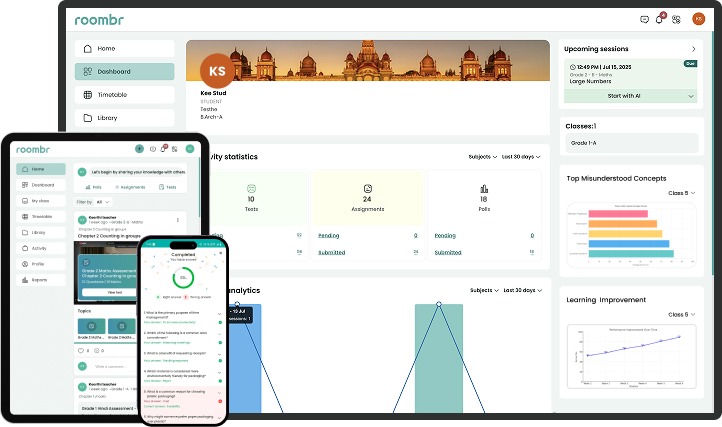
Roombr helps universities deliver the same academic experience across multiple campuses without compromising quality. By centralizing teaching, interaction, and assessment, Roombr makes it easier for educational leaders to protect course outcomes, improve learning outcomes, and support accreditation goals.
Our advanced digital classroom infrastructure enables professors to teach live across locations, keep students engaged in real time, and track performance with greater clarity.
For higher education institutions that want to scale with confidence, Roombr brings the control, consistency, and visibility needed to align academic rigor across every branch campus.
Explore how Roombr Learn helps universities deliver consistent teaching, measurable learning outcomes, and centralized academic experiences across multiple campuses.
Ready to see it in action? Request a Demo

Foziya Abuwala
Share
Step Into the future of
Education with Roombr