
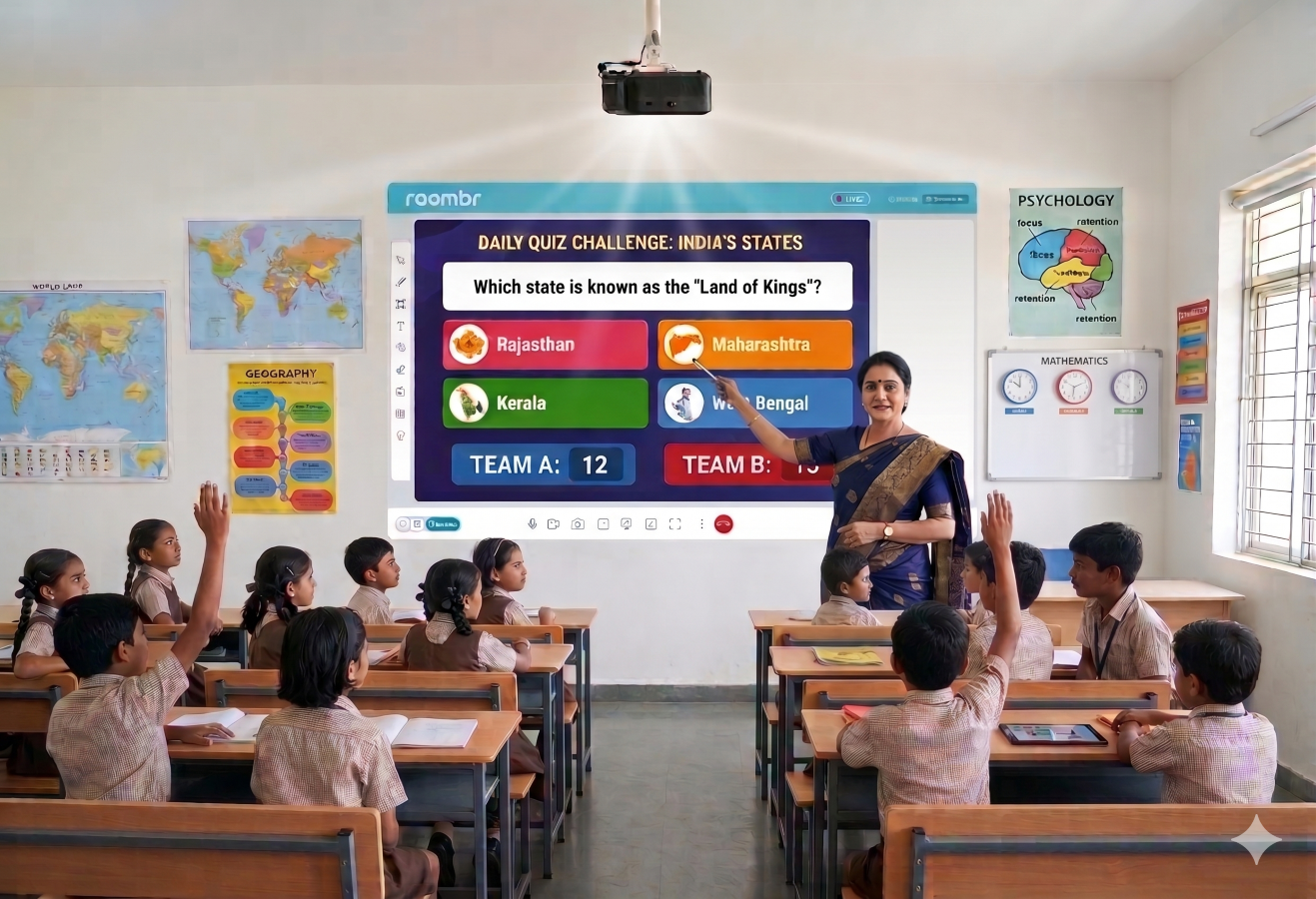
Walk into a CBSE staff room today, and you'll hear a different conversation than you would have three years ago. A 2025 survey by the Centre for Teacher Accreditation (CENTA) found that over 70% of Indian teachers are now using AI tools, with nearly 60% using them specifically for lesson planning. That's not a pilot program anymore. That's the daily reality in a majority of schools.
AI in the classroom means using tools that adapt lessons to each student, automate grading, and give teachers real-time data on who's struggling. It doesn't replace the teacher. It removes the repetitive work that eats into their time with students.
The rest of this guide breaks down what that looks like inside a digital classroom, where it's already working in India, and where it genuinely doesn't belong yet.
What Does AI in the Classroom Actually Do?
Most explanations of AI in education stay vague. "Personalized learning" and "smart tools" sound good but don't tell you what's actually happening on a Tuesday afternoon in a Class 8 section. Here's the functional breakdown.
1. Personalizing Lessons for Every Student
A class of 40 students rarely learns at the same pace. Some finish an exercise in five minutes; others need the concept explained three different ways.
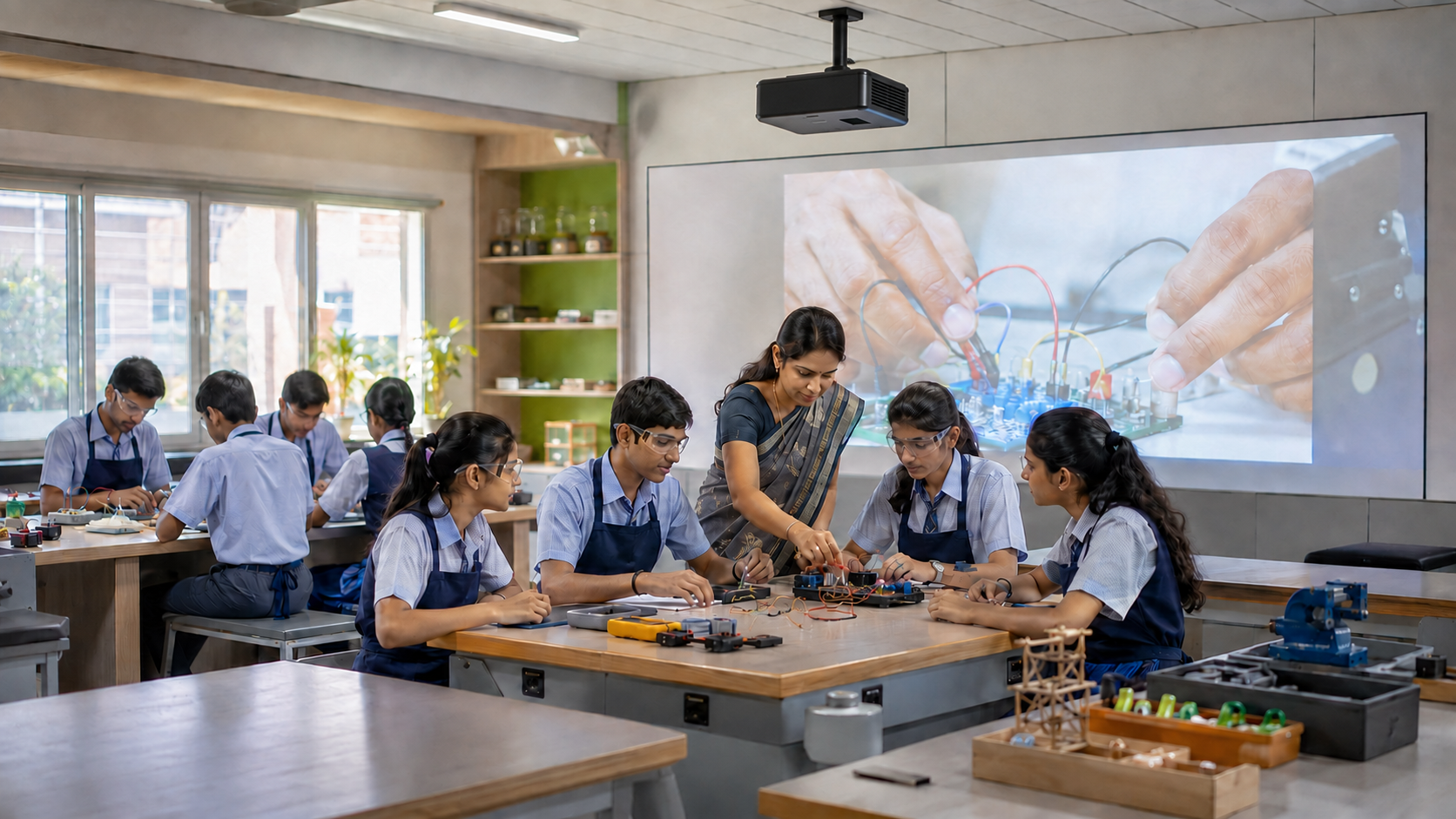
AI-powered platforms track how each student answers questions and where they slow down or get stuck. If a student consistently struggles with fractions but breezes through decimals, the system can serve up targeted practice for the weak area instead of repeating material they've already mastered.
This is where artificial intelligence for students genuinely earns its place in the classroom. It's not replacing the teacher's judgment. It's giving the teacher a faster, more accurate read on 40 students at once, something no single person can track manually in real time.
2. Automating Assessment and Feedback
Grading is one of the biggest time drains in teaching. A teacher correcting 40 essay-style answer sheets can easily lose an entire evening to it.
AI-based assessment tools can:
- Auto-grade multiple-choice and short-answer responses instantly
- Flag common mistakes across a whole class, not just one paper
- Generate a basic first-pass feedback note that a teacher can review and refine, rather than write from scratch
The teacher still makes the final call on marks and feedback quality. What changes is how much of the grading is already done by the time they sit down to review it.
3. Supporting Students Outside Class Hours
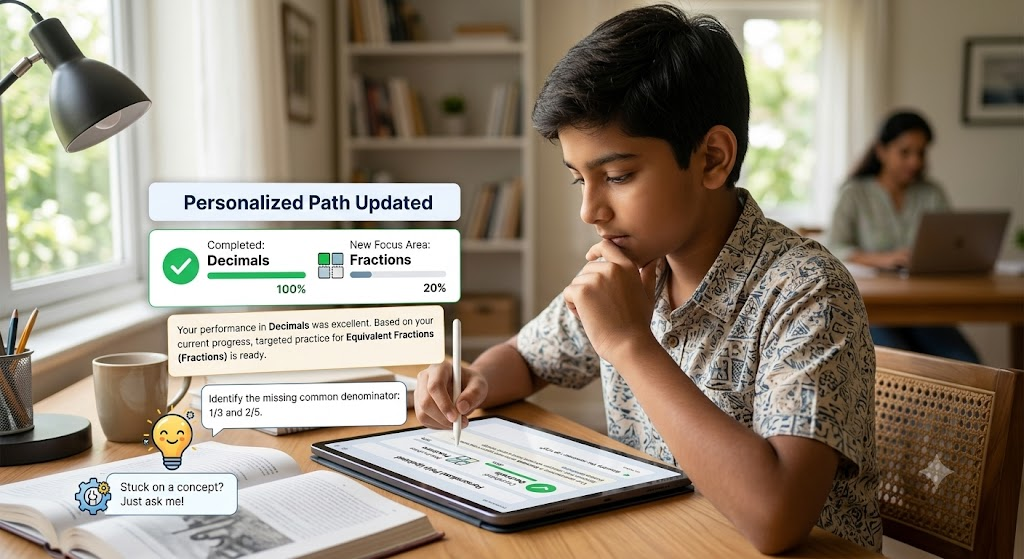
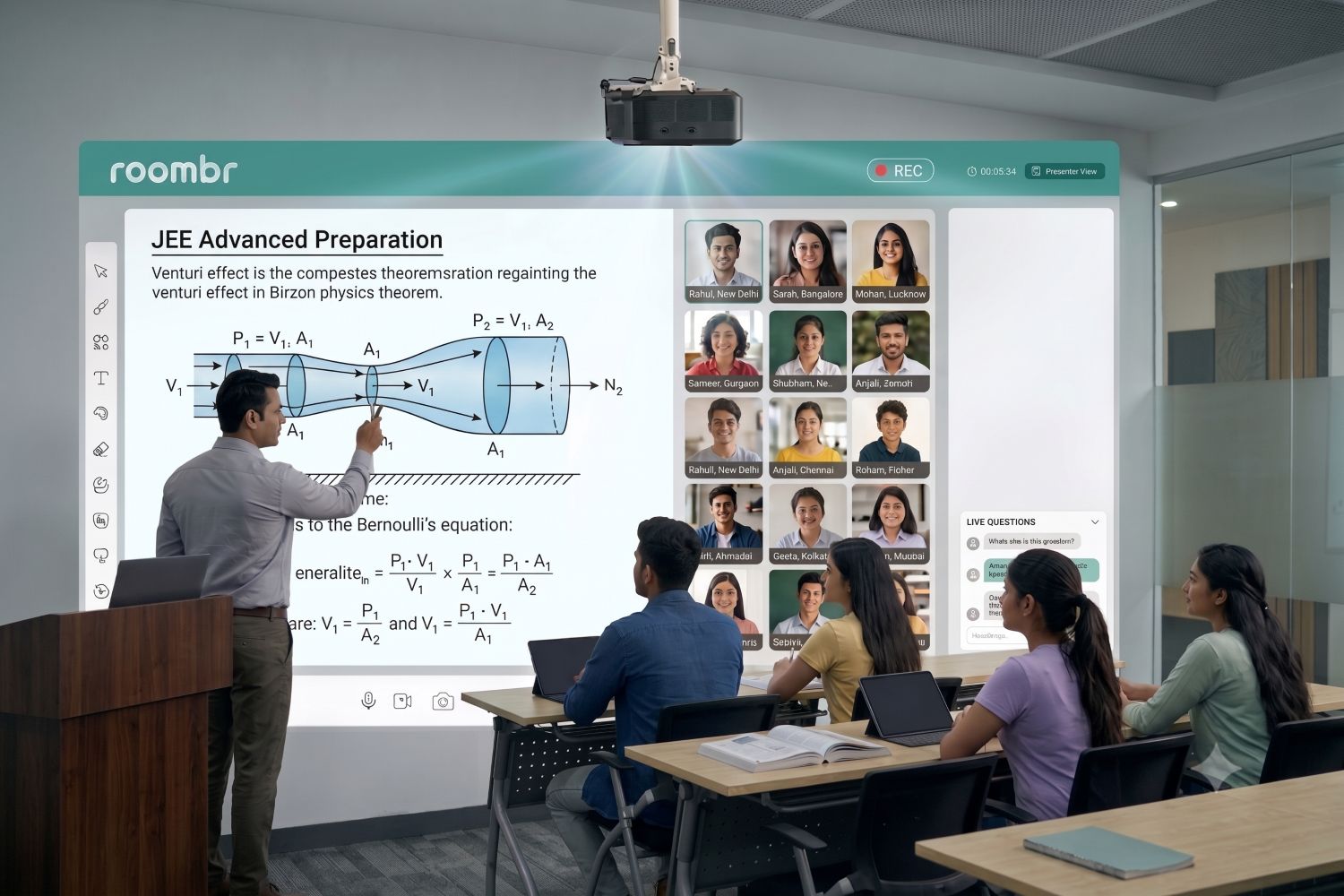
A student stuck on a homework problem at 9 PM used to have to wait until the next class to ask. AI chatbots built into digital learning platforms now handle basic doubt-clearing at the moment.
This works well for straightforward concept questions. It works far less well for nuanced discussion or anything requiring real judgment, which is why schools that use this well position it as a supplement, not a substitute for teacher access.
4. Keeping Engagement High in the Smart Classroom
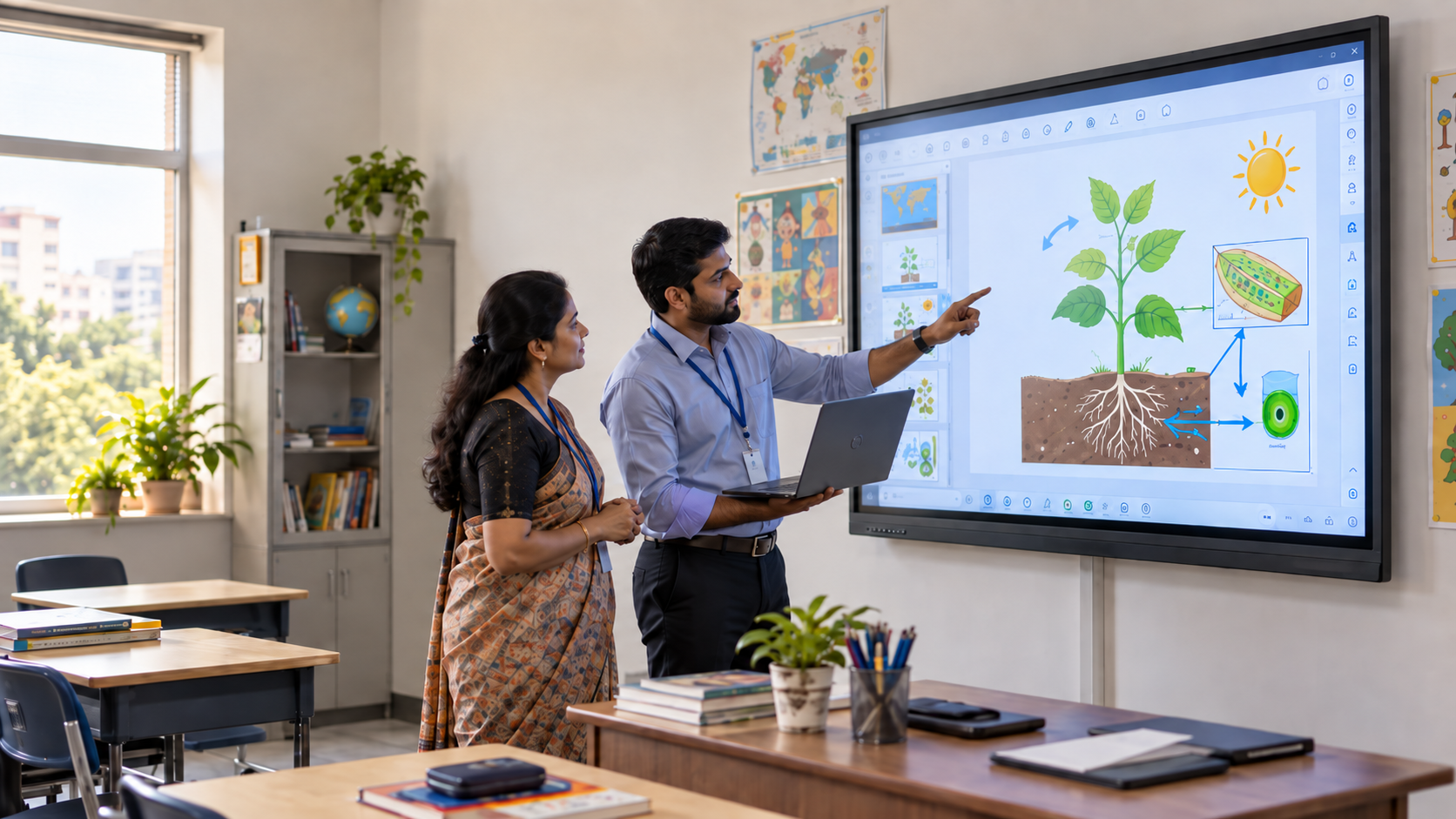
A smart classroom setup with AI-driven interactive lessons responds to how a class is actually engaging, not just how a lesson was planned on paper. If engagement dips mid-lesson, some systems can flag it to the teacher before it shows up in test scores three weeks later.
That's a meaningfully different mode of teaching than a static slide deck. It's reactive, not just delivered.
Where AI Is Already Working in Digital Classrooms Today
This isn't a "coming soon" list. These functions are already live in Indian schools and colleges right now.
A few things worth knowing about how this plays out in practice:
1. Adoption is Real But Uneven
Government and policy bodies have pushed hard on this. India's Ministry of Education has made AI and Computational Thinking mandatory subjects from Class 3 starting the 2026-27 academic year, rolled out through CBSE with training support for over 10 million teachers. That signals where digital learning in India is headed at a national level, not just in individual schools.
2. Most Schools Use Generic Tools, Not Integrated Systems
Industry data suggests only a small fraction of institutions have AI built into a structured teaching workflow. The rest are using free-standing chatbots without much strategy behind them, according to recent Bharat EdTech survey data. That gap between "using AI" and "using AI well" is the real dividing line between schools that see results and schools that don't.
3. Accessibility Is One of the Strongest Use Cases
UNICEF India has pointed to AI-powered assistive technology as one of the clearer wins for children with disabilities, converting speech to text and supporting students who need alternative formats to keep pace with their class.
Does AI Replace Teachers?
No. AI in the classroom is built to reduce administrative load, not replace the teacher's role.
Grading, attendance tracking, and basic doubt-clearing are repetitive tasks that AI can absorb. Mentoring, judgment calls on a struggling student, and the actual relationship between teacher and class are not things AI is designed to do or capable of doing.
Educators quoted in India's ongoing rollout of AI curriculum standards have been consistent on this point: the goal is to free up teacher time for higher-value work, not to shrink the role. The risk worth naming honestly here is over-reliance. Reporting on India's AI adoption in schools has flagged real cases of AI-generated lesson content containing factual errors when teachers use these tools without review. The tools work well when a teacher checks the output. They create new problems when they don't.
The Bottom Line
AI in the classroom isn't a future concept anymore. It's already grading papers, personalizing practice sets, and supporting students after hours in schools across India today. The institutions seeing real results are the ones treating it as a tool a teacher actively manages, not a system left to run on autopilot.
Frequently Asked Questions (FAQs)
1. What is the role of AI in the classroom?
AI in the classroom personalizes lessons based on student performance, automates grading and feedback, supports students with doubt-clearing outside class hours, and gives teachers real-time data on engagement and understanding.
2. Will AI replace teachers?
No. AI handles repetitive administrative tasks like grading and attendance tracking. It cannot replace a teacher's judgment, mentoring, or relationship with students.
3. How does AI personalize digital learning for students?
AI tracks how each student answers questions and identifies specific gaps, then serves targeted practice material for those gaps instead of a one-size-fits-all lesson plan.
4. Is AI reliable for classroom assessments and exams?
AI can reliably auto-grade objective assessments and monitor online exams for irregularities. For subjective grading and lesson content, teacher review remains necessary to catch errors AI tools can introduce.
See What an AI-Powered Classroom Looks Like
Reading about AI in the classroom is one thing. Seeing it run inside an actual lesson is another. Roombr brings AI directly into the classroom through Intel-powered edge computing, so curriculum search, student support, and lesson tools keep working reliably, even without constant internet access.
Teachers get an AI assistant that pulls NCERT-aligned resources and generates grade-specific examples in seconds, in the language they teach in. Every lecture is automatically transcribed into notes and summaries students can revisit anytime. And each student gets a 24/7 AI mentor mapped to their own pace, not a one-size-fits-all script.
Book a free Roombr demo to see how our most advanced AI solution fits into your classroom.

Praveen Krishnaiah
Share
Step Into the future of
Education with Roombr