
.jpeg)
Traditional teaching still matters in higher education. But it no longer works well on its own.
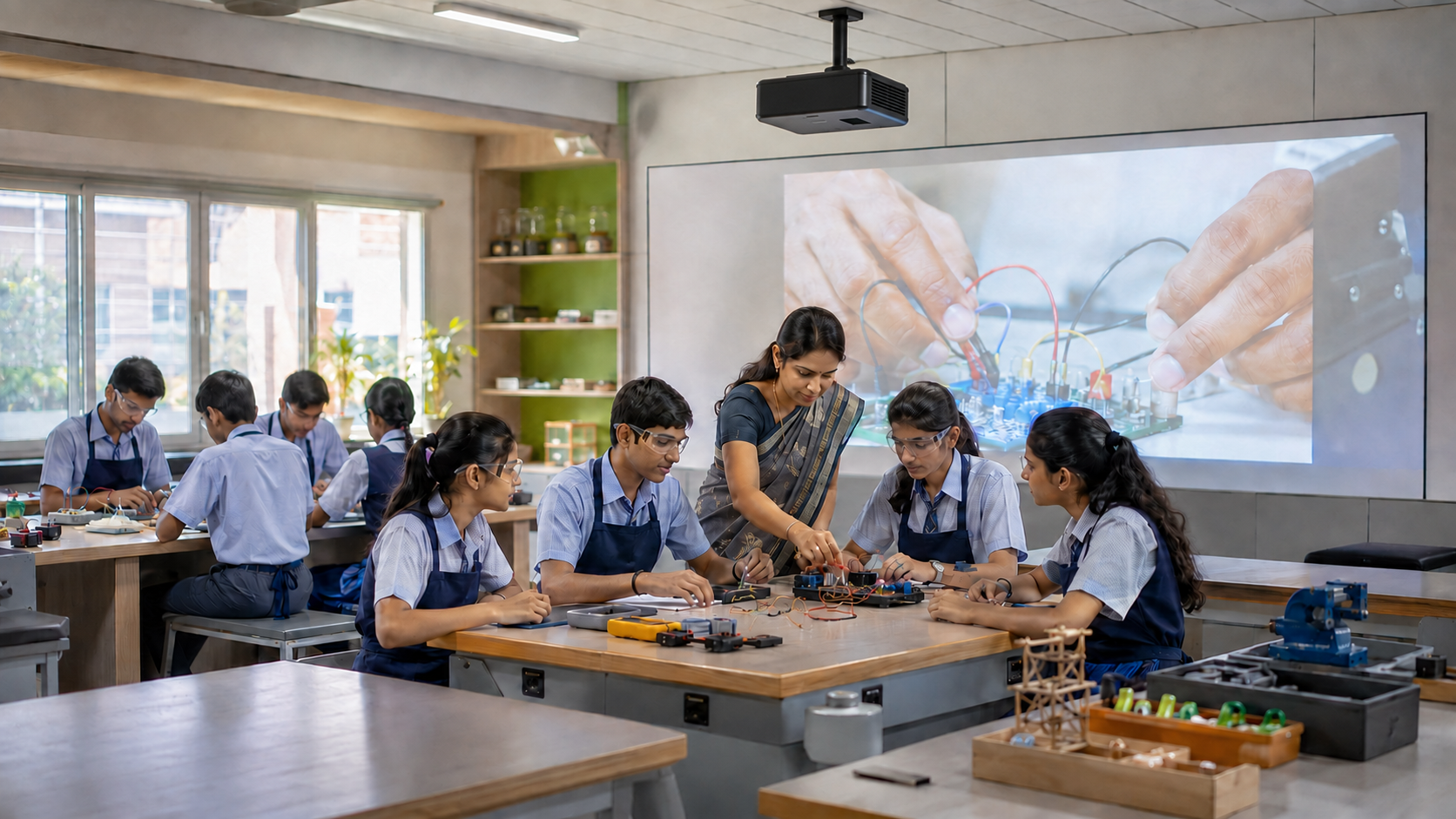
Indian colleges now need classrooms that support participation, hybrid access, faster feedback, and stronger learning outcomes. That is why interactive learning solutions are becoming a core part of modern higher education, not just a nice upgrade. As higher education evolves under NEP 2020, colleges are placing greater emphasis on quality teaching, student engagement, and technology-enabled learning.
For higher education institutions, these solutions reduce reliance on disconnected devices, simplify classroom management, and support better teaching and learning outcomes. They also align with the growing focus on quality education and outcome-based learning frameworks such as NAAC and NIRF.
Challenges Faced by Indian Colleges in the Current Education System

Source: Freepik
Many colleges are not struggling because faculty are weak.
They are struggling because the classroom model has not kept pace with student expectations.
1. Passive Teaching Still Dominates
The lecture-first model often keeps students quiet instead of involved. That reduces attention, participation, and recall.
2. Faculty Need More Flexibility
Teachers now handle mixed-ability classrooms, hybrid sessions, and students who expect digital access. A single teaching style is no longer enough.
3. Feedback Often Comes Too Late
When assessment happens only at the end, learning gaps stay hidden. By the time they appear, they are harder to fix.
4. Recorded Access Is Still Limited
Students miss classes for internships, illness, travel, or placement work. Without recorded lectures, they fall behind quickly.
5. Quality Frameworks Demand More Evidence
Higher education institutions are expected to show stronger outcomes, better teaching processes, and more learner support. That is where classroom technology in education becomes important. NAAC’s assessment model and NIRF’s ranking framework both reward teaching quality, learning resources, and outcome-focused systems.
Why Interactive Learning Solutions Matter More in Indian Colleges
A modern college classroom should do more than display slides.
It should help faculty teach clearly, help students stay engaged, and help institutions prove that learning is actually happening.
1. They Support Student Attention
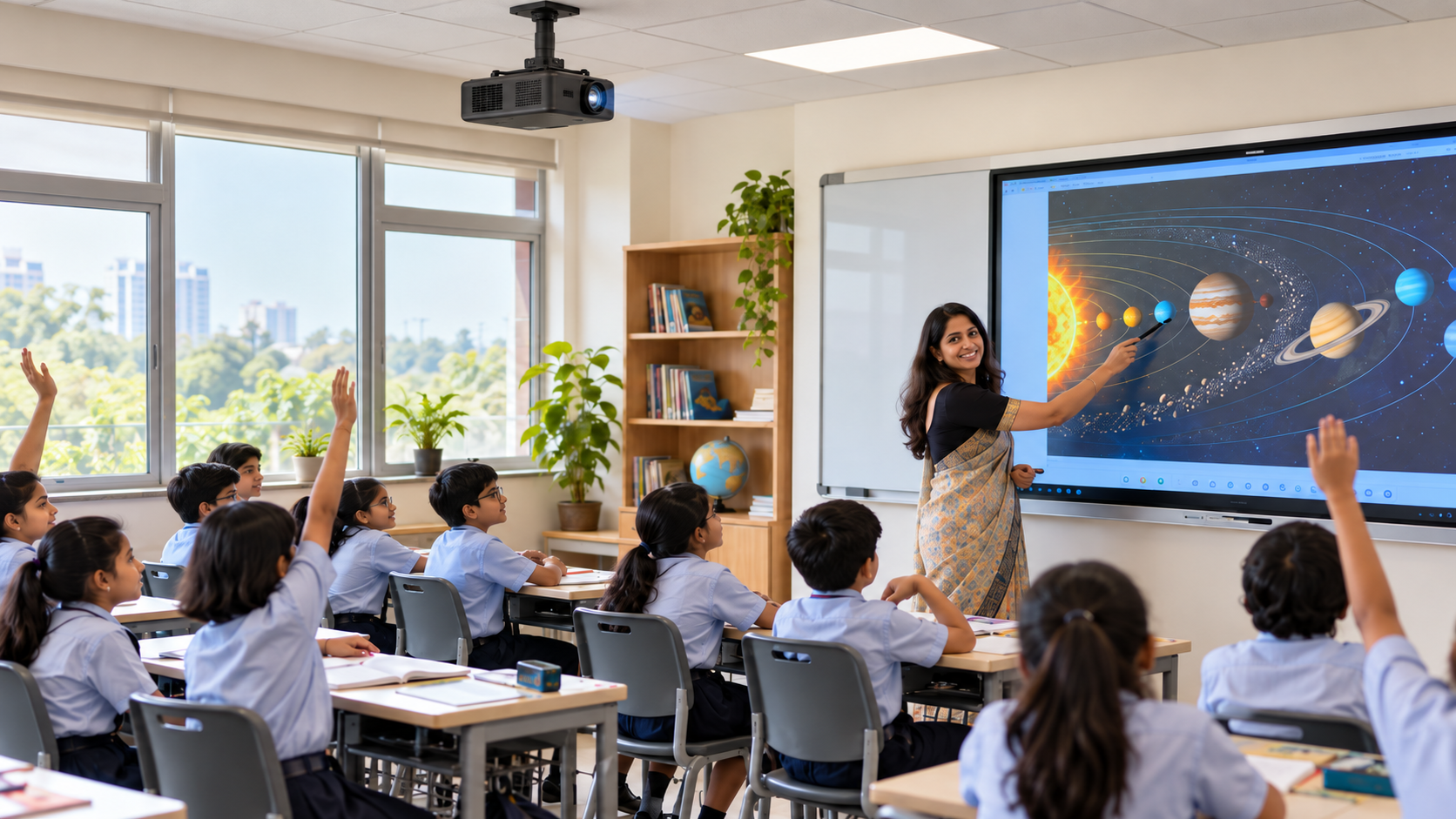
An interactive classroom turns the lesson into a two-way experience. The impact is especially noticeable in courses where complex concepts, visual demonstrations, and problem-solving play a central role.
2. They Make Hybrid Teaching Practical
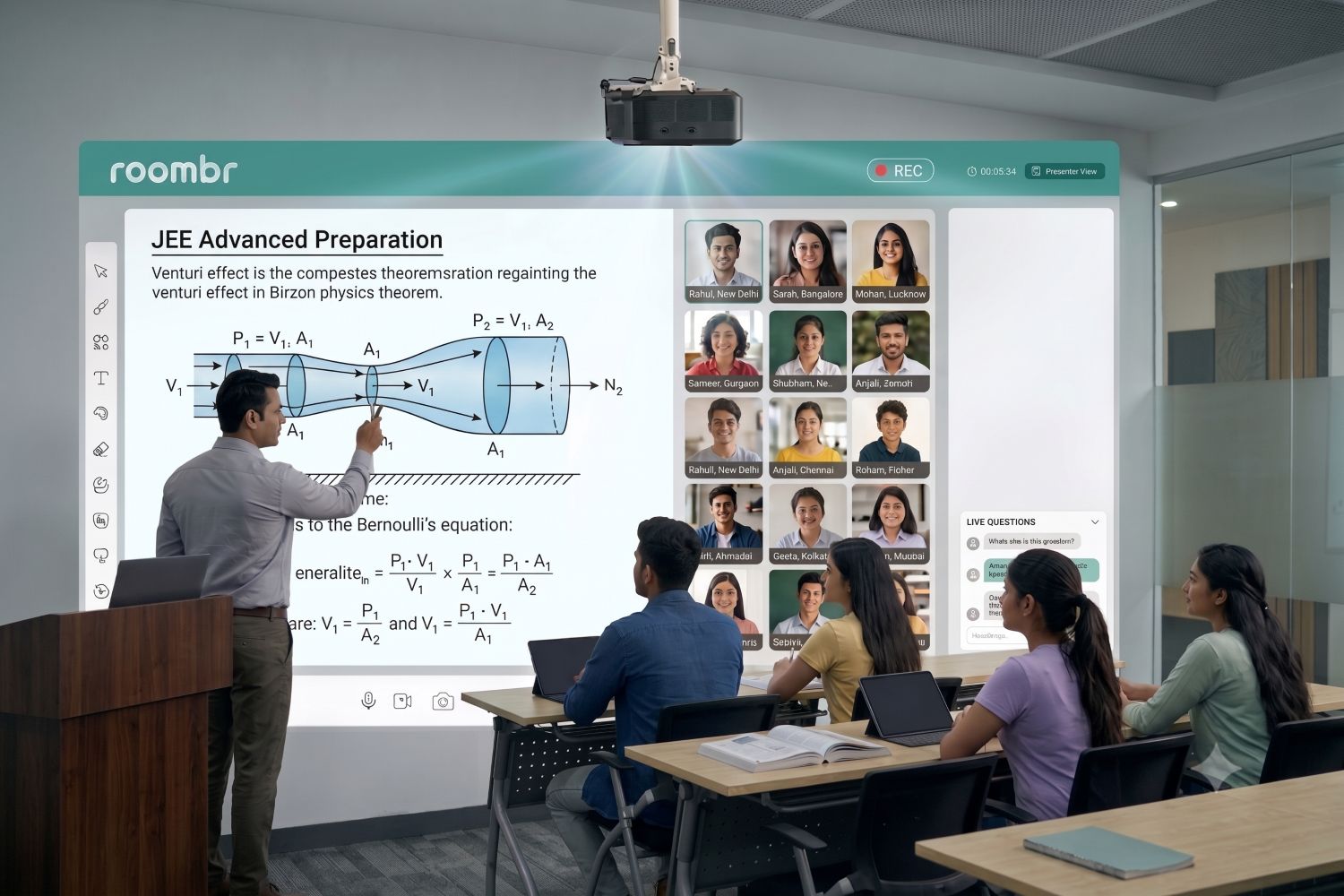
A well-planned hybrid classroom can support on-campus and remote learners together. That is useful for guest lectures, internships, make-up classes, and cross-campus teaching.
3. They Help Students Revisit Lessons
One of the biggest advantages of class recording is revision. Students can revisit a difficult topic, replay a complex explanation, and prepare at their own pace.
4. They Improve Feedback and Assessment
When a classroom includes digital assessments, faculty can check understanding during class instead of waiting until the end of term.
That helps teachers:
- Identify weak areas early
- Reduce end-term surprises
- Track progress more consistently
- Adapt teaching in real time
5. They Strengthen Learning Outcomes
The best interactive learning solutions do not just look modern.
They help improve:
- Exam outcomes
- Student learning outcomes
- Classroom participation
- Revision habits
- Teacher efficiency
That is why colleges are moving from isolated tools to connected classroom ecosystems.
How Interactive Learning Solutions Transform Indian Colleges
1. They Make Classes More Interactive
A strong interactive learning solution lets faculty annotate, explain, demonstrate, and respond in real time.
This keeps the lesson active, not passive.
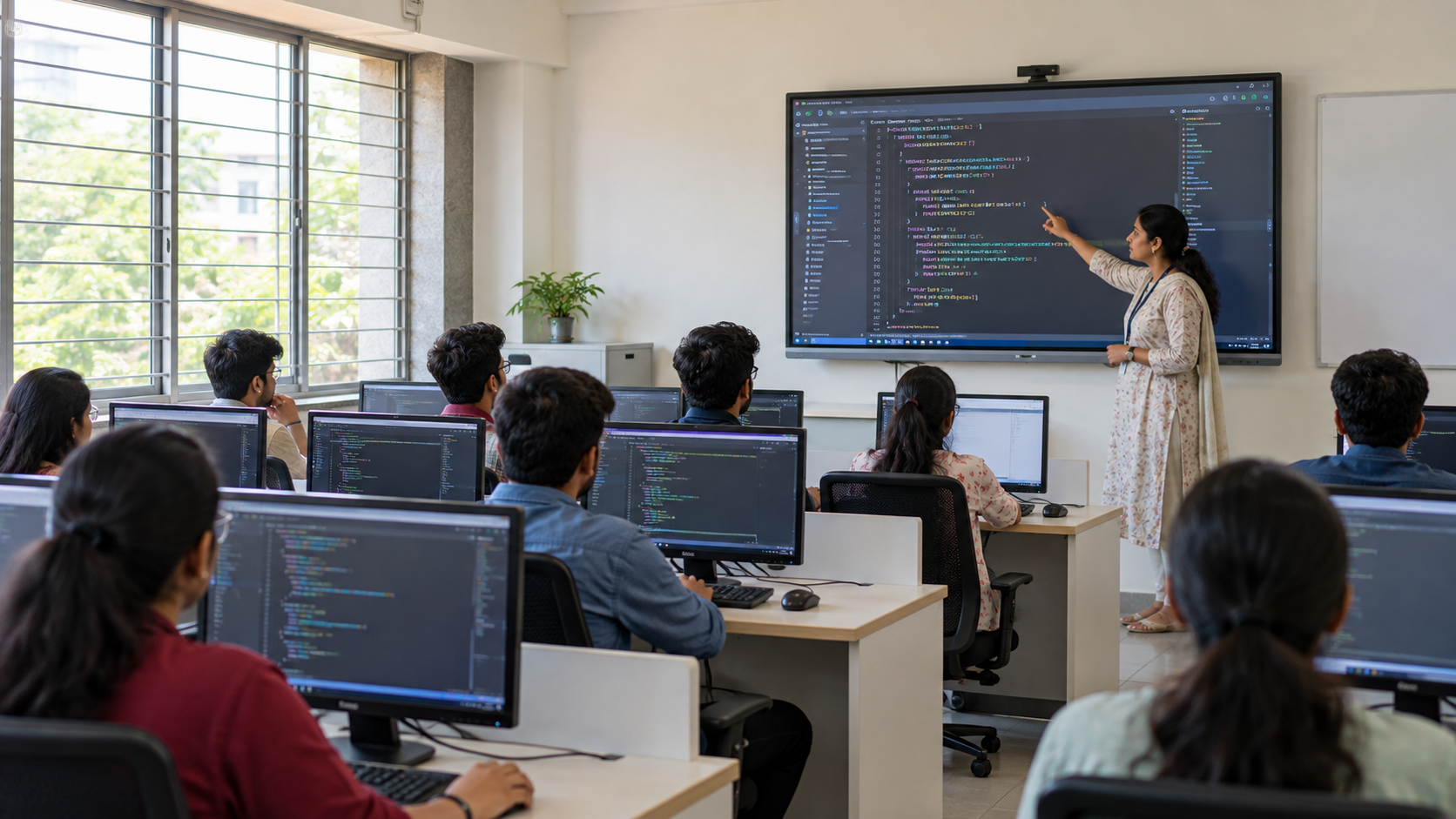
It is especially useful in engineering, management, science, commerce, and professional programs where explanation matters as much as content delivery.
2. They Support Hybrid Teaching Without Breaking the Flow
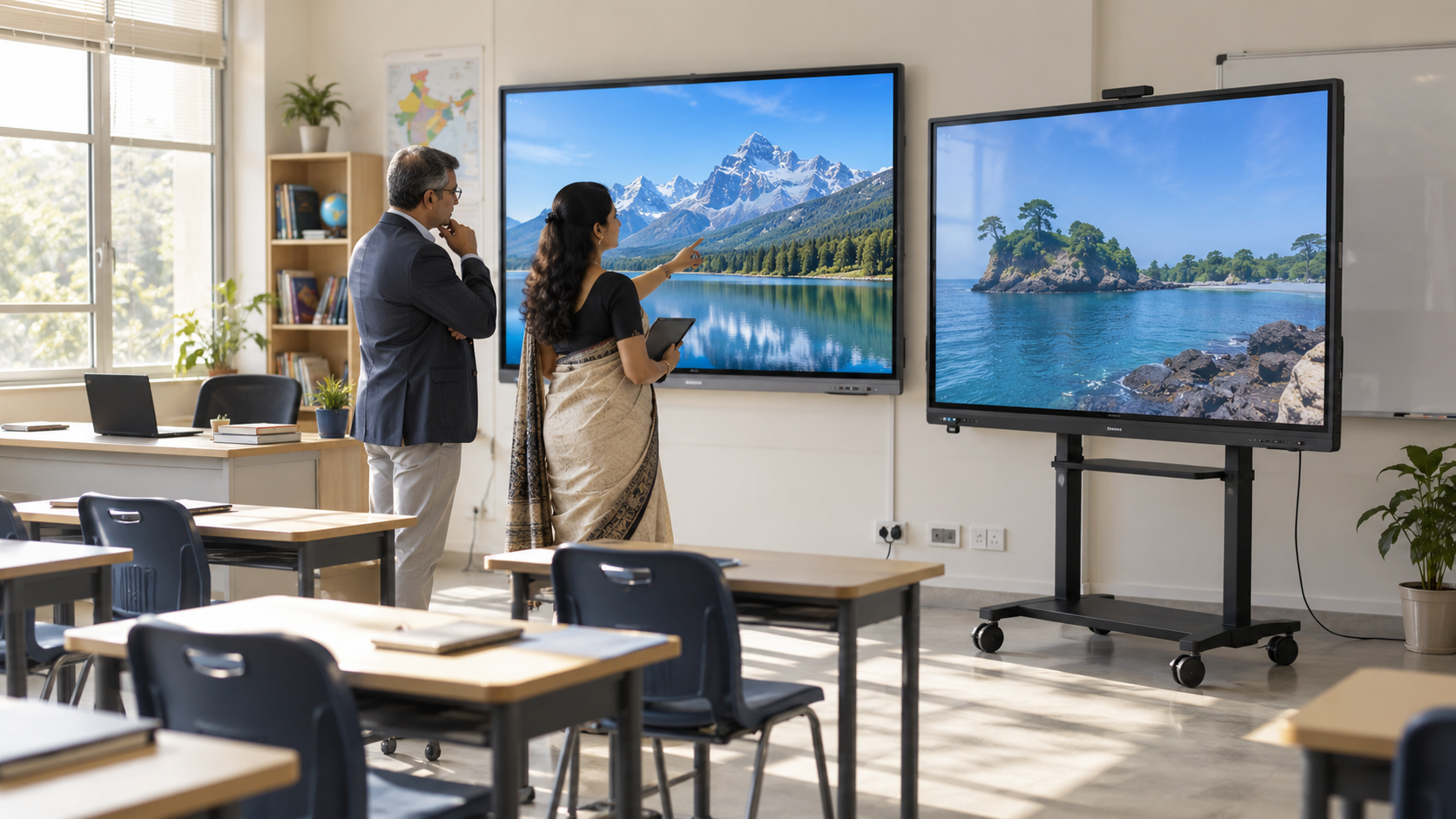
A good digital classroom supports both in-person and remote learning.
That is useful when colleges need one classroom experience with multiple access points.
Hybrid teaching should feel seamless. Students should not feel like they are in two different classes.
3. They Help Students Revisit Lessons
Class recording gives students a second chance to understand a topic.
That is valuable for:
- revision before exams
- Catching up after absence
- Slower-paced learning
- Preparing for competitive or placement-related subjects
4. They Improve Feedback and Assessment
A modern classroom works better when it supports classroom recording system features along with assessment.
That helps faculty:
- Check understanding during class
- Build short quizzes and review points
- Track performance more closely
- Reduce guesswork
For students, this creates clearer learning checkpoints. For teachers, it reduces unnecessary manual effort.
5. They Align Better with NAAC and NIRF Priorities
This is important for decision-makers.
NAAC’s higher education assessment model includes Criterion II – Teaching-Learning and Evaluation. NIRF’s college framework gives 40% weight to Teaching, Learning & Resources and 25% weight to Graduation Outcomes. That makes classroom quality a direct institutional concern, not just an academic one.
Quick Comparison
A good setup should also be simple enough for faculty to use daily.
If it needs too many steps, adoption drops.
That is why classroom technology must be chosen for real teaching conditions.
When Does a College Need Interactive Learning Solutions?
The answer is simple.
A college needs interactive learning solutions when it wants to:
- Improve classroom engagement
- Support hybrid teaching
- Make revision easier through recorded lectures
- Strengthen student learning outcomes
- Reduce dependence on scattered devices
- Create a more measurable learning environment
If those goals matter, the college is already at the point where classroom technology is no longer optional.
Key Insights
Indian colleges need interactive learning solutions that make teaching clearer, learning stronger, and outcomes more measurable.
The true benefit of investing in modern classroom technology lies in its ability to increase student participation, enable effective hybrid learning, simplify access to recorded lectures, and support better academic outcomes.
For principals, faculty leaders, and decision-makers, the next step is not just buying devices.
It is choosing classroom technology in education that actually supports academic quality.
A classroom that helps students learn better is not just modern. It is future-ready.
Frequently Asked Questions
1. What are interactive learning solutions?
They are integrated classroom technology systems that support interactive teaching, recording, sharing, assessment, and hybrid learning in one environment.
2. Why are interactive learning solutions important for colleges?
They help colleges improve engagement, support faculty, track learning, and create more flexible teaching models for modern higher education.
3. What is the difference between a digital classroom and a smart classroom?
A digital classroom is the broader teaching environment. A smart classroom usually refers to the technology layer or hardware-focused subset that makes the environment interactive, recorded, and connected.
4. Do interactive learning solutions support NAAC and NIRF goals?
Yes. NAAC focuses on teaching-learning and evaluation, while NIRF gives weight to teaching, learning, resources, and graduation outcomes. Better classroom systems can support all of these.
5. Are recorded lectures useful for higher education students?
Yes. They help students revise difficult concepts, catch up on missed classes, and learn at their own pace. Recorded lectures also support exam preparation, concept reinforcement, and flexible learning, making it easier for students to revisit important lessons whenever needed.
How Roombr Supports Modern Higher Education Classrooms
Roombr’s approach fits this need because it is built as an all-in-one digital classroom solution, not a collection of disconnected tools.
For colleges, the most useful capabilities are the ones that reduce complexity:
- One integrated classroom system instead of multiple devices
- Lesson recording and sharing
- Hybrid connectivity
- Assessment support
- Interactive delivery
- Easier classroom management
Roombr also positions its higher-education offering as a way to support stronger teaching and learning processes, which fits the needs of principals, deans, HODs, and academic leaders.
For a deeper look at the product approach, explore our hardware Roombr Pro.
To schedule a walkthrough, fill out our online form.

Foziya Abuwala
Share
Step Into the future of
Education with Roombr